

How AI-Driven Monitoring Is Changing BESS Operations

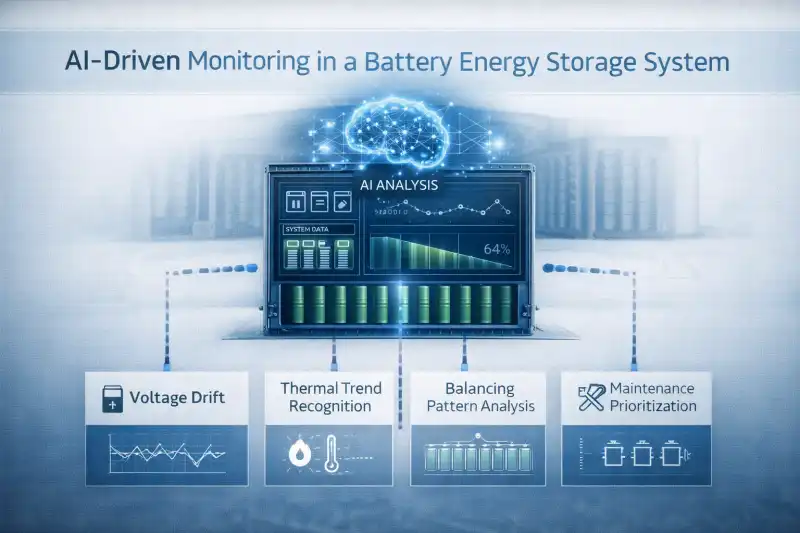
Battery Energy Storage Systems generate large volumes of operational data every second, including voltage behavior, thermal movement, current response, balancing cycles, and discharge patterns. For human teams, reviewing this information continuously across large battery assets is difficult. This is why AI-driven monitoring is becoming increasingly important in modern BESS operations.
Instead of relying only on fixed thresholds or manual inspection, AI-based systems identify patterns across multiple battery parameters at once. This allows operators to detect abnormal behavior earlier and improve decisions before visible performance changes appear.
Why Traditional Monitoring Has Limits
Conventional battery monitoring usually depends on summary dashboards and alarm thresholds.
Operators often review:
- Pack voltage
- Temperature averages
- State of Charge
- Active alarm events
These indicators are useful, but they do not always reveal slow-moving technical patterns developing inside battery strings.
What AI Monitoring Detects More Effectively
AI systems improve battery monitoring by comparing live battery behavior against previous operating trends.
This helps identify:
- Unusual voltage drift
- Repeating thermal patterns
- Irregular balancing behavior
- Charge-discharge anomalies
- Hidden efficiency decline
Instead of reacting only when limits are crossed, operators receive earlier signals when patterns begin changing.
Why Pattern Recognition Matters in BESS
Battery systems often show early warning signals through combinations of small deviations rather than one isolated event.
For example, a slight voltage change may not appear important alone, but when combined with recurring thermal drift and balancing delays, it can indicate growing battery stress.
AI systems process these relationships faster than manual review.
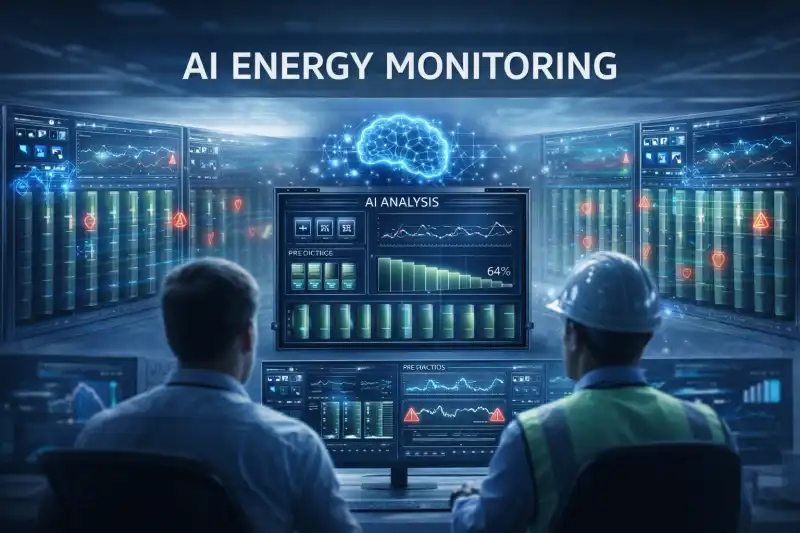
How AI Improves Maintenance Prioritization
One major advantage of AI battery monitoring is maintenance focus.
Instead of checking all battery assets equally, operators can prioritize modules showing the strongest anomaly patterns.
This improves:
- Inspection timing
- Balancing decisions
- Cooling adjustments
- Battery life planning
Why AI Supports Long-Term Battery Performance
As battery fleets grow larger, manual monitoring becomes less practical.
AI helps operators move from alarm response toward continuous operational intelligence.
Frequently Asked Questions
Conclusion
AI-driven monitoring is changing BESS operations because battery systems increasingly require pattern recognition, not just threshold-based alerts.
For battery teams seeking earlier anomaly detection, Yatis supports intelligent BESS monitoring that helps surface battery behavior patterns across critical operating signals.
Ready to Implement AI-Driven Monitoring?
Contact Yatis Telematics to learn how intelligent BESS monitoring can help your team detect anomalies earlier and improve battery performance.
Contact Us →