

How Cell Imbalance Reduces Battery Energy Storage Performance

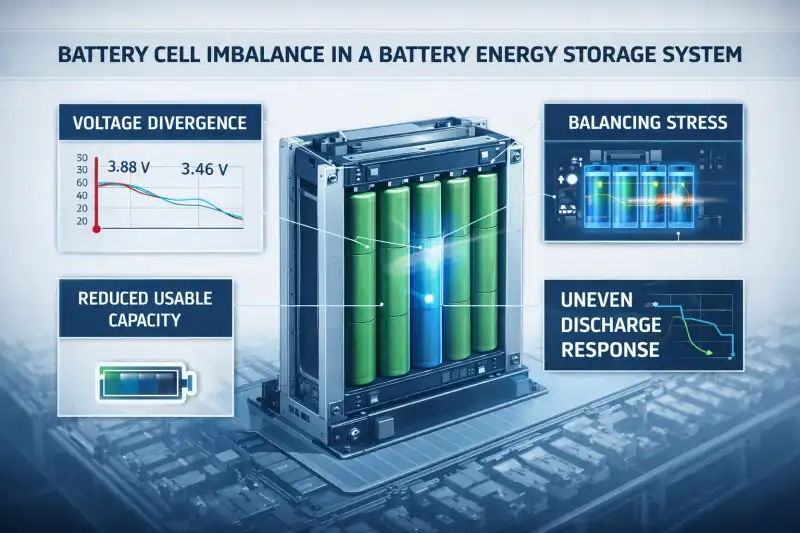
In a Battery Energy Storage System (BESS), battery cells are designed to operate within tightly controlled voltage ranges so that charging and discharging remain stable across the entire pack. When one or more cells begin behaving differently from the rest, cell imbalance develops. Although the deviation may appear small at first, it gradually affects energy delivery, charging efficiency, and long-term battery reliability.
Because battery packs operate as connected systems, one weak or drifting cell can limit the usable performance of an entire string. This is why cell imbalance detection has become a critical part of modern battery monitoring.
What Cell Imbalance Means in Battery Systems
Cell imbalance occurs when battery cells no longer maintain equal voltage or charge behaviour during operating cycles.
This usually appears through:
- Voltage differences between adjacent cells
- Uneven charge acceptance
- Inconsistent discharge response
- Repeated balancing corrections
A battery pack may continue operating normally while these differences slowly widen over time.
Why Small Voltage Deviations Matter
Even a small voltage gap can affect how much energy the battery pack can safely use.
When one cell reaches voltage limits earlier than others:
- Charging may stop before full pack capacity is reached
- Discharge may end early to protect weaker cells
- Balancing cycles become more frequent
This means usable energy declines even if the battery still appears functional at system level.
How Cell Imbalance Affects Battery Performance
The most direct impact of battery cell imbalance is reduced operational efficiency.
Common performance effects include:
- Lower available capacity
- Reduced discharge consistency
- Longer balancing periods
- Increased stress on healthy cells
Over time, repeated imbalance also accelerates uneven aging across modules.
Why Imbalance Often Develops Gradually
Cell imbalance usually begins through small variations in cell aging, temperature exposure, or current distribution.
Because these differences build slowly, operators often notice performance impact only after balancing events become more frequent or usable runtime starts shortening.
Why Cell-Level Monitoring Is Important
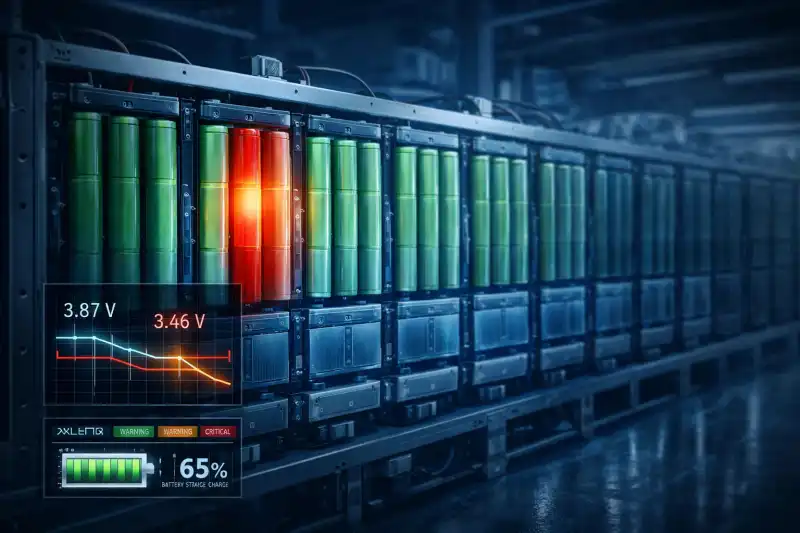
Modern battery monitoring systems track voltage at cell level so operators can identify imbalance before larger performance loss develops.
This helps teams detect:
- Persistent voltage divergence
- Weak cells inside healthy strings
- Balancing inefficiencies
- Degradation trends across modules
Frequently Asked Questions
Conclusion
Cell imbalance often begins quietly, but over time it becomes one of the most important reasons battery systems lose efficiency earlier than expected.
For battery teams monitoring long-term performance, Yatis supports cell-level BESS visibility that helps identify voltage divergence before balancing losses affect system output.
Monitor Cell-Level Performance
Contact Yatis Telematics to learn how cell-level monitoring can help you detect imbalance early and maintain optimal battery performance.
Contact Us →