

What Is Data Logging in Vehicle Tracking Devices?

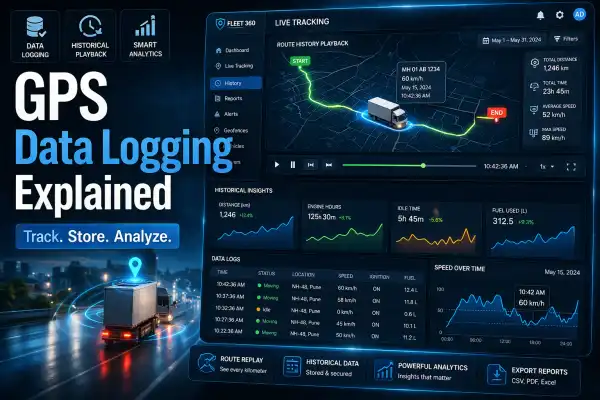
In modern fleet operations, tracking a vehicle's location is no longer enough. What matters more is what happened during the journey. This is where data logging vehicle trackers become critical.
Instead of only showing real-time movement, these systems record and store detailed operational data, allowing fleet operators to analyze performance, detect inefficiencies, and improve decision-making over time.
What Is Data Logging in GPS Tracking?
Data logging in a vehicle tracking device refers to the process of continuously recording location history, speed patterns, ignition activity, route deviations, and time-based movement.
A data logging vehicle tracker stores historical tracking data, enabling analysis of vehicle behavior, routes, and performance over time.
What Kind of Data Gets Logged?
1. Route History
Complete trip playback with timestamps for each movement.
2. Speed & Driving Patterns
Over-speeding instances, acceleration and braking trends.
3. Idle Time & Stops
Duration of stops and unauthorized halts.
4. Ignition Status
ON/OFF patterns and usage outside permitted hours.
5. Geo-Fence Events
Entry/exit logs and route deviation records.
Why Data Logging Matters for Fleet Operations
Real-time tracking answers: "Where is the vehicle now?" Data logging answers: "What actually happened?"
This distinction is critical for performance analysis, driver accountability, route optimization, and operational audits. Without historical data, decisions are reactive. With data logging, decisions become data-driven.
Real-World Impact
Fleet operators use logged data to identify inefficient routes, reduce fuel consumption, detect vehicle misuse, improve delivery timelines, and validate operational reports. For compliance-heavy sectors, data logging also helps with audit trails, regulatory reporting, and incident investigation.
What to Look for in a Data Logging Tracker
A strong system should provide accurate and continuous data capture, route replay functionality, downloadable reports, analytics dashboards, and long-term data storage. This ensures that logged data translates into actionable insights.
Explore Yatis vehicle tracking solutions that provide structured data logging with analytics dashboards for fleet management.
Limitations to Be Aware Of
Not all systems offer meaningful data logging. Common issues include incomplete data capture, lack of structured reports, no analytics layer, and storage limitations. Raw data without interpretation is difficult to use.
Frequently Asked Questions
Final Insight
A vehicle tracking device that only shows live location gives you visibility. A data logging vehicle tracker gives you understanding. And in fleet operations, understanding is what drives efficiency, accountability, and long-term performance.
Turn Fleet Data into Operational Insights
Contact Yatis Telematics to explore vehicle tracking solutions with structured data logging and analytics dashboards.
Contact Us →