

Driver Coaching with Video Telematics: Turning Driving Data Into Safer Fleet Operations

Most fleet accidents are not caused by major mechanical failures. They usually come from small driving behaviors repeated every day.
Harsh braking. Distracted driving. Aggressive acceleration. Unsafe following distance.
Individually, these moments may seem minor. But across an entire fleet, they increase accident risk, fuel costs, vehicle wear, and insurance exposure over time.
That is why more fleet operators are using video telematics not just for incident recording, but for driver coaching.
The goal is not to monitor drivers constantly. The goal is to identify risky patterns early and improve driving habits before they lead to serious incidents.
What Is Driver Coaching in Fleet Management?
Driver coaching is the process of using driving data and real-world events to help drivers improve safety and performance on the road.
Traditionally, coaching depended heavily on:
- manual ride-alongs
- driver complaints
- accident reports
- supervisor observations
The problem is that those methods are limited and often inconsistent.
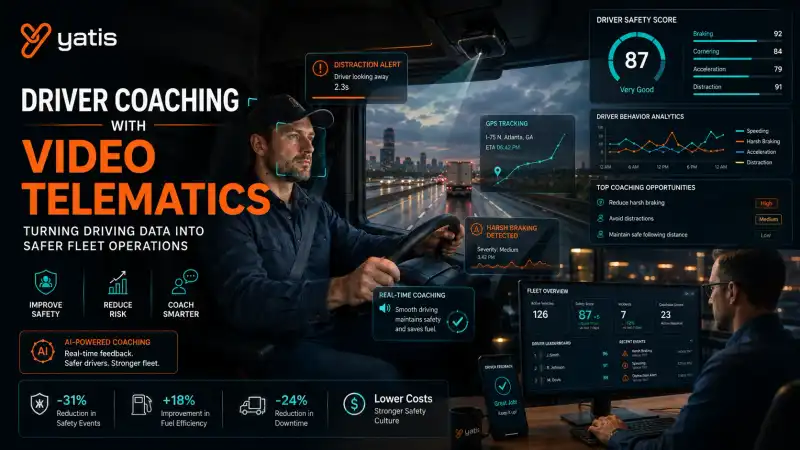
Video telematics changes this by providing actual driving context supported by video footage, speed data, braking behavior, GPS tracking, and AI-detected safety events. Instead of guessing what happened, managers can review real driving situations objectively.
That creates more productive coaching conversations.
How Video Telematics Supports Driver Coaching
Modern video telematics systems can automatically detect risky driving behaviors and flag them for review.
Common examples include:
- harsh braking
- rapid acceleration
- distracted driving
- mobile phone usage
- tailgating
- lane drifting
- speeding
- fatigue indicators
When these events occur, fleet managers receive alerts along with supporting video and telematics data. This allows coaching to become faster, more specific, data-driven, and easier to document.
Instead of general feedback like “Drive more carefully,” managers can discuss actual incidents with clear context.
Why Drivers Often Respond Better to Video-Based Coaching
One of the biggest challenges in fleet safety programs is subjectivity. Without evidence, coaching conversations can sometimes feel personal or unfair to drivers.
Video telematics reduces that tension because both the driver and the manager can review the same event together.
For example:
- Was the driver forced to brake suddenly?
- Was another vehicle driving aggressively?
- Was distraction involved?
- Could the situation have been avoided?
The discussion becomes focused on improvement rather than blame. In many fleets, this leads to stronger driver accountability, better communication, improved trust in safety processes, and fewer repeat safety violations.
Driver Coaching Helps Reduce Long-Term Risk
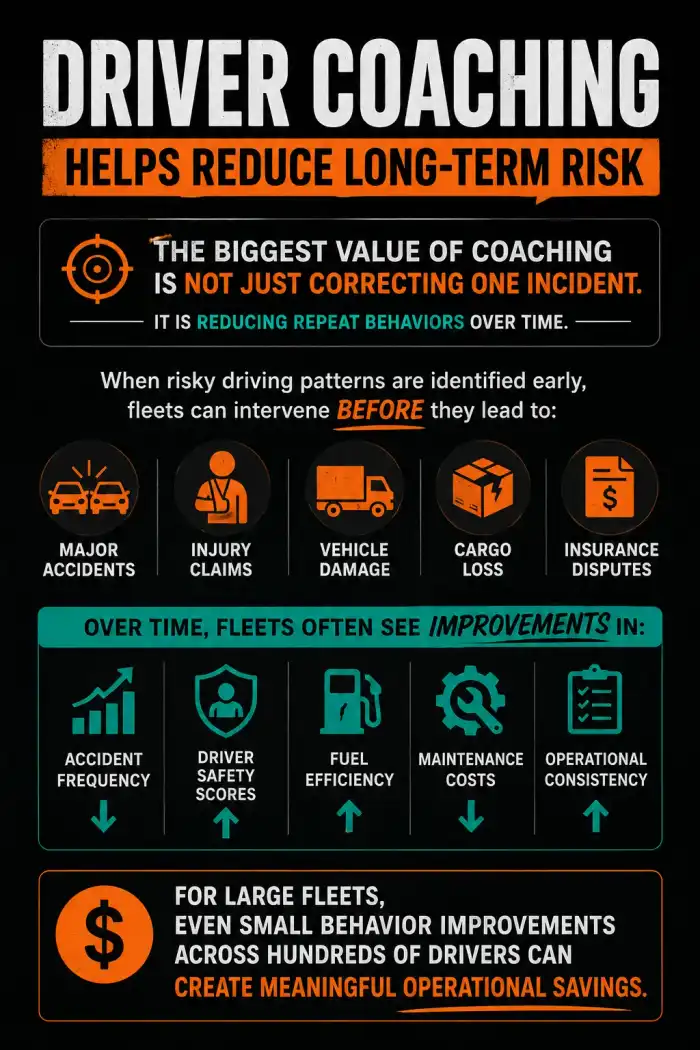
The biggest value of coaching is not just correcting one incident. It is reducing repeat behaviors over time.
When risky driving patterns are identified early, fleets can intervene before they lead to major accidents, injury claims, vehicle damage, cargo loss, or insurance disputes.
Over time, fleets often see improvements in accident frequency, driver safety scores, fuel efficiency, maintenance costs, and operational consistency.
For large fleets, even small behavior improvements across hundreds of drivers can create meaningful operational savings.

Coaching Should Be Consistent, Not Punitive
One common mistake fleets make is using video telematics only after something goes wrong. That approach usually creates resistance from drivers.
The most effective coaching programs use telematics consistently as part of ongoing safety improvement rather than punishment.
Successful fleets typically:
- review trends regularly
- recognize positive driving behavior
- coach early instead of waiting for accidents
- use clear safety policies
- keep coaching conversations practical and respectful
Drivers are more likely to engage when they understand that the system exists to improve safety, not simply monitor activity.
Real-Time Alerts Create Faster Interventions
Another major advantage of video telematics is speed. Instead of waiting for weekly reports, managers can receive alerts immediately when high-risk events occur.
This allows fleets to respond faster, coach drivers sooner, prevent repeat behavior, and identify urgent safety concerns quickly.
For example, repeated distracted driving alerts from the same driver may indicate a serious operational risk that requires immediate attention. Without telematics visibility, those patterns may go unnoticed until an accident happens.
What Fleets Should Look for in a Driver Coaching System
Not every video telematics platform supports coaching effectively. Fleet operators should look for systems that include:
- AI-based event detection
- easy video review
- driver scoring tools
- centralized dashboards
- customizable alerts
- trend reporting
- coaching history documentation
The system should help managers simplify coaching workflows, not create more manual work. Ease of use matters, especially for large or multi-location fleets.
Driver Coaching Is Becoming Part of Modern Fleet Safety
Fleet safety today is no longer only about responding to accidents. It is increasingly about preventing them before they happen.
Video telematics gives fleet managers visibility into everyday driving behavior in a way traditional reporting systems never could.
That visibility helps fleets reduce preventable incidents, improve accountability, support drivers more effectively, and build stronger long-term safety cultures.
For fleets managing growing operational pressure, driver coaching supported by real-world data is becoming an important part of modern risk management.
Frequently Asked Questions
Ready to improve driver safety?
Contact Yatis Telematics to learn how our AI-powered video telematics solutions can help your fleet build safer driving habits and reduce operational risk.
Contact Us →