

The Hidden Operational Cost of Poor BESS Monitoring

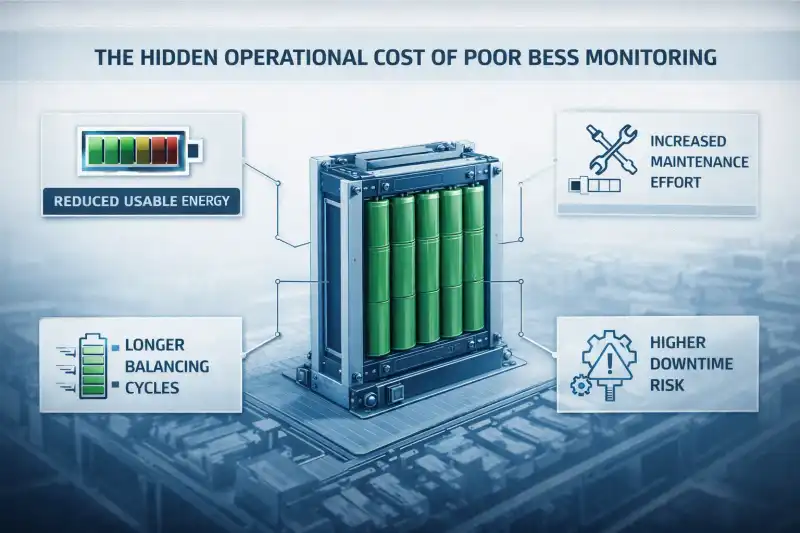
Battery Energy Storage Systems are often evaluated by installed capacity, efficiency targets, and discharge performance, but one of the largest long-term cost drivers is often less visible: weak operational monitoring. In many battery projects, performance losses do not begin with major faults. They begin with small technical deviations that remain unnoticed until energy output, battery life, or maintenance effort is affected.
Without strong BESS monitoring, battery operators often respond only after visible alarms appear, by which time the financial impact has already started accumulating.
Why Small Battery Deviations Become Expensive
A battery system may continue operating even while hidden inefficiencies develop internally.
Common examples include:
- Slow voltage divergence across cells
- Recurring thermal drift
- Balancing inefficiency
- Unnoticed current stress
- Repeated minor discharge irregularities
Each issue may appear operationally minor, but over time they reduce battery efficiency and increase maintenance intervention.
How Poor Monitoring Reduces Battery Value
The most immediate hidden cost of weak monitoring is lower usable energy.
When small anomalies are missed:
- Charging efficiency declines
- Discharge consistency weakens
- Balancing cycles increase
- Available runtime shortens
This means the battery delivers less practical value than expected, even before visible degradation becomes obvious.
Maintenance Costs Rise Without Early Visibility
Without continuous battery visibility, maintenance often becomes reactive.
Teams may spend more time investigating alarms after performance has already changed rather than acting on early technical signals.
This often leads to:
- Delayed troubleshooting
- Unnecessary inspections
- Repeated manual checks
- Longer maintenance cycles
Why Downtime Becomes More Likely
Poor battery monitoring systems also increase downtime risk because early anomalies can remain active across multiple cycles.
A battery string with repeated imbalance or thermal variation may continue operating until one event forces a larger intervention.
Monitoring Improves Operational Decisions
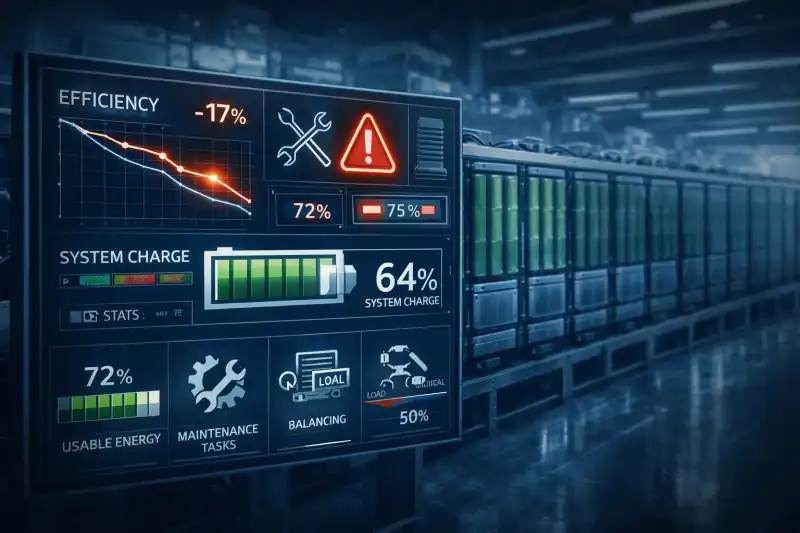
Modern monitoring platforms help operators identify performance drift before it affects system output.
This improves decisions around:
- Balancing priorities
- Cooling adjustments
- Maintenance scheduling
- Battery life planning
Frequently Asked Questions
Conclusion
Poor battery monitoring rarely creates one visible cost at once. Instead, it gradually reduces efficiency, increases intervention, and weakens long-term asset performance.
For operators managing battery performance over time, Yatis supports connected BESS monitoring that helps surface hidden performance losses before they affect asset value.
Reduce Hidden Battery Costs
Contact Yatis Telematics to learn how comprehensive BESS monitoring can help you identify performance losses early and protect your battery investment.
Contact Us →