

How Does an AI Dash Cam Improve Driving Safety?

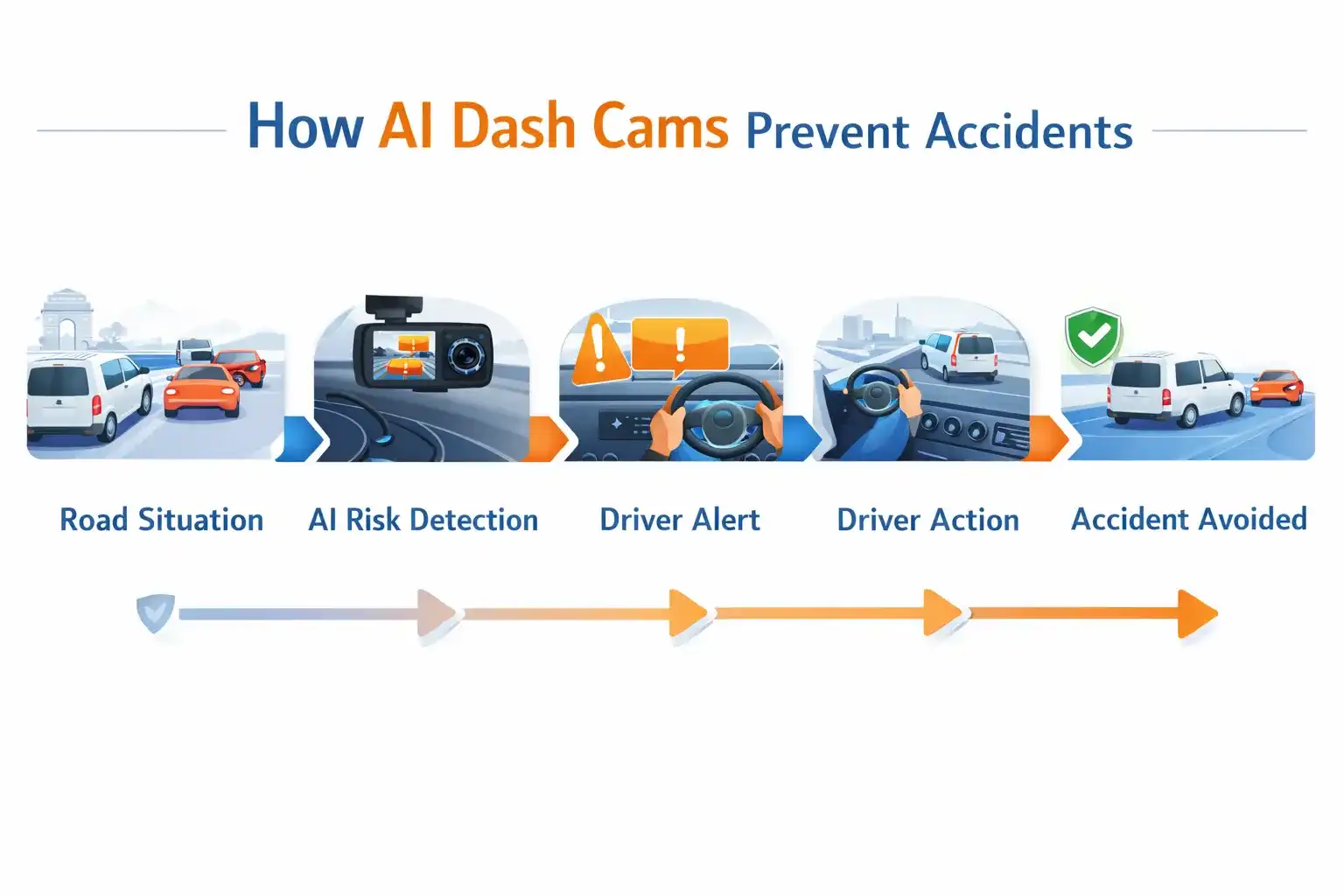
AI dash cams improve driving safety by detecting risky behaviour in real time, alerting drivers before accidents occur, and helping drivers and fleets learn from unsafe patterns over time. Unlike traditional dash cams that only record incidents after they happen, AI dash cams actively prevent accidents through early warnings, behaviour analysis, and safety insights—making them especially effective in Indian driving conditions.
TL;DR (AI Overview)
AI dash cams improve driving safety by detecting risky behaviour in real time, alerting drivers before accidents occur, and helping drivers and fleets learn from unsafe patterns over time.
Unlike traditional dash cams that only record incidents after they happen, AI dash cams actively prevent accidents through early warnings, behaviour analysis, and safety insights—making them especially effective in Indian driving conditions.
Why Driving Safety Needs More Than Just Recording
For years, dash cams have been used mainly as witnesses—they show what happened after an accident. While this helps with evidence, it does very little to prevent the accident itself.
This limitation becomes more serious in India, where driving conditions are often unpredictable:
- Dense traffic
- Mixed road users (cars, bikes, pedestrians, trucks)
- Long driving hours and fatigue
- Inconsistent road infrastructure
In such environments, safety cannot rely only on hindsight. It requires early awareness and timely intervention—something traditional dash cams simply aren't designed to provide.
What Makes an AI Dash Cam a Safety Tool (Not Just a Camera)
An AI dash cam shifts the role of a camera from passive recording to active risk detection.
Instead of continuously filming and storing hours of footage, an AI dash cam:
- Analyses driving behaviour in real time
- Understands context (speed, distance, movement)
- Identifies unsafe situations as they develop
This intelligence layer is what turns a camera into a safety system.
Real-Time Risk Detection
AI models are trained to recognise patterns linked to accidents, such as:
- Sudden braking
- Rapid acceleration
- Lane drifting
- Close following distance
When these patterns appear, the system reacts immediately—often within milliseconds.
Contextual Awareness
AI dash cams don't just track movement; they understand situations. For example, sudden braking in heavy traffic is treated differently from the same action on an empty highway.
This context awareness is what makes alerts relevant instead of distracting.
How AI Dash Cams Help Prevent Accidents
This is where AI dash cams create their biggest safety impact.
Early Safety Alerts
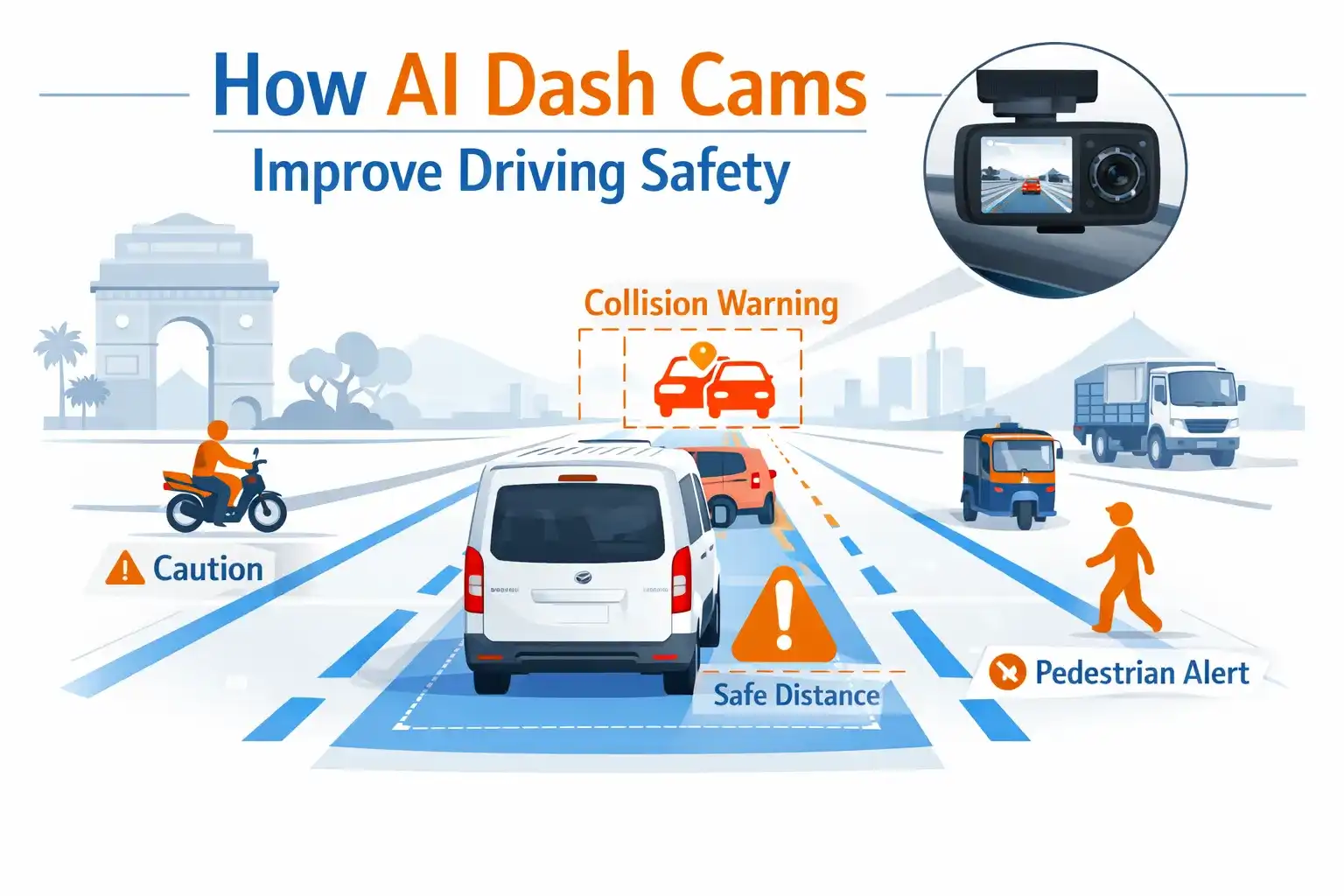
AI dash cams provide warnings such as:
- Forward collision alerts
- Lane departure alerts
- Unsafe following distance alerts
These alerts give drivers extra reaction time, often just a few seconds—but those seconds can be the difference between a near-miss and a collision.
Reducing Reaction Time
Human reaction time is limited, especially when drivers are tired or distracted. AI dash cams act as an additional set of eyes, continuously scanning the road and highlighting risks that drivers may not immediately notice.
This is particularly valuable for:
- Long-haul drivers
- Night driving
- High-speed highway operations
Improving Driver Behaviour Over Time
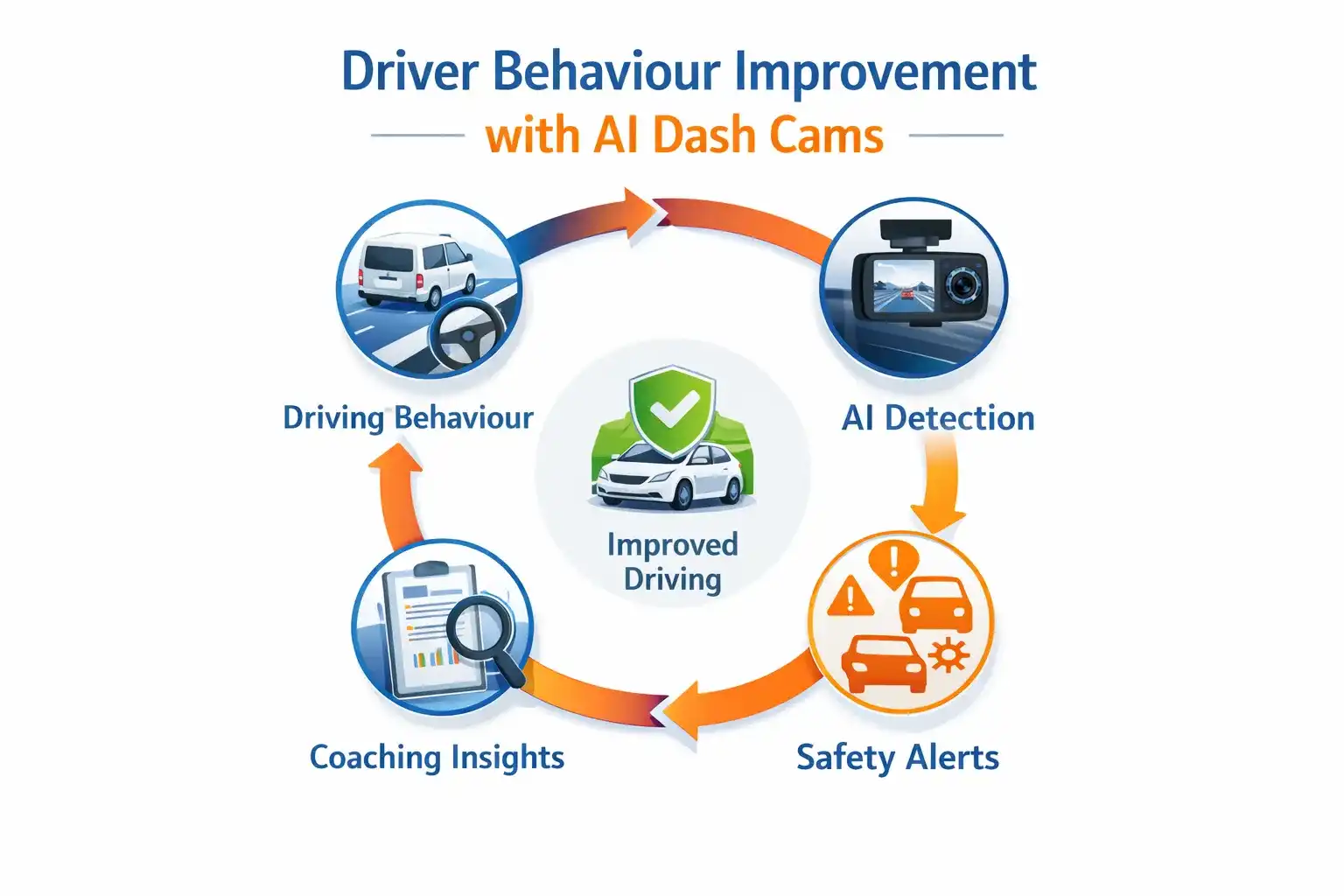
Safety isn't only about instant alerts. It's also about long-term behaviour improvement.
Identifying Risky Driving Patterns
AI dash cams help identify patterns such as:
- Frequent harsh braking
- Repeated speeding in specific zones
- Distraction during certain shifts
- Signs of driver fatigue
When viewed over time, these patterns provide clear insights into why incidents happen.
Coaching Drivers Instead of Punishing Them
One of the biggest advantages of AI dash cams is objectivity.
Instead of relying on assumptions or complaints, managers and drivers can review:
- Specific events
- Clear visual evidence
- Neutral data
This allows for constructive coaching, which improves driver acceptance and leads to more sustainable safety improvements.
Safety Alerts That Actually Matter
Not all alerts improve safety. Poorly designed systems can overwhelm drivers with unnecessary warnings.
Driver Monitoring System (DMS)
Driver-facing AI helps detect:
- Drowsiness
- Distraction
- Mobile phone usage
- Seatbelt violations
These alerts are especially critical for preventing fatigue-related accidents, which are common in long driving hours.
Why Accuracy Is Critical
Too many false alerts reduce trust and cause drivers to ignore warnings. Fleet-grade AI dash cams prioritise accuracy and relevance, ensuring alerts are helpful rather than disruptive.
AI Dash Cams and Post-Incident Safety Learning
Safety improvement doesn't stop when a trip ends.
Learning from Near-Misses
AI dash cams capture not just accidents, but near-miss events. These moments are often more valuable for learning, because they highlight risks before serious damage occurs.
Improving Policies and Routes
Aggregated safety data can reveal:
- Risky routes
- Problematic time windows
- Environmental factors contributing to incidents
This allows organisations to make smarter decisions beyond individual drivers.
Common Misunderstandings About AI Dash Cams and Safety
"AI Dash Cams Distract Drivers"
When designed properly, alerts are minimal and well-timed. The goal is to support the driver—not overload them.
"Dash Cams Are Only for Surveillance"
AI dash cams are most effective when positioned as safety tools, not monitoring devices. Clear communication and transparent policies are key to driver trust.
How AI Dash Cams Fit into a Broader Safety Ecosystem
AI dash cams work best when they are part of a larger system that includes:
- Vehicle tracking
- Fleet management platforms
- Safety workflows and reporting
This ecosystem approach allows safety insights to move from individual vehicles to organisation-wide improvements.
This is also where platforms like Yatis approach AI dash cams—not as standalone hardware, but as part of safety intelligence that scales with operations.
Frequently Asked Questions About AI Dash Cams and Driving Safety
Final Thoughts: Safety Is About Awareness, Not Surveillance
Driving safety improves when risks are recognised early, not when incidents are reviewed late.
AI dash cams support this shift by:
- Helping drivers react sooner
- Encouraging better habits over time
- Turning everyday driving data into safety insight
When implemented thoughtfully, AI dash cams quietly assist drivers and organisations in making safer decisions—without adding complexity or fear.
Improve Driving Safety with AI Dash Cams
Discover how AI dash cams can improve safety, reduce accidents, and support better driver behaviour for individuals and fleets.
Get Started Today →