

How to Choose a Transport Management System for Logistics Companies (2026 Guide)

Choosing the right transport management system (TMS) for a logistics company requires evaluating real-time visibility, scalability, integration capabilities, cost transparency, and operational fit. In 2026, the best TMS platforms go beyond tracking to provide decision intelligence, automation, and compliance readiness.
Why Choosing the Right TMS Is a Strategic Decision
For logistics companies, transport is not a support function — it is the business itself.
A poorly chosen transport management system leads to:
- Fragmented visibility
- Manual firefighting
- Rising operational costs
- Customer dissatisfaction
- Scalability bottlenecks
A well-chosen TMS, on the other hand, becomes a control tower for logistics operations.
What Is a Transport Management System (TMS) in Logistics?
A transport management system helps logistics companies plan, execute, monitor, and optimise the movement of goods across fleets, routes, and partners.
For logistics companies specifically, a TMS must handle:
- Multi-client operations
- Variable routes and schedules
- Exception handling
- Real-time coordination
- Performance measurement
This makes TMS selection more complex than for in-house fleets.
Common Mistakes Logistics Companies Make When Choosing a TMS
Mistake 1: Choosing Based on Features Alone
A long feature list does not equal operational fit.
Mistake 2: Overbuying Enterprise Software
Many logistics companies buy systems built for Fortune-500 complexity — and never fully use them.
Mistake 3: Ignoring Integration Needs
A TMS that cannot integrate with ERP, WMS, or customer systems becomes a silo.
Mistake 4: Treating TMS as "Just Tracking"
Tracking without intelligence only shifts problems from phone calls to dashboards.
Key Criteria to Choose the Right Transport Management System
1. Real-Time Operational Visibility (Non-Negotiable)
A logistics TMS must provide:
- Live vehicle and shipment visibility
- Route adherence monitoring
- Delay and exception alerts
This enables proactive service management instead of reactive explanations.
2. Scalability Across Clients and Fleet Sizes
Your TMS should scale across:
- Different customer SLAs
- Mixed fleet sizes
- Regional expansions
If adding new clients requires heavy reconfiguration, the system will slow growth.
3. Integration with Logistics Ecosystem
A logistics TMS must integrate with:
- ERP (billing, invoicing)
- WMS (dispatch, fulfillment)
- Customer portals
- Partner systems
API-first platforms provide long-term flexibility.

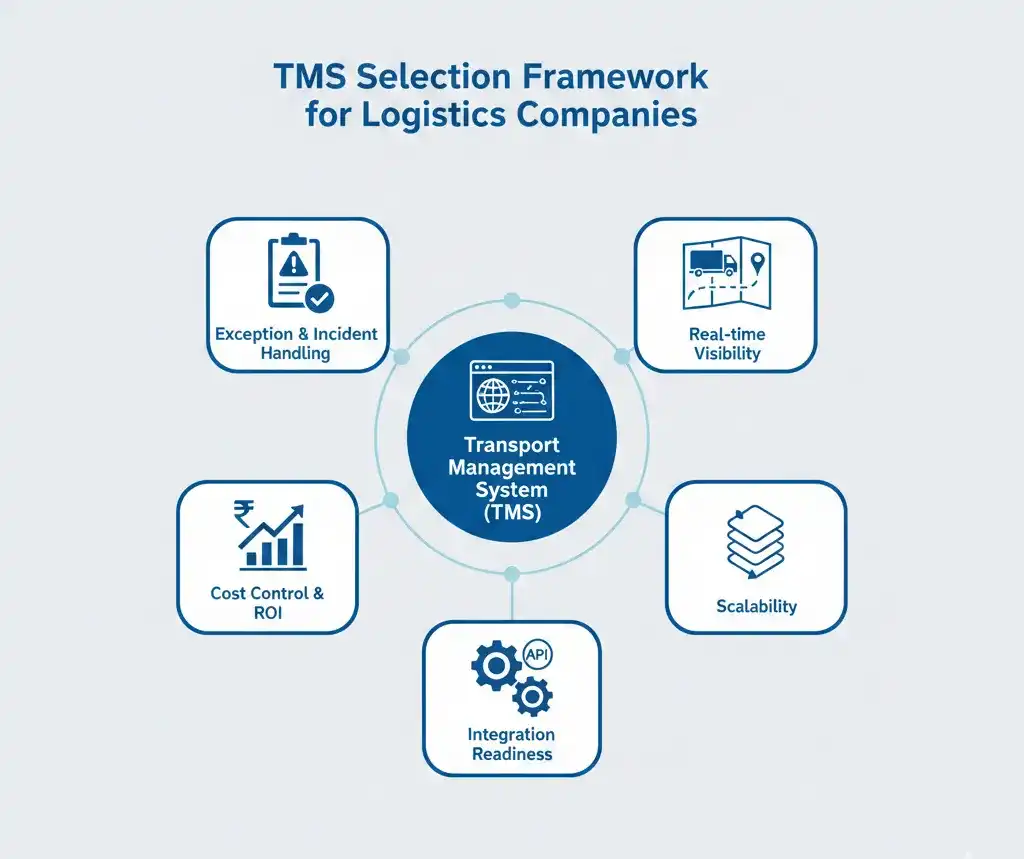
4. Cost Transparency and ROI Visibility
Logistics margins are thin.
A good TMS helps you:
- Track cost per trip
- Identify inefficiencies
- Reduce idle time and detours
Without cost insight, software becomes an expense — not an asset.
5. Exception and Incident Management
Logistics operations are unpredictable.
Your TMS should help manage:
- Route deviations
- Delays
- Vehicle breakdowns
- Safety incidents
This is where advanced systems separate themselves from basic tracking tools.
Transport Management System vs Custom Logistics Software
Many logistics companies consider building custom solutions.
Reality check:
- Custom software is expensive to maintain
- Updates lag behind regulatory and tech changes
- Scaling becomes painful
Modern TMS platforms offer configurability without custom build risk.
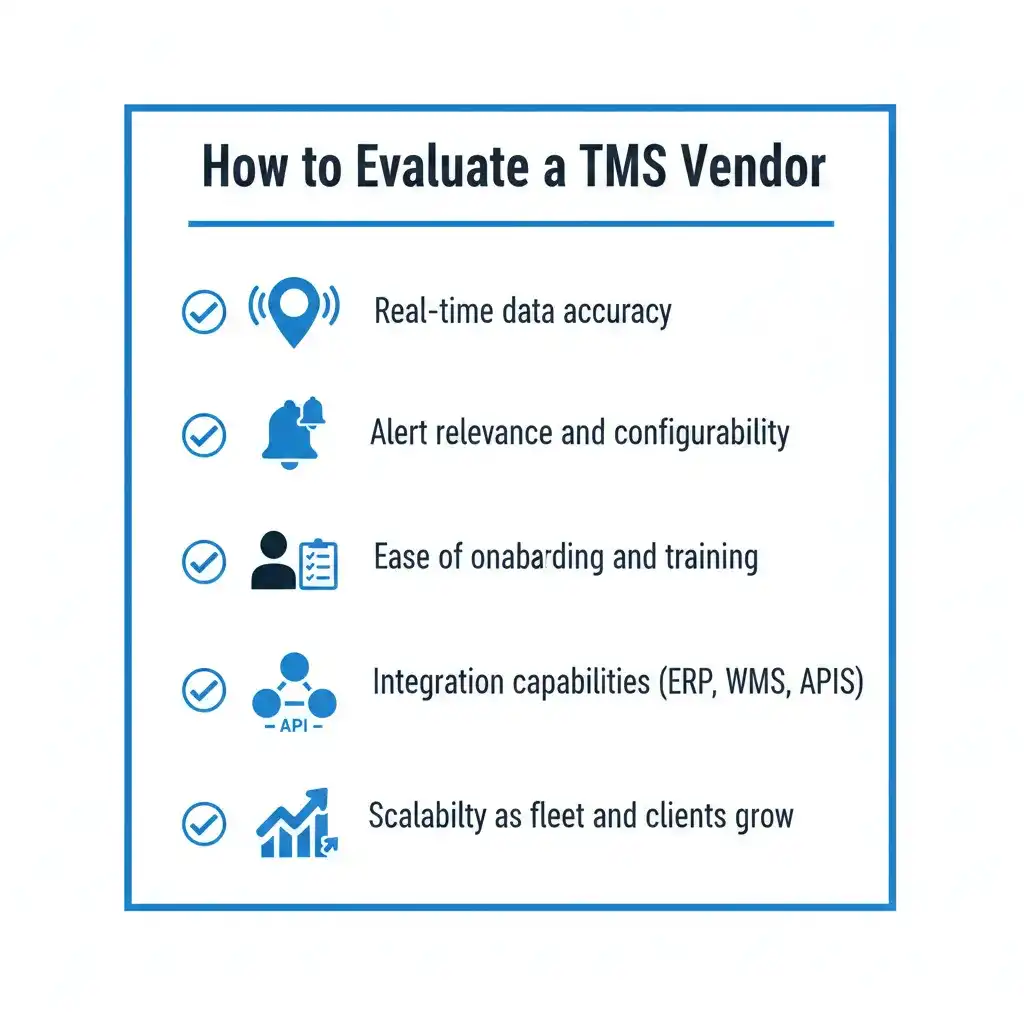
How to Evaluate a TMS Vendor (Practical Checklist)
Ask vendors these questions:
- How quickly is data updated?
- Can alerts be customised per client?
- How easy is onboarding for new users?
- What integrations are available out-of-the-box?
- How does the system handle growth?
If answers are vague, the system likely is too.
Where Modern Platforms Like Yatis Fit
Platforms such as Yatis Telematics approach transport management as a scalable logistics intelligence layer.
For logistics companies, this means:
- Real-time fleet visibility
- Actionable alerts
- Safety and compliance readiness
- API-driven integrations
- Ability to start small and scale
This approach suits logistics businesses that want operational control today and flexibility tomorrow.
When Is the Right Time to Implement a TMS?
You likely need a TMS if:
- Manual coordination is increasing
- Customer SLAs are harder to meet
- Fleet size or route complexity is growing
- Visibility gaps are causing disputes
The earlier a TMS is implemented, the easier it is to scale cleanly.
FAQs (People Also Ask – Optimised)
How do logistics companies choose a transport management system?
By evaluating real-time visibility, scalability, integration capability, and operational fit.
Is a TMS suitable for small logistics companies?
Yes. Many modern TMS platforms are modular and scale with business size.
What is the biggest mistake when selecting a TMS?
Choosing software that does not align with actual operational workflows.
Clear CTA (Soft, Decision-Oriented)
Choosing the right transport management system is not about buying software — it's about enabling reliable, scalable logistics operations.
If you're evaluating options, focus on visibility, intelligence, and integration — not just features.
👉 Explore modern transport management approaches with Yatis Telematics