

How to Track a Bus Location in Real Time (Step-by-Step Guide)

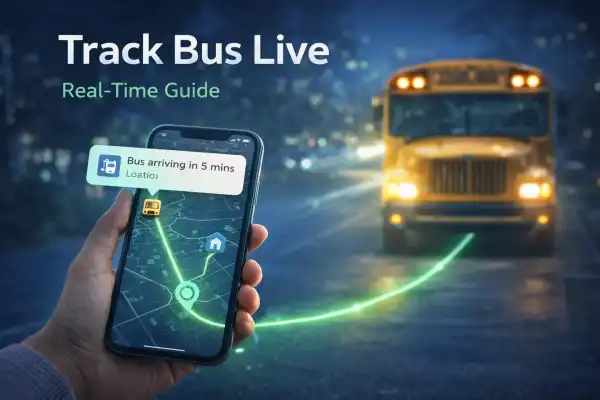
If you've ever asked, “How can I track a bus location in real time?” you're not alone. Parents want to know when the school bus will arrive. Fleet operators want visibility across routes. Transport teams want fewer delays and better control.
The good news? Tracking a bus today is simple — if you use the right method.
What Is Bus Tracking?
Bus tracking is the process of monitoring a bus location in real time using GPS technology and connected software systems. It allows users to view live location on a map, track routes and stops, and receive alerts and updates.
How to Track a Bus Location (3 Methods)
1. Using a GPS Bus Tracking System (Best Method)
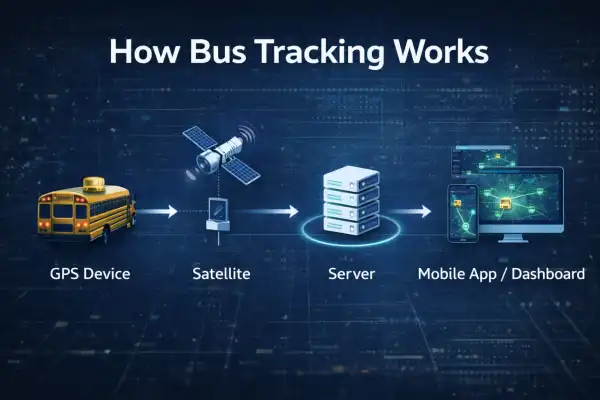
This is the most reliable and widely used method. A GPS device is installed in the bus, it sends location data to a server, and users view the location via app or dashboard. You get real-time tracking, route monitoring, and arrival/delay/deviation alerts. This is the standard method used by schools and transport fleets.
2. Using Mobile Apps (Limited Use)
Some transport providers offer apps for tracking buses, but these depend on system integration, are not always real-time, and offer limited visibility. Apps only work if a backend GPS system exists — they're an interface, not a solution.
3. Manual Tracking (Outdated Method)
This includes calling drivers, checking manually, and estimating arrival times. Manual tracking is inaccurate, time-consuming, and unreliable — not suitable for modern operations.
Why GPS Tracking Is the Only Scalable Solution
Without GPS tracking, there is no real-time visibility, delays go unnoticed, and safety monitoring is weak. With GPS tracking, you get live location updates, route transparency, better coordination, and improved safety. There is no scalable alternative for managing more than a handful of vehicles.
What Features You Should Look For
A good bus GPS tracking system should include real-time tracking, geo-fencing alerts, route history, arrival notifications, and dashboard access. For school buses, additional features matter: parent notifications, student safety alerts, and SOS functionality.
Real-World Use Case: School Bus Tracking
In school transport, parents track bus arrival, schools monitor routes, and admins manage the fleet. Modern systems like those from Yatis Telematics provide live tracking dashboards, notification systems, route monitoring, and compliance support. This turns tracking into a complete safety and visibility system.
Common Mistakes to Avoid
- Relying only on phone calls to drivers
- Using non-real-time apps that show delayed data
- Choosing low-cost trackers without platform support
Tracking is only useful if it's accurate and consistent.
Frequently Asked Questions
Ready to implement real bus tracking?
Yatis Telematics combines real-time GPS tracking with alerts, dashboards, and operational visibility for schools and fleets.
Contact Us →