

ROI of Video Telematics for Commercial Fleets

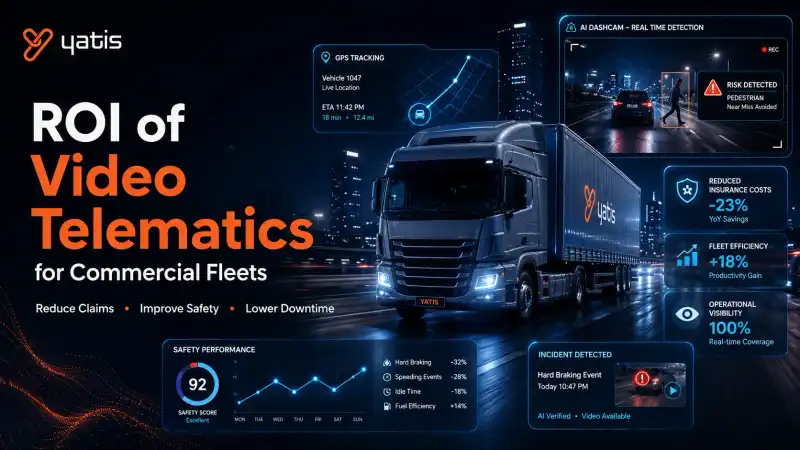
For many fleet operators, the biggest question about video telematics is simple: Is it actually worth the investment?
The answer usually depends on how fleets measure cost.
If video telematics is viewed only as a camera expense, the value may seem limited. But when fleets look at the broader operational impact — accidents, claims, downtime, insurance exposure, and driver safety — the return becomes much easier to understand.
Video telematics is not only about recording incidents. It is about reducing the operational costs that come from poor visibility and delayed response.
The Hidden Costs of Fleet Incidents
Accidents affect more than vehicle repairs. Even a relatively small incident can create:
- delivery delays
- vehicle downtime
- administrative workload
- insurance disputes
- driver replacement costs
- legal expenses
- customer service disruptions
For larger fleets, these costs compound quickly across operations.
In many cases, the biggest financial impact comes from repeated unsafe driving behavior, slow investigations, unresolved claims, and lack of incident evidence. That is where video telematics creates operational value.
How Video Telematics Reduces Accident-Related Costs
Video telematics combines AI dashcams, GPS tracking, driver behavior monitoring, real-time alerts, incident footage, and operational analytics. This helps fleets identify risks earlier and respond faster when incidents occur.
Over time, fleets often see reductions in preventable accidents, false claims, investigation delays, unsafe driving events, and vehicle misuse.
Even small improvements in safety performance can create measurable cost savings across a commercial fleet.

Faster Claims Resolution Saves Time and Money
Claims investigations become expensive when evidence is unclear. Without video footage and telematics data, fleets may spend days collecting reports, reconstructing events, communicating with insurers, and resolving liability disputes.
Video telematics simplifies that process by providing timestamped footage, speed data, GPS location, braking history, and event timelines.
Faster access to evidence often means quicker investigations, lower administrative burden, reduced downtime, and improved claims handling.
For fleets managing frequent road exposure, those operational savings can become significant over time.
Driver Coaching Improves Long-Term Fleet Performance
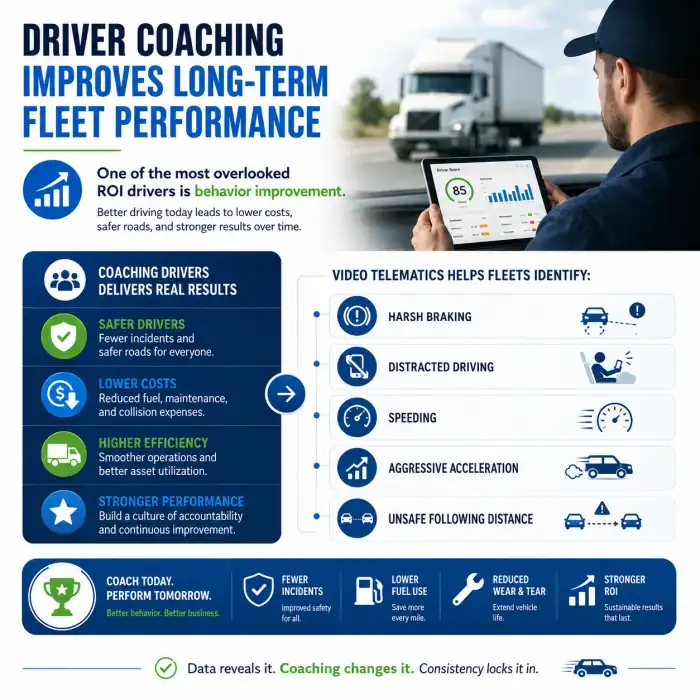
One of the most overlooked ROI drivers is behavior improvement. Video telematics helps fleets identify harsh braking, distracted driving, speeding, aggressive acceleration, and unsafe following distance.
Managers can then coach drivers using actual driving events instead of assumptions.
As coaching programs mature, fleets often improve accident frequency, fuel efficiency, vehicle wear, safety compliance, and driver accountability.
The financial impact may not appear immediately, but long-term operational consistency creates measurable value.
Reduced Downtime Improves Fleet Productivity
Vehicle downtime affects revenue directly. When incidents lead to long investigations or delayed reporting, vehicles may remain inactive longer than necessary.
Real-time telematics visibility helps fleets review incidents faster, dispatch support quickly, coordinate repairs sooner, and reduce operational disruption.
For delivery fleets, logistics providers, and high-mileage operations, even small downtime reductions can improve fleet productivity considerably.
Insurance Pressure Is Increasing Across Fleets
Insurance costs remain a growing concern for commercial fleet operators. Many insurers now expect stronger risk-management practices and more detailed incident documentation.
Video telematics supports this by helping fleets improve safety visibility, document incidents accurately, support claims investigations, and monitor driver behavior consistently.
While savings vary between operations, stronger visibility and better risk management can help fleets improve their overall insurance position over time.
ROI Depends on Operational Adoption
Technology alone does not create results. The fleets that see the strongest return from video telematics usually:
- review incidents consistently
- coach drivers regularly
- monitor safety trends
- respond to alerts quickly
- integrate telematics into daily operations
When systems are installed but rarely reviewed, the operational value becomes limited. Video telematics works best when it becomes part of the fleet's ongoing safety and risk-management process.
What Fleets Should Measure
To evaluate ROI accurately, fleets should track:
- accident frequency
- claims resolution time
- unsafe driving events
- driver coaching improvements
- vehicle downtime
- insurance trends
- fuel efficiency changes
Measuring operational trends over time gives fleets a clearer understanding of where video telematics is creating value.
Video Telematics Is Becoming a Long-Term Operational Investment
For commercial fleets, safety and operational visibility are increasingly connected. Video telematics helps fleets move from reactive incident management toward proactive risk reduction.
That shift can improve safety performance, operational efficiency, claims handling, driver accountability, and long-term cost control.
The return is not always tied to one major event. In many cases, it comes from reducing small operational inefficiencies and preventable risks consistently over time. For fleets operating at scale, that visibility can become a meaningful operational advantage.
Frequently Asked Questions
Ready to measure your fleet's ROI?
Contact Yatis Telematics to learn how our video telematics solutions reduce operational costs and improve safety across your commercial fleet.
Contact Us →