

Transport Management Systems Offering Automated Route Planning

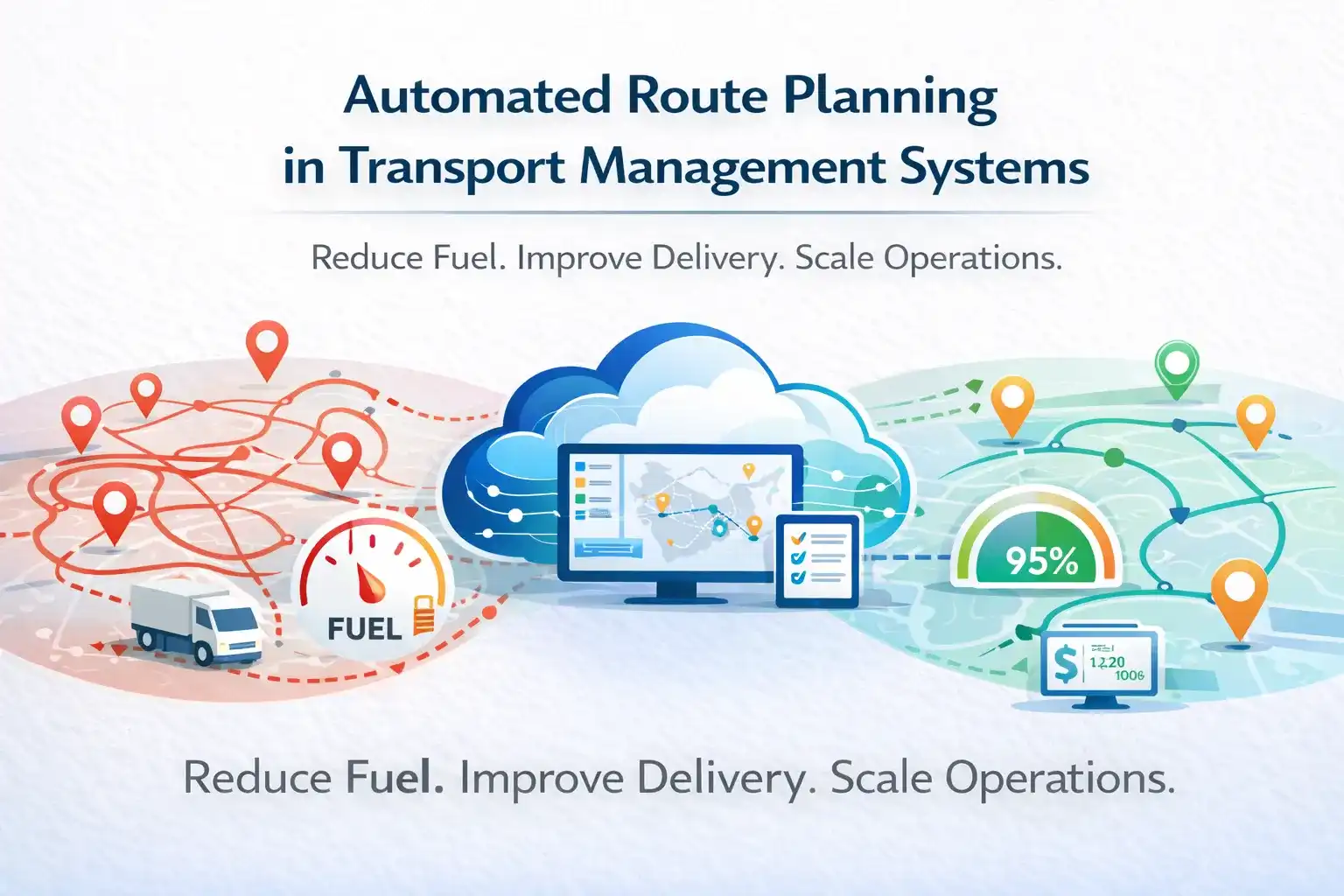
Automated route planning in transport management systems (TMS) uses algorithms and operational data to optimise delivery routes based on distance, traffic, vehicle capacity, time windows, and constraints. Manual route planning becomes inefficient and costly as fleets grow, leading to fuel wastage, delays, and driver inefficiencies. Modern TMS platforms help scale route optimisation realistically — but only when combined with accurate data and performance monitoring.
Why Route Planning Is a Critical Transport Cost Driver
Route planning is not just an operational task. It directly influences profitability. As fleet sizes increase and delivery networks become more complex, inefficient routing compounds into a measurable financial impact.
Fuel Costs
Fuel is one of the largest recurring expenses in transport operations. Poorly optimised routes lead to:
- Unnecessary detours
- Excess idling
- Longer travel distances
- Repeated urban congestion exposure
Even small inefficiencies across multiple vehicles can significantly increase monthly fuel expenditure.
Time Delays
Delays affect more than just delivery timelines. They impact:
- Customer satisfaction
- Contract penalties
- Driver productivity
- Fleet utilisation
Manual route planning often fails to adapt dynamically when road conditions change.
Driver Inefficiencies
When routes are unclear or constantly adjusted manually, drivers rely on instinct instead of structured planning, communication gaps increase, and accountability decreases. Structured automated planning improves clarity and consistency across the fleet.
What Automated Route Planning in TMS Actually Does
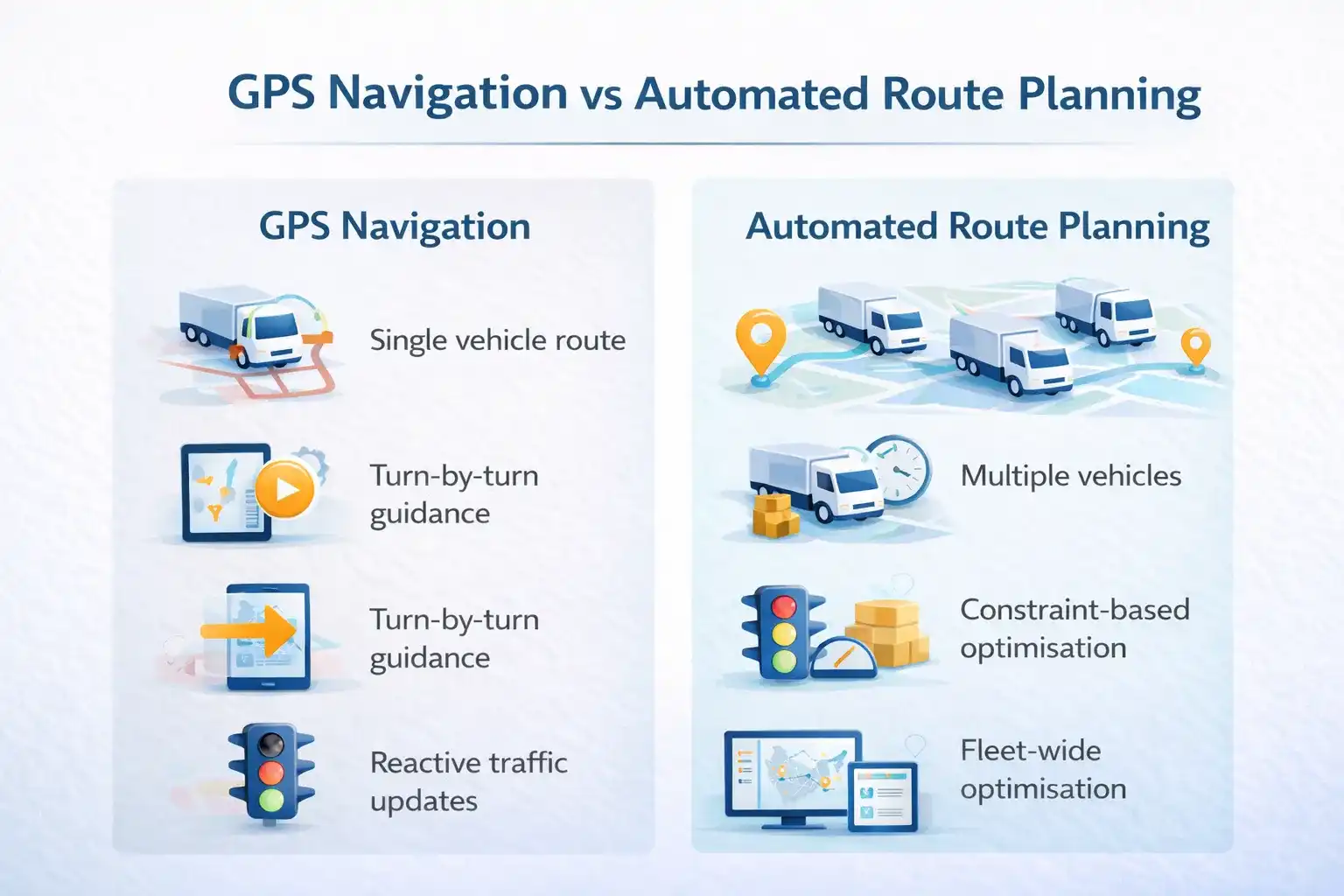
Many businesses misunderstand what automated route planning truly delivers. It is not just map navigation. It is a structured optimisation system.
Static vs Dynamic Routing
- Static routing: Predefined routes that rarely change.
- Dynamic routing: Routes recalculated based on real-time inputs like traffic, delays, or order changes.
Modern TMS platforms support dynamic adjustments for operational agility.
Constraints-Based Optimisation
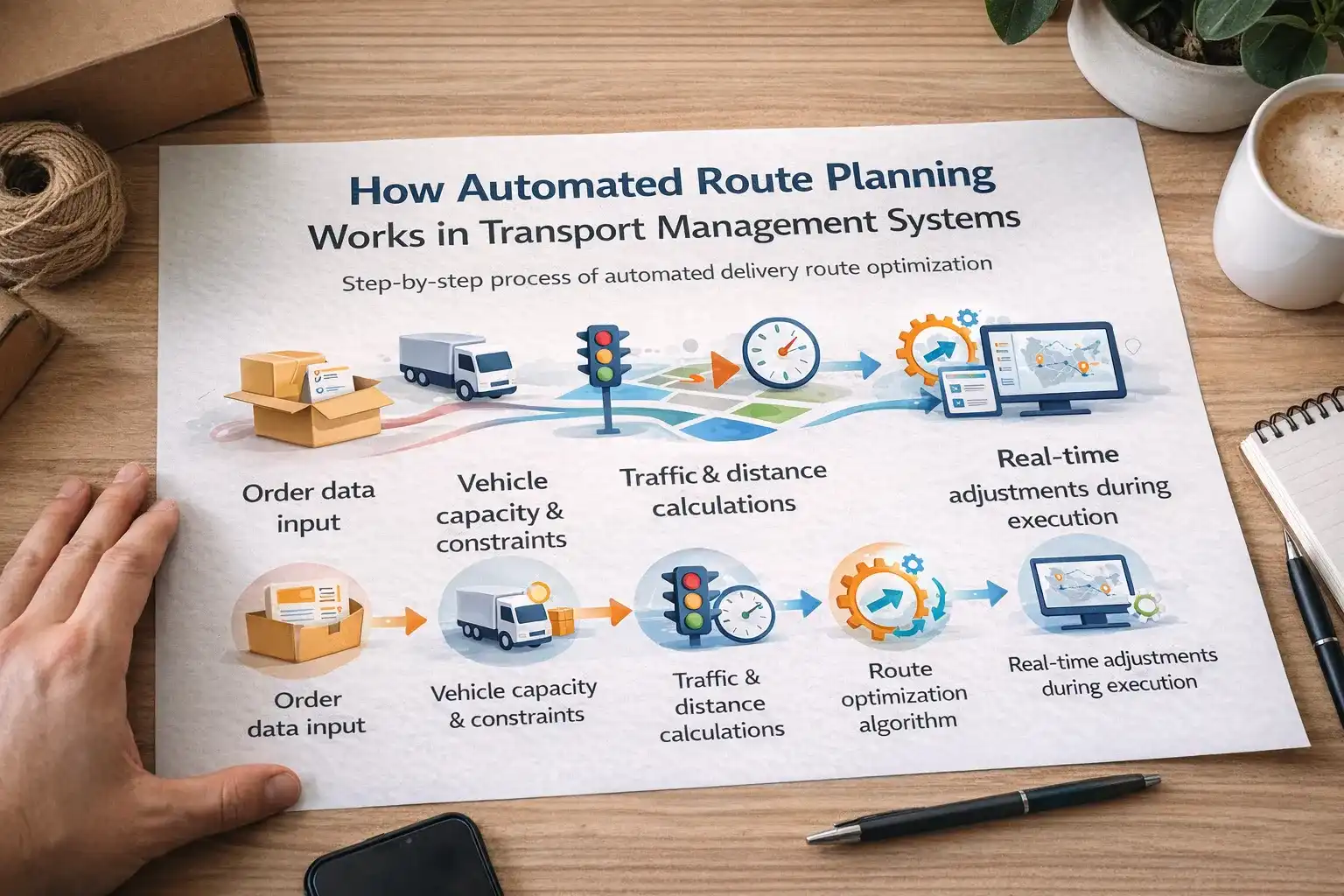
Automated route planning considers constraints such as:
- Vehicle capacity
- Delivery time windows
- Driver shift limits
- Restricted zones
The system generates routes that meet operational rules while minimising distance and cost.
Real-Time Adjustments
Advanced platforms adjust routes when:
- Traffic conditions shift
- Orders are added or cancelled
- Vehicles experience delays
This real-time adaptability becomes essential in dense urban environments across Indian logistics operations.
Key Features of TMS with Automated Route Planning
When evaluating transport management systems offering route planning, fleets should look for the following capabilities:
Multi-Stop Optimisation
Multiple delivery points, order sequences, and shortest total distance calculations. Critical for last-mile and distribution-heavy operations.
Time Windows
Customer delivery windows, warehouse loading schedules, and driver working hour limits are built into route generation.
Vehicle Capacity Logic
Weight limits, volume capacity, and special cargo requirements are factored into route assignments.
Traffic Awareness
Congestion, road closures, and peak-hour delays are integrated into route decisions to reduce real-world delays.
Automated Route Planning vs GPS Navigation
| GPS Navigation | Automated Route Planning (TMS) |
|---|---|
| Turn-by-turn guidance for one journey | Optimises entire fleets simultaneously |
| Reacts to immediate traffic | Plans ahead using constraints and data |
| Single vehicle focus | Balances multiple vehicles and loads |
| Tactical navigation | Strategic fleet optimisation |
GPS is tactical navigation. Automated route planning is strategic fleet optimisation.
Use Cases Where Automated Route Planning Delivers Real ROI
Urban Delivery
Traffic-aware routing, multi-stop sequencing, and reduced idle time in dense city environments make automated planning essential for urban delivery fleets in India.
Long-Haul Logistics
Efficient stop planning, reduced detours, and better rest stop scheduling improve driver adherence and fuel efficiency over long distances.
Multi-Drop Freight
Significant time savings, lower fuel consumption, and improved route consistency are measurable benefits for multi-drop freight operations.
Limitations of Route Planning Tools
Garbage Data In = Garbage Routes
If delivery addresses are inaccurate, vehicle capacity data is incorrect, or order inputs are incomplete, the resulting routes will reflect those inaccuracies. Data quality is a prerequisite for route planning effectiveness.
No Intelligence Without Monitoring
Without performance monitoring, deviations go unnoticed, route compliance is not measured, and savings cannot be verified. Route planning is only as valuable as the feedback loop that surrounds it.
How Route Planning Fits into a Transport Intelligence Platform
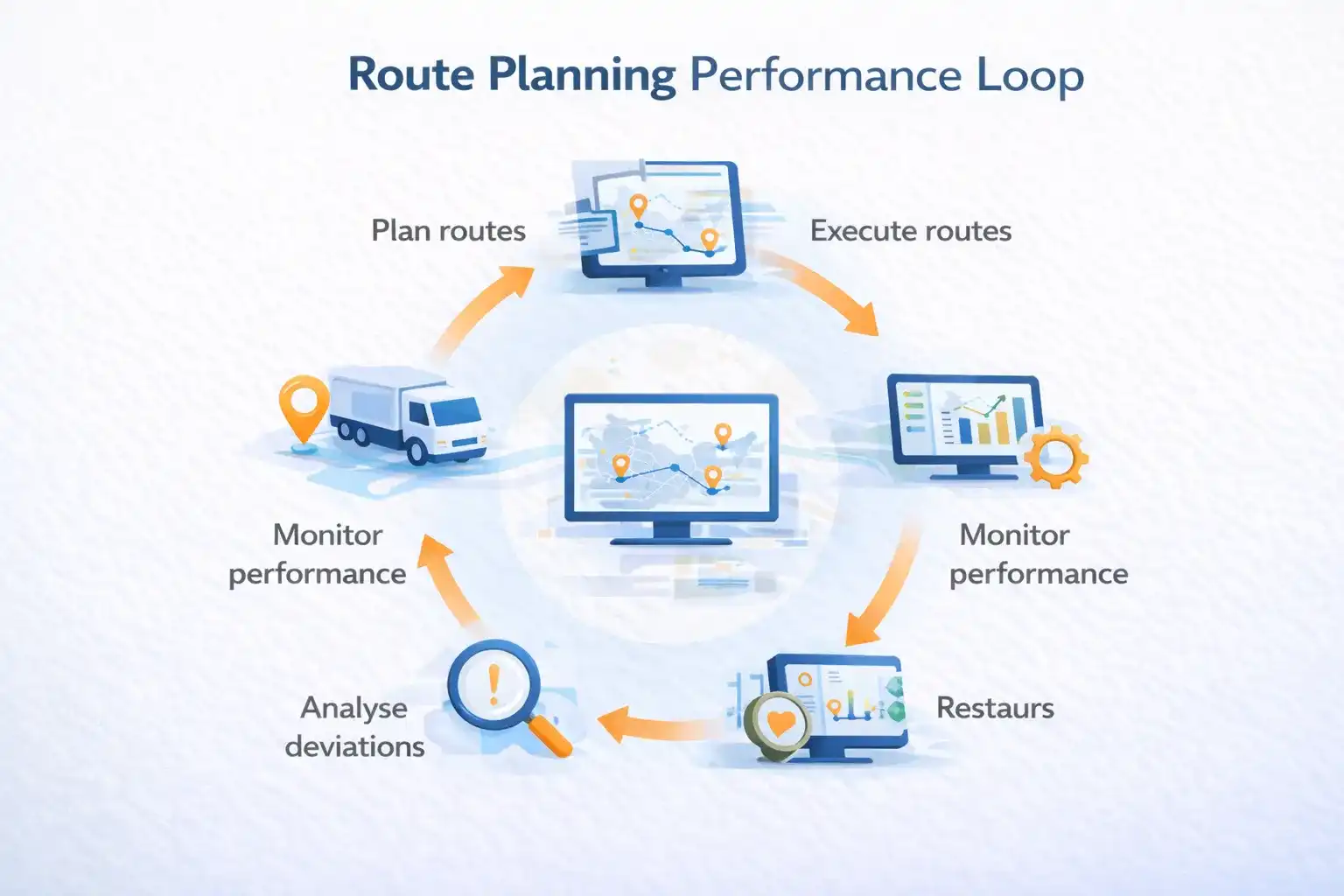
Route planning should not operate in isolation. The most effective operations follow a continuous loop:
- Plan — Route is optimised using constraints and data
- Execute — Vehicle executes the route
- Monitor — System tracks deviations and performance
- Analyse — Analytics identify patterns and root causes
- Optimise — Future routes improve based on real outcomes
This Plan → Execute → Monitor → Analyse → Optimise loop is what separates isolated route planning tools from a true transport intelligence platform.
FAQs
Conclusion
Automated route planning is often introduced as a feature inside a transport management system. In reality, it is a discipline — one that influences cost control, service reliability, and operational clarity across the entire fleet.
For growing logistics operations, the difference between manual planning and structured route optimisation becomes visible quickly: lower fuel consumption, better time adherence, and improved driver consistency. But the real transformation happens when routing is no longer treated as a one-time calculation.
Scalable transport businesses close the loop between planning and execution. They measure route adherence. They analyse deviations. They refine decisions continuously.
This is where modern transport intelligence platforms — including solutions like Yatis Telematics — extend the value of route optimisation beyond map logic. By connecting planning, live tracking, analytics, and compliance into one ecosystem, route planning evolves from an isolated capability into a measurable performance engine.
The better question for organisations evaluating transport management solutions is: "Does the system help us continuously improve how we plan and execute routes?" — because route planning is not just about getting from point A to point B. It is about building a transport operation that scales intelligently.
👉 Learn more about transport intelligence with Yatis Telematics