

Best AI Dash Cam for Commercial Fleet Management (2026 Buyer's Guide)

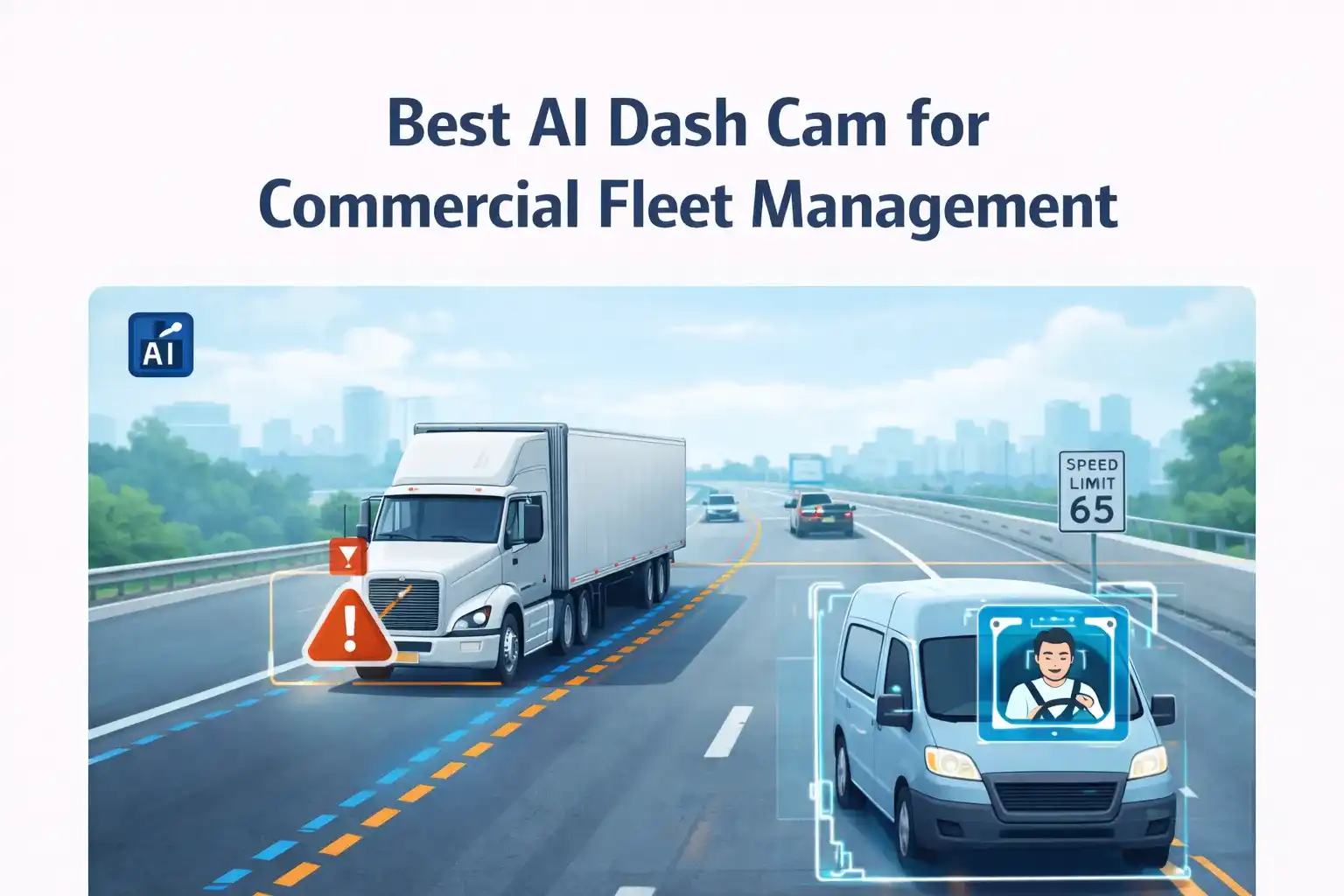
For commercial fleets, dash cams are no longer about recording accidents after they happen. Fleet operators in India are dealing with rising accident liability, driver fatigue on long-hauls, insurance scrutiny, and pressure to improve safety without slowing operations. The question is no longer "Should we install dash cams?" — it's "Which AI dash cam actually improves fleet operations?" This distinction matters because commercial fleet management has very different needs than consumer driving.
Why Commercial Fleets Are Re-evaluating Dash Cams in 2026
For commercial fleets, dash cams are no longer about recording accidents after they happen.
Fleet operators in India are dealing with:
- Rising accident liability
- Driver fatigue and long-haul risks
- Insurance scrutiny and claim disputes
- Pressure to improve safety without slowing operations
In this environment, the question is no longer "Should we install dash cams?"
It's "Which AI dash cam actually improves fleet operations?"
This distinction matters — because commercial fleet management has very different needs than consumer driving.
What Is an AI Dash Cam in a Commercial Fleet Context?
In fleet operations, an AI dash cam is not defined by resolution or storage size.
A fleet-grade AI dash cam is a system that:
- Interprets driving behaviour in real time
- Detects risky events automatically
- Creates structured, reviewable safety data
- Integrates with fleet management workflows
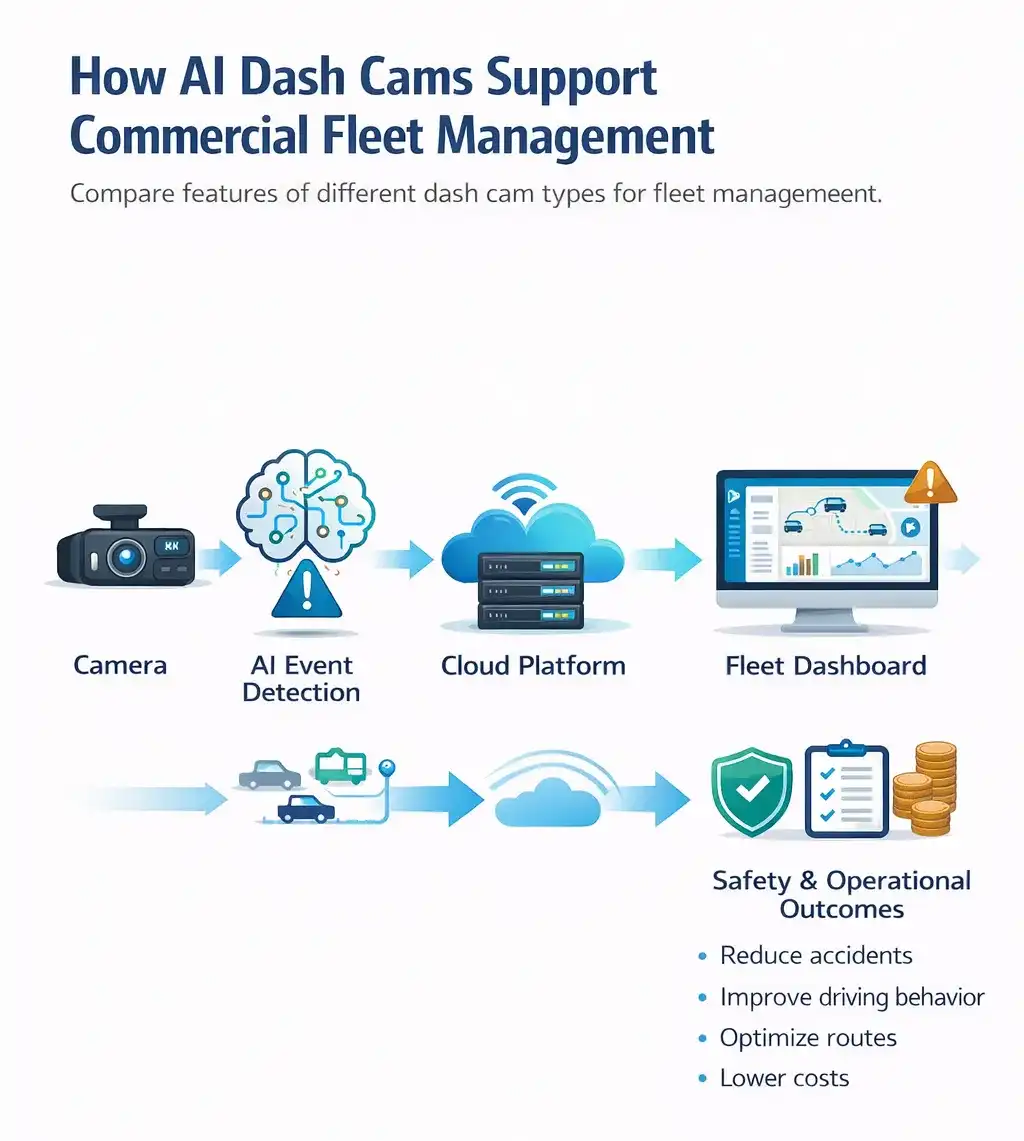
In short, it turns raw video into operational intelligence.
Traditional Dash Cams vs AI Dash Cams for Fleet Management
Traditional Dash Cams
- Continuous video recording
- Manual footage review
- Incident-driven usage
AI Dash Cams
- Event-based recording
- Real-time alerts
- Driver behaviour analysis
- Scalable dashboards for managers
For a single car, this difference may feel incremental. For a 50–500 vehicle fleet, it's transformational.
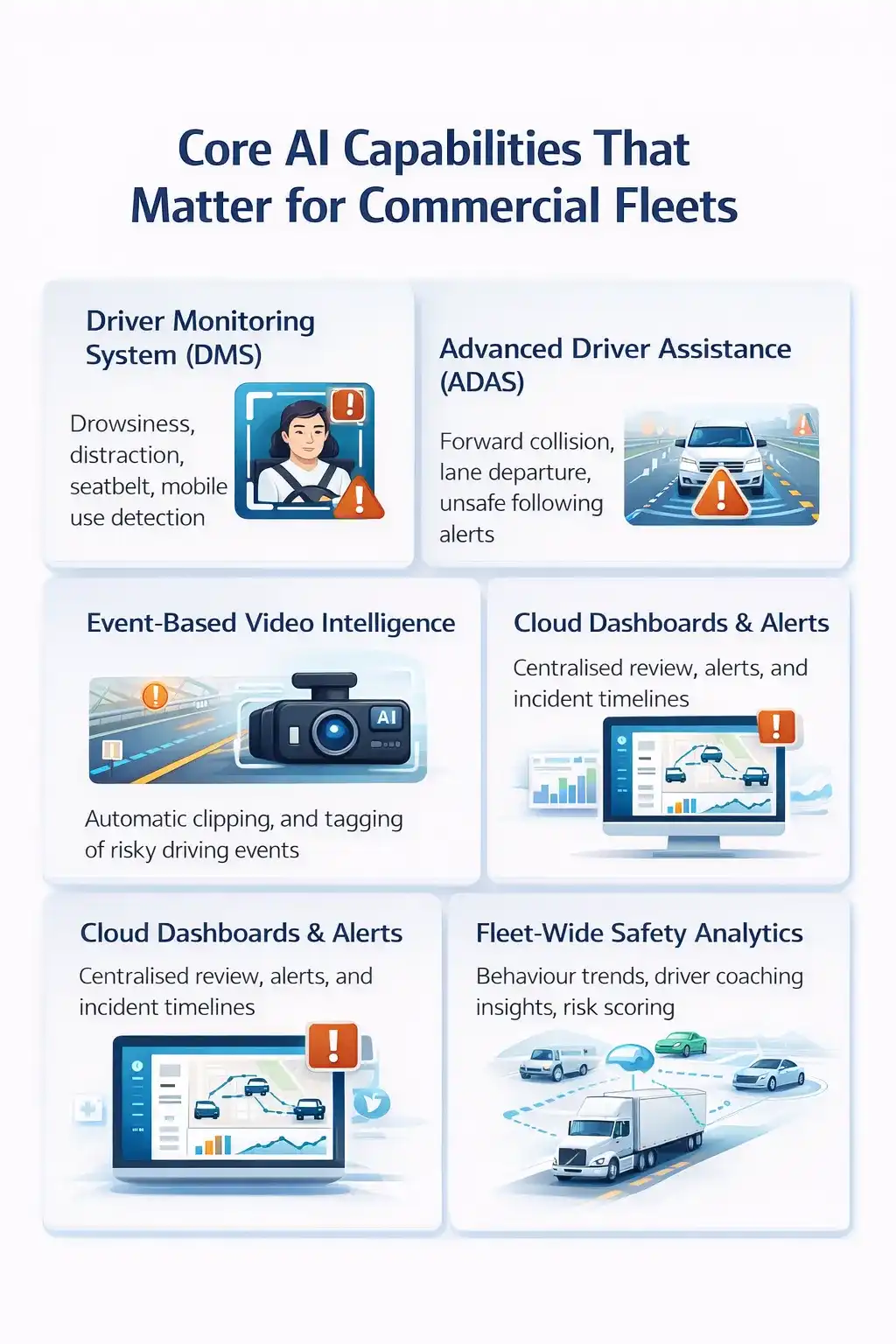
Core AI Capabilities That Matter for Commercial Fleets
Driver Monitoring System (DMS)
Detects:
- Drowsiness
- Distraction
- Mobile phone usage
- Seatbelt violations
This is critical for long-haul, night driving, and shift-based operations.
Advanced Driver Assistance (ADAS)
Provides alerts for:
- Forward collision risk
- Lane departure
- Unsafe following distance
ADAS is not about replacing the driver — it's about early warning.
Event-Based Video Intelligence
Instead of storing hours of footage, AI:
- Identifies risky moments
- Automatically clips and tags events
- Reduces review effort dramatically
Fleet managers review minutes, not days of video.
Cloud Dashboards and Safety Analytics
Fleet-grade systems provide:
- Incident timelines
- Driver risk patterns
- Location-linked video evidence
- Trend analysis over weeks and months
This is where dash cams move from hardware to management tools.

Types of AI Dash Cam Options Used in Commercial Fleets
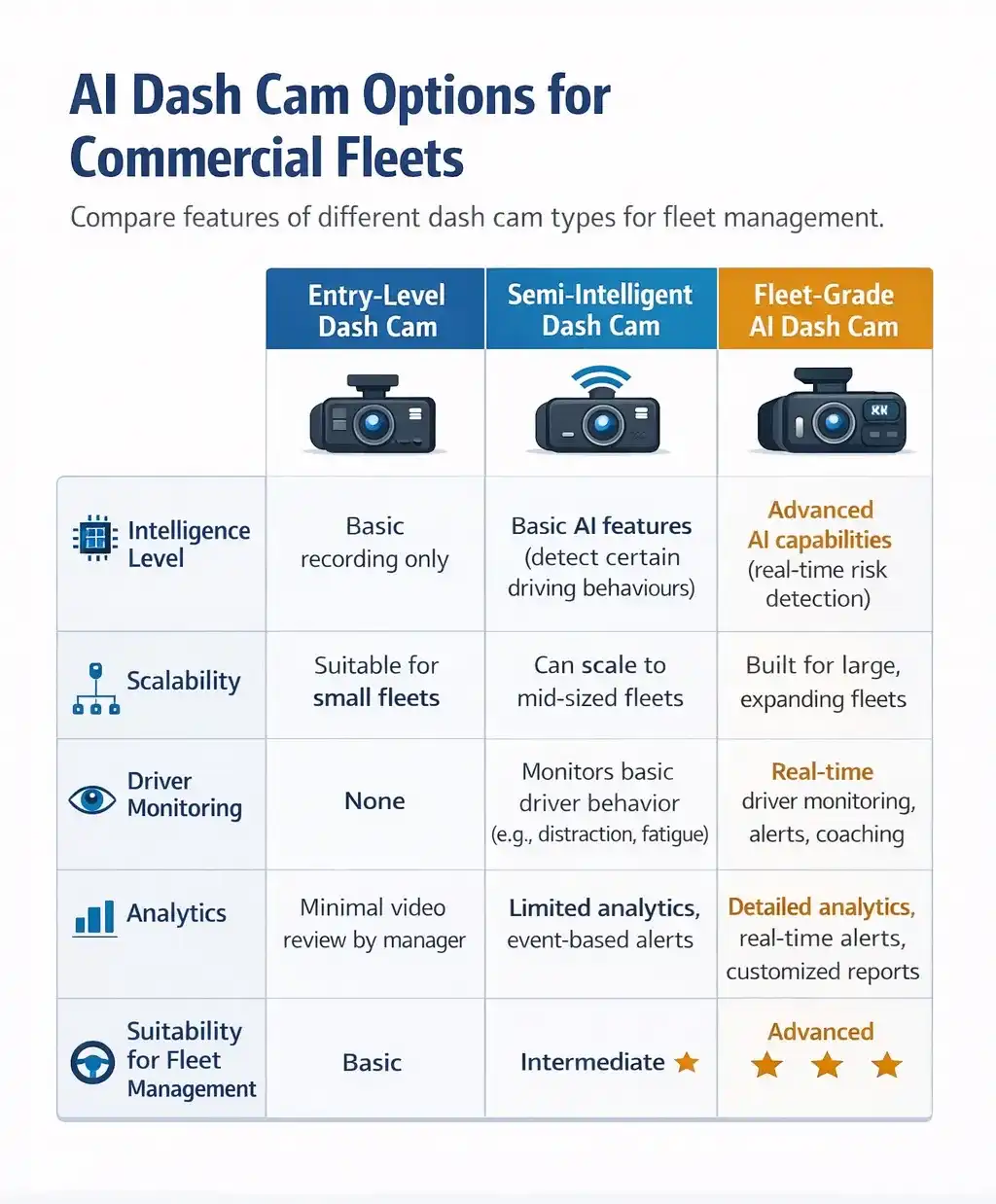
Rather than listing brands, commercial buyers benefit more from understanding categories.
1️⃣ Entry-Level Dash Cams (Not Recommended for Fleets)
- High-resolution recording
- Minimal intelligence
- No backend analytics
❌ Often mistaken as "AI"
❌ Create manual review burden
2️⃣ Semi-Intelligent Dash Cams (Limited Fleet Use)
- Basic event detection
- Some cloud access
- Limited scalability
✅ Useful for pilots
❌ Weak for large fleets
3️⃣ Fleet-Grade AI Dash Camera Systems
Designed specifically for commercial operations:
- Dual cameras (road + driver)
- Real-time AI event detection
- Centralised dashboards
- Integration with fleet platforms
This is the category where serious fleet safety programmes operate.

Where AI Dash Cams Create Real Value in Fleet Management
Safety Improvement
AI highlights risky behaviour early, enabling coaching instead of punishment.
Insurance & Claims
Time-stamped, event-tagged footage strengthens claim defence.
Driver Accountability
Objective data reduces disputes and bias.
Operational Efficiency
Faster incident resolution means less downtime.
These outcomes matter far more than video quality alone.
Common Mistakes Fleets Make When Choosing AI Dash Cams
Confusing Resolution with Intelligence
4K video without AI still creates manual work.
Treating Dash Cams as Standalone Devices
Without integration, insights stay siloed.
Underestimating Review Overhead
Human review does not scale without AI filtering.
Ignoring Change Management
Drivers must understand why cameras exist.
How AI Dash Cams Fit into Fleet Management Platforms
In mature fleets, AI dash cams integrate with:
- GPS tracking
- Transport management systems
- Safety and compliance dashboards
This integration allows:
- Location + behaviour correlation
- Automated alerts
- Long-term safety benchmarking
At Yatis, AI dash cams are designed as one layer of fleet intelligence, not isolated hardware.

Frequently Asked Questions: AI Dash Cams for Commercial Fleets
Are AI dash cams mandatory for commercial fleets in India?
AI dash cams are not currently mandatory nationwide, but many fleets adopt them proactively for safety, insurance protection, and compliance readiness.
Do AI dash cams invade driver privacy?
When implemented responsibly, AI dash cams focus on safety events, not continuous surveillance. Clear policies and transparent communication are essential.
Can AI dash cams work in low-connectivity areas?
Yes. Event detection happens on-device. Connectivity is required only to sync data to the cloud later.
How is a fleet AI dash cam different from a consumer dash cam?
Fleet AI dash cams provide backend analytics, scalability, integrations, and structured safety workflows — features consumer dash cams lack.
What should fleets prioritise when selecting an AI dash cam?
Fleets should prioritise intelligence accuracy, dashboard usability, integration capability, and long-term scalability over camera resolution alone.
Final Thoughts: Choosing the Right AI Dash Cam for Fleets
The best AI dash cam for commercial fleet management is the one that reduces risk, improves behaviour, and scales with operations.
For fleets, dash cams are no longer passive witnesses. They are active participants in safety, accountability, and operational maturity.
At Yatis, AI dash cams are built with this reality in mind — helping fleets move from reacting to incidents to preventing them altogether, without adding unnecessary complexity.
Ready to Deploy AI Dash Cams for Your Commercial Fleet?
Get expert guidance on selecting and deploying AI dash cam systems that improve safety, reduce risk, and scale with your fleet operations.
Contact Yatis Today →