

Best AI Dash Cam Options Available in India (2026 Buyer's Guide for Fleets & Enterprises)

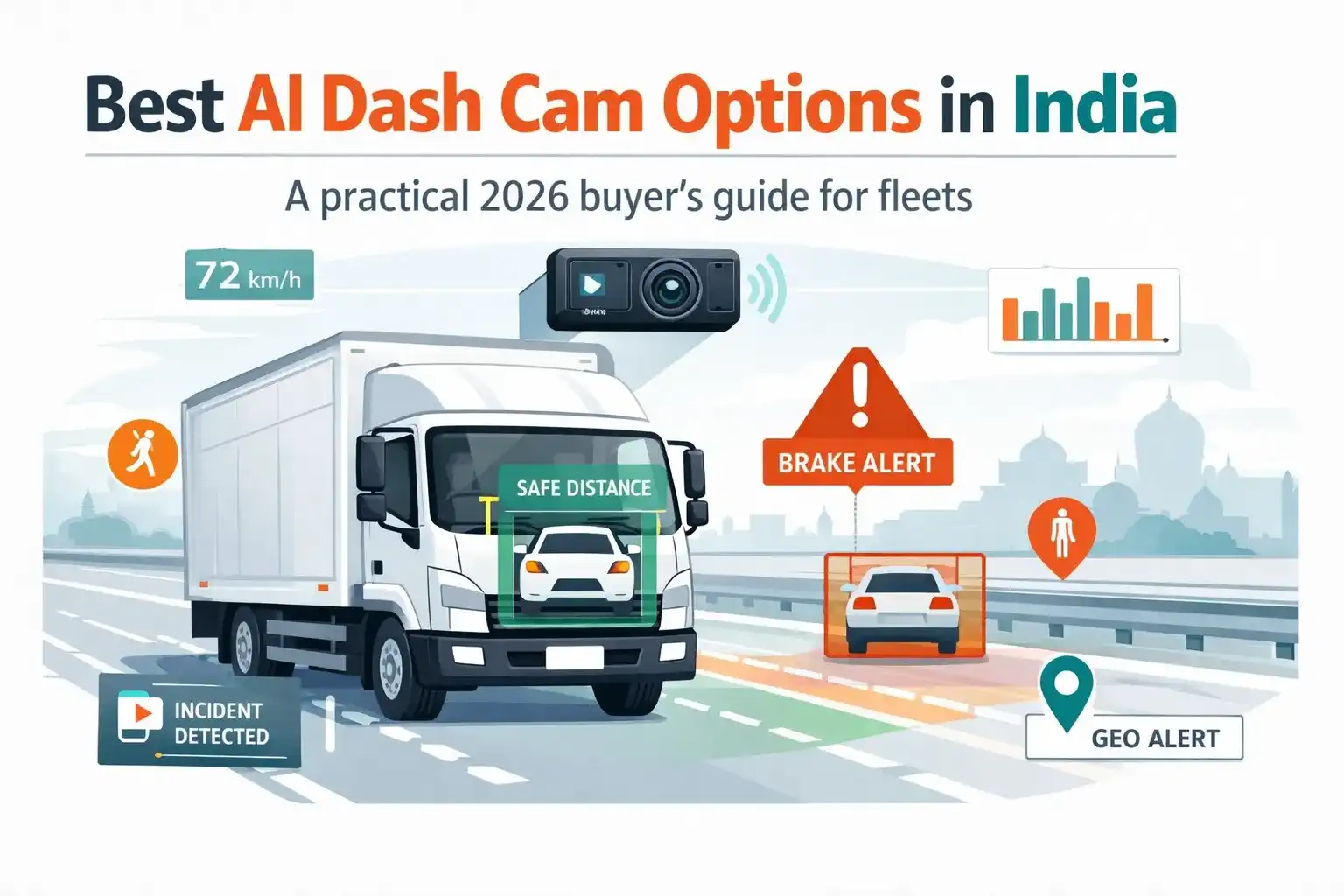
If you speak to fleet operators in India today, the conversation around dash cams has quietly changed. Earlier, dash cams were installed mainly to record accidents. In 2026, AI dash cams are being evaluated for preventing incidents, protecting drivers, and reducing operational risk. This shift matters because Indian roads are complex—mixed traffic, long driving hours, high accident disputes, and increasing compliance scrutiny. An AI dash cam is no longer about footage quality alone. It's about context, intelligence, and accountability.
Introduction: Why "AI Dash Cam" Is No Longer Just a Gadget
The shift in fleet thinking is real. Earlier, dash cams were installed mainly to record accidents. In 2026, AI dash cams are being evaluated for preventing incidents, protecting drivers, and reducing operational risk.
This shift matters because Indian roads are complex:
- Mixed traffic conditions
- Long driving hours
- High accident dispute rates
- Increasing compliance and insurance scrutiny
An AI dash cam is no longer about footage quality alone. It's about context, intelligence, and accountability.
What Is an AI Dash Cam (And How It's Different from a Normal Dash Cam)
A traditional dash cam:
- Records video
- Stores footage locally
- Is reviewed only after an incident
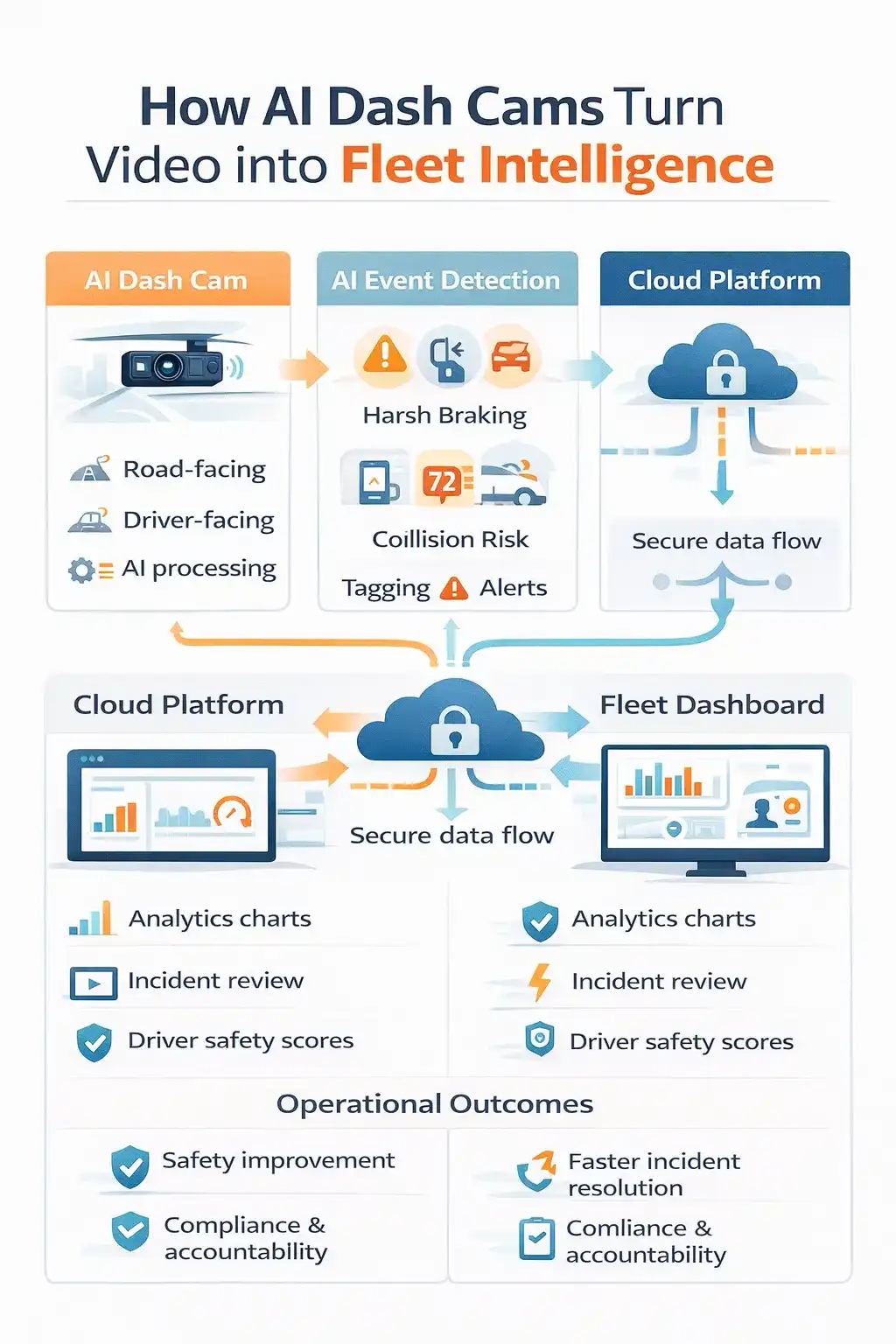
An AI dash cam:
- Analyses driving behaviour in real time
- Detects risky events (hard braking, distraction, tailgating)
- Tags critical moments automatically
- Syncs data to a backend platform
In short:
A dash cam watches.
An AI dash cam understands.
This distinction is crucial — and often misunderstood in the Indian market.
What Makes an AI Dash Cam Truly "AI-Powered"
Not all products marketed as "AI dash cams" actually deliver intelligence.
In real-world fleet usage, meaningful AI capabilities include:
Driver Behaviour Monitoring (DMS)
Detects:
- Drowsiness
- Distraction
- Mobile phone usage
- Seatbelt violations
Advanced Driver Assistance System (ADAS)
Alerts for:
- Forward collision risk
- Lane departure
- Unsafe following distance
Event-Based Video Capture
Instead of recording everything, AI:
- Flags risky events
- Creates searchable clips
- Reduces review effort
Cloud-Based Review & Analytics
Critical for fleets:
- Centralised dashboards
- Incident trends
- Driver coaching insights
Without these layers, a dash cam — no matter how high the resolution — remains a passive recorder.
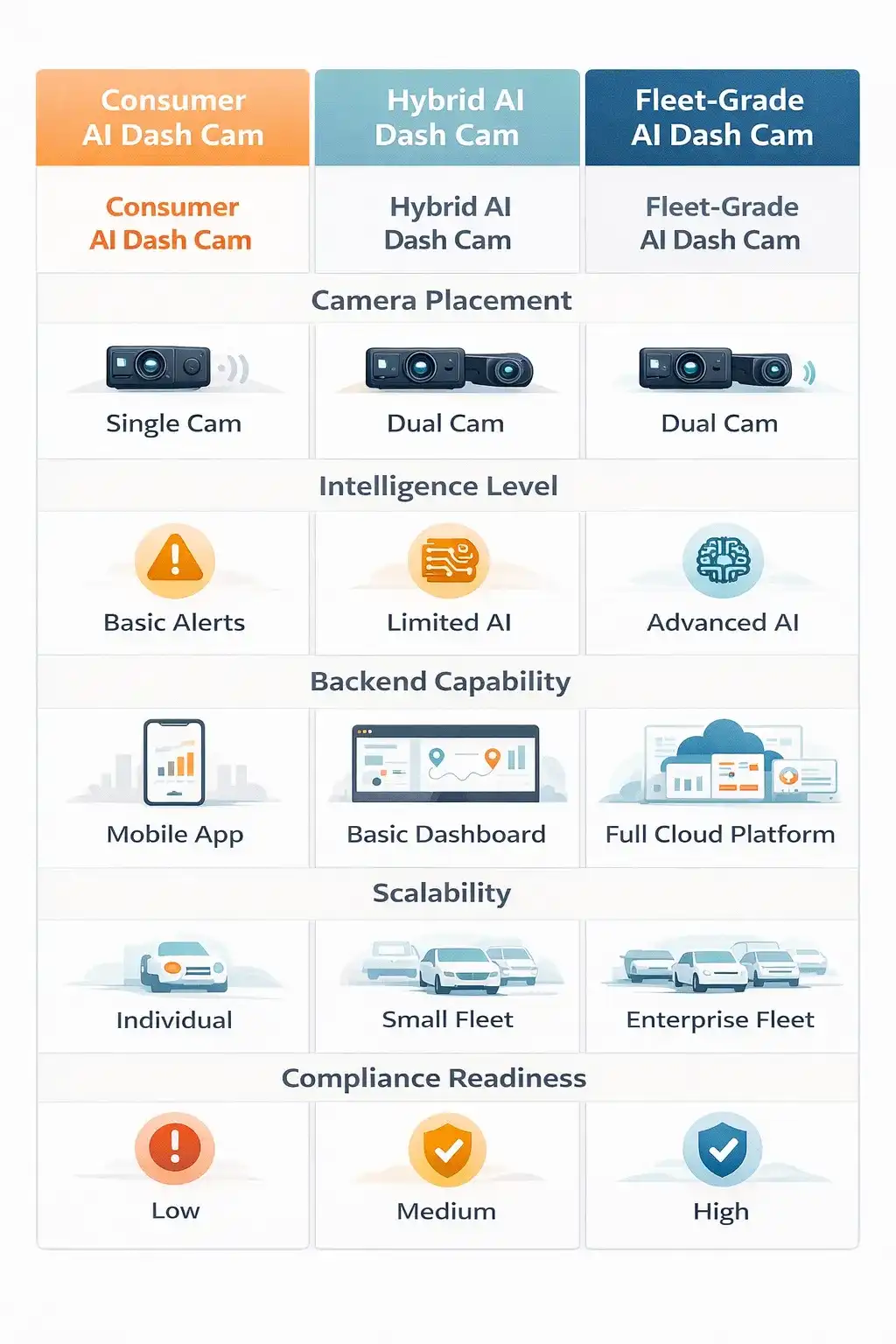
Categories of AI Dash Cam Options Available in India
Rather than listing brands, it's more useful to look at categories.
1️⃣ Consumer & Prosumer AI Dash Cams
These are typically:
- Front-facing only
- High resolution (4K, HDR)
- App-based review
- Limited or no backend analytics
They work well for:
- Individual car owners
- Owner-drivers
- Basic recording needs
Where they fall short:
- No fleet visibility
- No driver behaviour intelligence
- No compliance workflows
2️⃣ Hybrid Dash Cams (Recording + Basic Intelligence)
These sit between consumer and fleet-grade systems.
They offer:
- Event-triggered recording
- Basic alerts
- Limited dashboards
Suitable for:
- Small fleets
- Pilot deployments
Limitations:
- Shallow analytics
- Limited scalability
- Often lack deep integrations
3️⃣ Fleet-Grade AI Dash Camera Systems
This is where AI dash cams become operational tools.
They typically include:
- Road-facing + driver-facing cameras
- Real-time AI event detection
- Cloud dashboards
- Policy-based alerts
- Integration with telematics platforms
Used by:
- Logistics fleets
- Transport operators
- Enterprises with safety KPIs
This is the category where platforms like Yatis AI Dash Cams operate — not as standalone devices, but as part of a fleet intelligence ecosystem.

Where AI Dash Cams Deliver Real Business Value in India
1️⃣ Safety & Risk Reduction
AI-based alerts help correct behaviour before accidents occur.
2️⃣ Insurance & Claims Support
Contextual video + event data strengthens claim defence.
3️⃣ Driver Coaching
Instead of punishment, fleets can:
- Identify patterns
- Train drivers constructively
4️⃣ Compliance & Accountability
Recorded, tagged evidence reduces ambiguity and disputes.
This is why many fleets now view AI dash cams as preventive infrastructure, not accessories.
Common Buyer Mistakes in the Indian Market
From real-world deployments, a few patterns repeat:
- Confusing video quality with intelligence
- Buying consumer cameras for fleet use
- Ignoring backend software capability
- Underestimating data review effort
- Treating dash cams as standalone devices
These mistakes usually surface after deployment, when operational friction increases.
How AI Dash Cams Fit into a Larger Fleet Technology Stack
In mature operations, AI dash cams don't work alone.
They integrate with:
- GPS tracking
- Fleet management systems
- Safety dashboards
- Incident management workflows
This is where platform thinking becomes essential.
At Yatis, AI dash cams are designed to:
- Complement telematics data
- Provide behavioural context
- Support safety-led decision-making
The camera is important — but the intelligence layer is what scales.
Final Thoughts: Choosing the Right AI Dash Cam in 2026
The best AI dash cam option in India is not defined by resolution, price, or marketing labels.
It's defined by:
- How well it understands driving behaviour
- How clearly it presents insights
- How seamlessly it fits into fleet operations
For organisations managing real-world risk, AI dash cams are no longer about recording the past — they're about shaping safer outcomes going forward.
At Yatis, this belief drives how we design AI dash cameras: as tools that quietly enable safer journeys, informed decisions, and long-term operational maturity — without adding complexity where it isn't needed.
Frequently Asked Questions About AI Dash Cams in India
What is the difference between an AI dash cam and a normal dash cam?
A normal dash cam simply records video footage, which is usually reviewed only after an incident. An AI dash cam actively analyses driving behaviour in real time, detects risky events like harsh braking or distraction, and automatically flags important moments. The difference lies in intelligence, not just recording.
Are AI dash cams legal to use in India?
Yes, AI dash cams are legal to use in India. However, fleets must ensure responsible usage, especially for driver-facing cameras. Clear driver consent, transparent policies, and usage strictly for safety and operational purposes are important to stay compliant and maintain trust.
Do AI dash cams work without internet connectivity?
AI dash cams can detect events and record footage even without internet connectivity. However, cloud features such as real-time alerts, remote access, analytics, and dashboards require periodic data connectivity to sync information to the backend platform.
Are consumer AI dash cams suitable for fleet vehicles?
Consumer AI dash cams are generally not suitable for fleet operations. They lack backend analytics, scalable dashboards, driver coaching workflows, and integration with fleet systems. For fleets, these limitations become operational risks rather than cost savings.
What should fleets look for when evaluating AI dash cam options?
Fleets should look beyond camera resolution and focus on AI capabilities, accuracy of event detection, quality of dashboards, ease of incident review, integration with telematics systems, and long-term scalability. The real value comes from insights, not just footage.
How do AI dash cams help reduce accidents and insurance disputes?
AI dash cams provide contextual video evidence along with driving behaviour data. This helps identify risky patterns early, coach drivers proactively, and clearly establish facts during insurance claims or disputes, reducing ambiguity and resolution time.
Where does Yatis AI Dash Cam fit among AI dash cam options in India?
Yatis AI Dash Cams are designed for fleet and enterprise use, focusing on safety intelligence rather than standalone recording. They work as part of a broader telematics and fleet management ecosystem, helping organisations move from reactive incident handling to preventive safety operations.
Ready to Explore AI Dash Cam Solutions for Your Fleet?
Get expert guidance on choosing the right AI dash cam system that delivers safety intelligence, not just footage.
Contact Yatis Today →