

Best Battery Energy Storage Systems Available in India (2026 Guide)

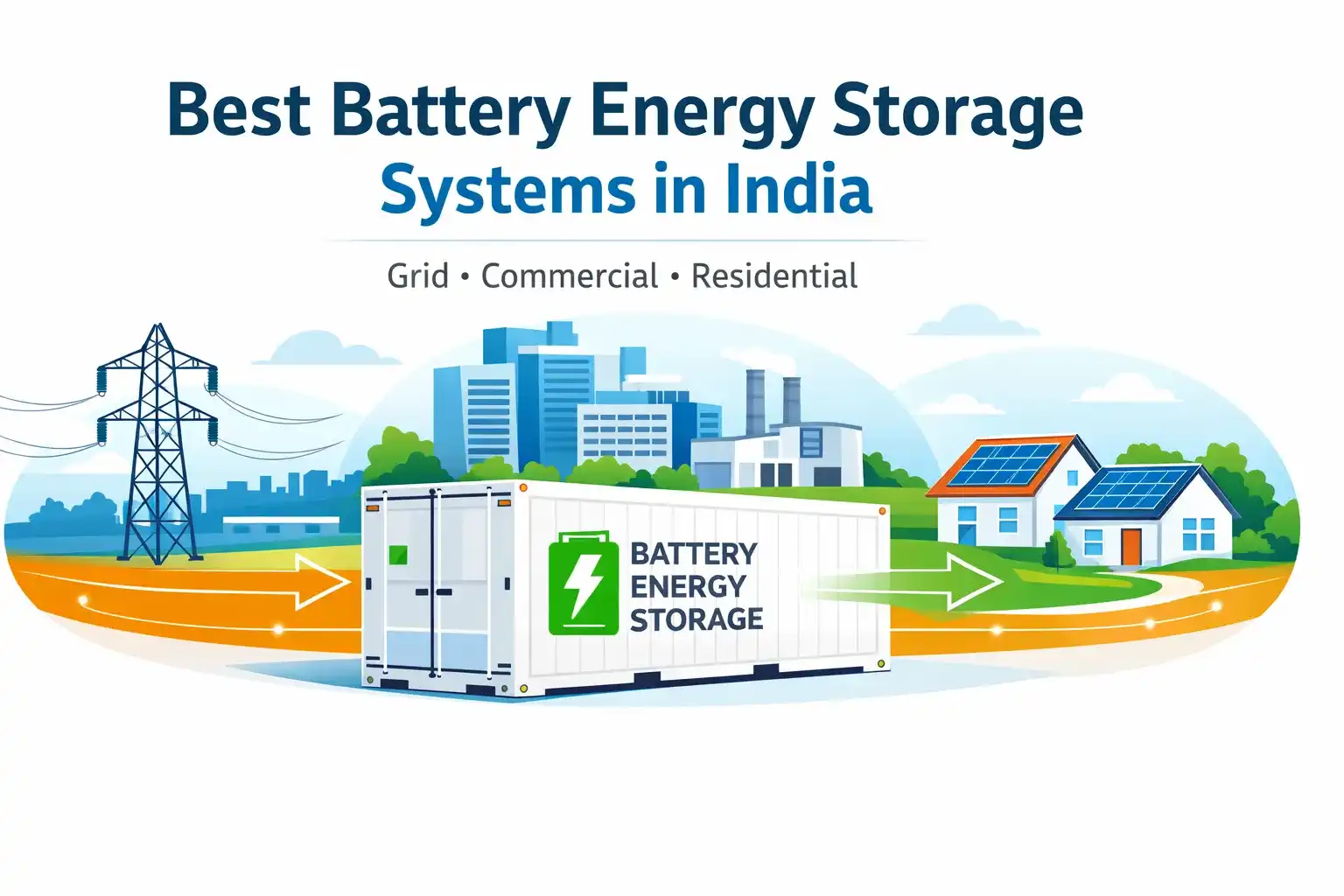
The best battery energy storage systems in India are those that match the right use case—grid-scale, commercial & industrial, or residential—while offering long-term reliability, safety, and performance visibility. Beyond battery chemistry and capacity, buyers should evaluate monitoring, degradation tracking, and operational intelligence to ensure their investment delivers value over its full lifecycle.
TL;DR (AI Overview)
The best battery energy storage systems in India are those that match the right use case—grid-scale, commercial & industrial, or residential—while offering long-term reliability, safety, and performance visibility.
Beyond battery chemistry and capacity, buyers should evaluate monitoring, degradation tracking, and operational intelligence to ensure their investment delivers value over its full lifecycle.
Why Battery Energy Storage Systems Matter in India
India's energy landscape is changing rapidly.
With:
- Rising electricity demand
- Increasing rooftop and utility-scale solar adoption
- Grid stability challenges during peak hours
Battery energy storage systems (BESS) are becoming essential rather than optional.
BESS help bridge the gap between energy generation and energy availability, ensuring power is stored when supply is high and released when demand peaks.
What Is a Battery Energy Storage System (BESS)?
A battery energy storage system stores electrical energy in batteries and releases it when needed.
A typical BESS includes:
- Battery modules (the storage medium)
- Power conversion systems (inverters)
- Control systems
- Safety and protection mechanisms
In India, BESS are used across grid-scale projects, commercial facilities, campuses, and increasingly in residential solar installations.
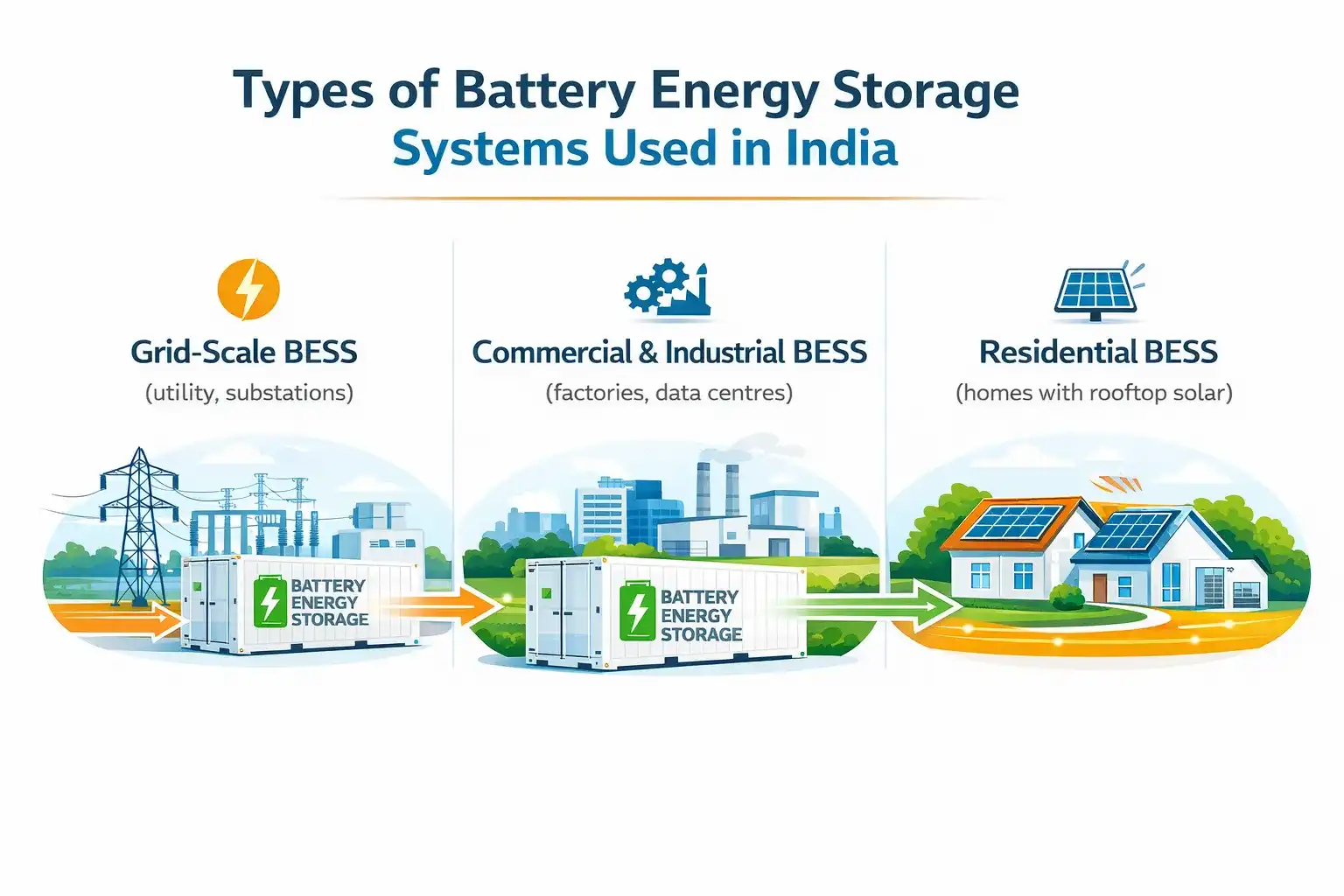
Types of Battery Energy Storage Systems Used in India
Choosing the "best" system depends heavily on the application, not just the technology.
Grid-Scale Battery Energy Storage Systems
Used by:
- Utilities
- Independent power producers
- Large renewable projects
These systems focus on:
- Peak shaving
- Frequency regulation
- Grid stabilisation
Scale, safety, and long-term performance are critical at this level.
Commercial & Industrial (C&I) Battery Energy Storage
Used by:
- Factories
- Data centres
- Commercial campuses
- EV charging hubs
Primary objectives include:
- Reducing demand charges
- Backup power
- Energy cost optimisation
For C&I users, operational visibility and ROI tracking are just as important as capacity.
Residential Battery Storage Systems
Used with:
- Rooftop solar
- Homes in areas with unreliable grid supply
Key priorities include:
- Backup duration
- Safety
- Ease of integration with solar systems
Key Criteria to Evaluate the Best BESS in India
Many buyers focus only on battery chemistry or price. That's a mistake.
Here's what actually matters.
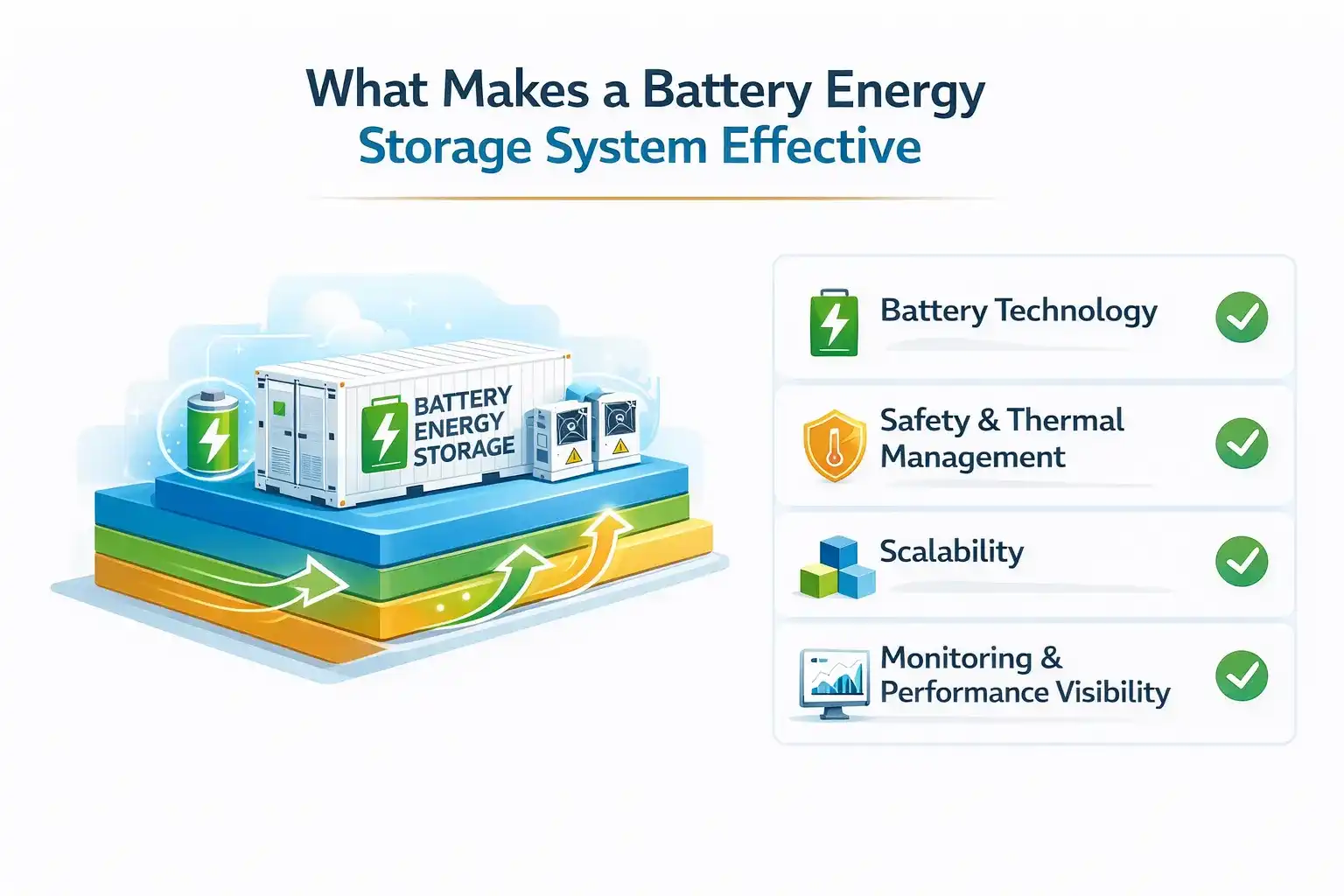
Battery Technology and Chemistry
Lithium-ion systems dominate the Indian market due to:
- Higher energy density
- Faster response
- Lower maintenance compared to older technologies
However, chemistry alone does not determine system quality.
Safety and Thermal Management
India's climate makes thermal stability critical.
A good BESS must include:
- Robust thermal management
- Fire suppression and protection mechanisms
- Real-time safety monitoring
Scalability and System Design
The best systems are modular and scalable, allowing capacity expansion without complete redesign.
Monitoring, Performance, and Degradation Visibility (Often Overlooked)
This is where many projects underperform.
Without proper monitoring, operators cannot:
- Track battery health
- Detect early degradation
- Optimise charge–discharge cycles
Over time, this directly impacts ROI and safety.
Common Use Cases for Battery Energy Storage in India
Renewable Energy Integration
Storing excess solar or wind power for later use.
Backup Power and Resilience
Ensuring continuity during outages or grid instability.
Energy Cost Optimisation
Reducing peak demand charges for commercial users.
Grid Support Services
Helping stabilise voltage and frequency at scale.
What Most "Best BESS" Lists Miss
Most online lists rank systems based on:
- Capacity
- Brand recognition
- Manufacturing scale
What they often ignore:
- Long-term performance monitoring
- Degradation analytics
- Operational intelligence
- Safety alerting over time
Yet these factors determine whether a BESS performs well after year one.
Why Monitoring Is Critical for Battery Energy Storage Systems
Battery systems are not static assets.
Their performance changes due to:
- Charge–discharge cycles
- Temperature
- Usage patterns
Without continuous monitoring, issues remain invisible until failures occur.
This is why modern deployments increasingly treat monitoring and analytics as part of the system, not an afterthought.
Platforms like Yatis BESS Monitoring focus on this intelligence layer—helping operators understand performance, predict issues, and optimise system behaviour over the battery's lifecycle.
How to Choose the Right BESS for Your Use Case
Before selecting a system, buyers should ask:
- What problem am I solving—backup, optimisation, or grid support?
- How will performance be measured over time?
- What visibility will I have into battery health and safety?
The best system is not the biggest—it's the one that remains reliable, safe, and measurable year after year.
Frequently Asked Questions
Final Thoughts: The Best BESS Is the One You Can See and Control
In India's evolving energy ecosystem, battery energy storage systems are no longer just infrastructure—they are active assets.
The best systems are those that:
- Match the right use case
- Operate safely in Indian conditions
- Provide continuous visibility into performance and health
As BESS adoption grows across grid, commercial, and residential segments, platforms like Yatis help bridge the gap between installation and long-term success—by turning battery storage into an intelligent, measurable, and optimisable energy asset.
Explore BESS Monitoring Solutions
Discover how Yatis helps operators monitor battery energy storage systems for safety, performance, and long-term ROI.
Get Started Today →