

Cash-in-Transit Vehicle Tracking: Security, Geofencing and Real-Time Alerts

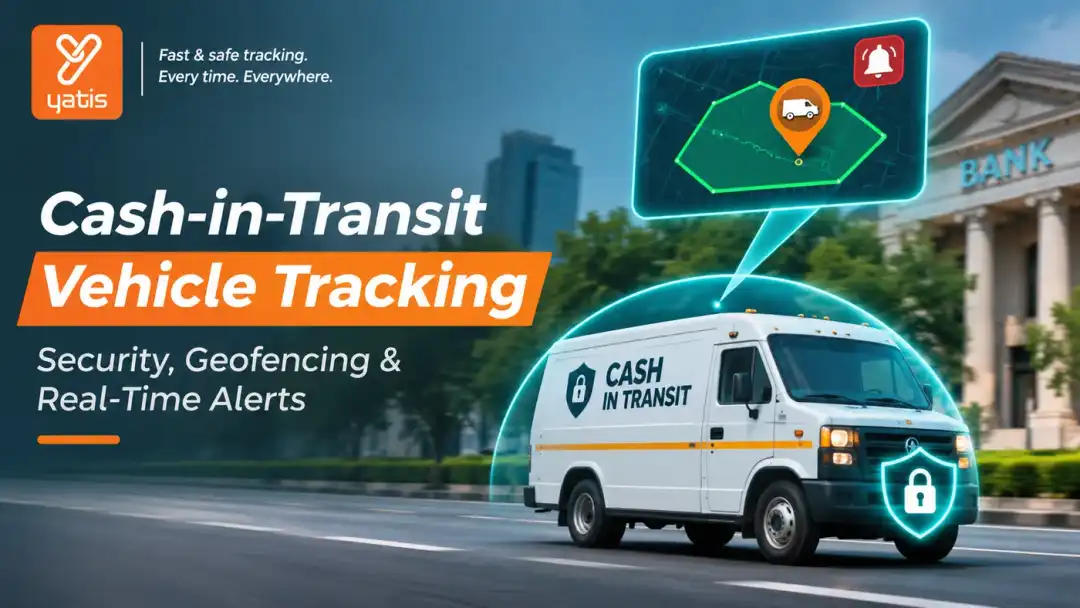
Cash-in-transit (CIT) operations move valuable consignments between banks, ATMs, businesses and cash-processing facilities. Because each journey has strict security requirements, teams need reliable vehicle visibility, controlled route information, timely exception alerts and a clear incident-response process. Cash-in-transit vehicle tracking can support this coordination by making vehicle movement and selected security events visible to authorised control-room personnel.
For operators managing cash vans or secure transport vehicles, vehicle tracking and telematics can provide a controlled view of vehicle location, trip history and configured alerts. The value comes from combining technology with strict access controls, clear alert ownership and rehearsed response procedures.
What is cash-in-transit vehicle tracking?
Cash-in-transit vehicle tracking is the use of GPS-enabled devices and fleet software to monitor vehicles transporting cash or other high-value consignments. It can provide live or periodic location updates, trip history, geofence events and configurable alerts for selected vehicle or device conditions.
Cash van tracking is security-sensitive. Live location, route and schedule information should be available only to authorised roles, with access logged and governed. Publicly exposing operational details or sharing tracking credentials can create avoidable risk.
Why real-time visibility matters in secure transport
- Journey oversight: authorised control-room staff can monitor vehicle progress against approved operational plans.
- Exception awareness: unusual stops, route deviations or unexpected movement can be surfaced for verification.
- Geographic controls: geofences can identify entry into or exit from defined operational areas.
- Device integrity: supported tamper or power events can alert teams to possible device interference.
- Emergency coordination: configured SOS or panic events can initiate an approved escalation workflow.
- Incident reconstruction: time-stamped trip and alert records can support post-incident review, subject to retention and access policies.
6 telematics controls that support cash van security
1. GPS tracking and journey visibility
GPS tracking helps authorised teams view vehicle location and review movement history. Update frequency, connectivity, device installation and environmental conditions influence visibility. Define who may access live location and how location data is handled during and after a trip.
2. Geofencing for operational boundaries
Geofences can be configured around approved depots, service locations or other operational zones. Entry and exit events may support arrival monitoring or exception review. Geofences should be tested for GPS drift and boundary accuracy, and their configuration should be protected from unauthorised changes.
3. Route monitoring and deviation alerts
Route monitoring can compare actual vehicle movement with an approved journey plan and surface deviations for authorised review. In CIT operations, route plans and schedules are sensitive information. Avoid publishing routes, alert thresholds or response timings; keep them within controlled operational systems and established security policy.
4. Tamper and device-health alerts
Depending on hardware, alerts may indicate power interruption, device tampering, antenna or connectivity issues, or other device-health conditions. These events can have benign causes as well as security implications. Control-room staff should verify context and follow a documented escalation procedure rather than assuming an alert proves interference.
5. Emergency and panic workflows
Where supported, an SOS or panic input can send an event to authorised recipients. The response should be defined in advance: who receives the alert, how it is acknowledged, how the situation is assessed and which approved contacts or emergency services are engaged. Test the workflow safely and periodically, without exposing sensitive response details publicly.
6. Time-stamped records for incident review
Trip history, geofence events, device alerts and acknowledgement records can help create a timeline for authorised investigation. Preserve records according to legal, contractual and security requirements; maintain audit trails and restrict exports. Telematics records should be corroborated with other evidence where necessary.
Cash-in-transit tracking: security control checklist
- ☐ Tracking devices and installation are approved for the vehicle and operating environment
- ☐ Live location access is role-based and periodically reviewed
- ☐ Strong authentication and credential controls are enforced
- ☐ Route and schedule information is treated as restricted data
- ☐ Geofence configurations are tested and change-controlled
- ☐ Alert recipients, acknowledgement and escalation ownership are documented
- ☐ SOS and emergency workflows are safely tested
- ☐ Device tamper/power alerts have verification steps
- ☐ Incident logs and exports follow retention and audit policies
- ☐ Control-room personnel receive training and refresher exercises
- ☐ Security procedures are reviewed with relevant authorities and stakeholders
- ☐ Tracking limitations and connectivity gaps are documented
How to implement cash van GPS tracking responsibly
- Conduct a security and operational assessment. Define objectives, threat considerations, stakeholders, access rules and data sensitivity with qualified security leadership.
- Select appropriate tracking capability. Validate GPS, power, connectivity, tamper inputs and emergency features against vehicle and operational requirements.
- Configure access and alerts. Apply least-privilege access, secure authentication, alert ownership and change controls.
- Document incident workflows. Establish verification, acknowledgement, escalation, communications and evidence-preservation steps through approved internal policy.
- Test in a controlled environment. Validate device events, geofence accuracy, connectivity and response routing without exposing live routes or sensitive procedures.
- Train and audit. Train authorised users, review access logs, test recovery and update policies after operational changes.
Security note: This article intentionally avoids route-design instructions, tactical response timings, detailed vulnerability guidance or operational schedules. CIT procedures should be designed and maintained by qualified security professionals and relevant authorities.
Cash-in-transit vehicle tracking KPIs
| Measure | What it indicates | Review approach |
|---|---|---|
| Tracking availability | Coverage of expected vehicle reporting | Review device/connectivity gaps and downtime |
| Alert acknowledgement time | How promptly authorised staff acknowledge alerts | Use approved internal thresholds and audit logs |
| Alert verification rate | Share of alerts assessed and dispositioned | Record verified, false-positive and unresolved outcomes |
| Geofence event quality | Reliability of configured entry/exit events | Review boundary accuracy and GPS drift |
| Device health compliance | Availability of required tracking hardware | Monitor maintenance and connectivity status |
| Incident record completeness | Whether timelines and actions are documented | Audit required fields, access and retention |
Use organisation-approved thresholds and do not publish sensitive operational metrics, routes or response playbooks.
Frequently asked questions
What is cash-in-transit vehicle tracking?
Cash-in-transit vehicle tracking uses GPS and telematics to monitor authorised cash vans or secure transport vehicles. It can provide location, trip history, geofence events and selected alerts to approved control-room users.
How does cash van GPS tracking support security?
It can improve vehicle visibility, surface route or movement exceptions, notify authorised teams of selected device events and support time-stamped incident review. It is one layer of a wider security programme.
What is geofencing in cash-in-transit tracking?
Geofencing defines virtual geographic boundaries. Entry or exit events can support operational monitoring and exception review when configured, tested and access-controlled.
Can vehicle tracking detect tampering?
Some devices support tamper, power or device-health alerts. These indicate a condition requiring verification; they do not independently confirm malicious activity.
Can a GPS tracker replace CIT security procedures?
No. Tracking does not replace trained personnel, physical security, risk assessment, approved operating procedures or emergency coordination. Technology should be integrated into a professionally managed security framework.
Who should access live cash van location?
Only authorised roles with a legitimate operational need, using least-privilege access, strong authentication, audit logs and periodic access reviews.
What should be included in a CIT tracking incident log?
Follow the organisation’s approved evidence and reporting policy. Typically, records may include event timestamps, alert type, acknowledgement, verification outcome, actions taken and authorised personnel, with secure retention and access controls.
Bring controlled visibility to secure vehicle operations
Explore vehicle tracking capabilities that can support authorised fleet monitoring and operational oversight.
Explore YatisTalk to the teamRelated resources
- Yatis Telematics — vehicle tracking and fleet visibility
- Yatis Resources — guides and insights
- Vehicle Tracking — explore tracking capabilities
- Geofencing — explore location-based fleet controls
External references: Consult ISO 31000 risk management guidance for general risk-management principles, CISA physical security resources for security planning context.