

EV Charging Analytics for Commercial Fleets: What Fleet Managers Should Measure

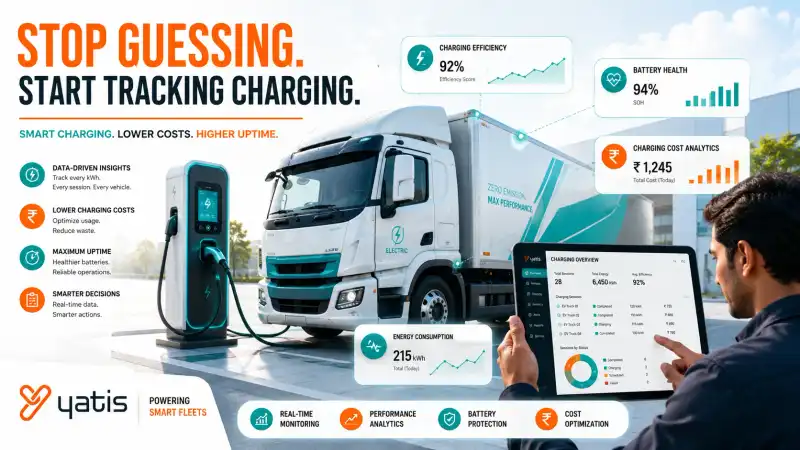
Electric vehicle adoption is growing across commercial fleet operations. From logistics companies and delivery fleets to utility providers and service vehicles, businesses are increasingly investing in EVs to reduce operating costs and support sustainability goals.
However, simply adding electric vehicles to a fleet does not automatically improve efficiency. To maximize the value of fleet electrification, organizations need visibility into how their vehicles are being charged, when they are being charged, and whether charging infrastructure is being used effectively.
This is where EV charging analytics becomes important. Charging data provides fleet managers with the operational insights needed to improve vehicle utilization, reduce downtime, control energy costs, and make better long-term fleet decisions.
What Is EV Charging Analytics?
EV charging analytics refers to the process of collecting, monitoring, and analyzing charging-related data from electric vehicles and charging infrastructure.
This data helps fleet operators understand:
- Charging frequency
- Charging duration
- Energy consumption
- Charging costs
- Battery performance
- Charger utilization
- Vehicle availability
Instead of treating charging as a routine activity, analytics turns charging behavior into actionable operational intelligence.
Why Charging Visibility Matters
Traditional fleets typically monitor fuel consumption, refueling frequency, vehicle utilization, and route performance. Electric fleets require similar visibility, but with a different energy source.
Without charging analytics, fleet managers may struggle to answer important questions such as:
- Are charging stations being utilized efficiently?
- Which vehicles spend too much time charging?
- What is the cost per charging session?
- Are vehicles charging during peak electricity rates?
- Which routes consume the most battery energy?
These insights are essential for building an efficient EV fleet operation.
The Hidden Cost of Poor Charging Management
Charging may seem simple on the surface: plug in the vehicle and wait. But across a commercial fleet, inefficient charging practices can create:
- Increased energy costs
- Vehicle downtime
- Reduced asset utilization
- Scheduling conflicts
- Charger bottlenecks
- Operational inefficiencies
Without data, these issues often remain hidden until they begin affecting fleet performance. Charging analytics helps identify these inefficiencies before they become larger operational problems.
Key EV Charging Metrics Every Fleet Should Track
Not all charging data is equally valuable. Fleet operators should focus on metrics that directly impact operational performance.
Charging Session Duration
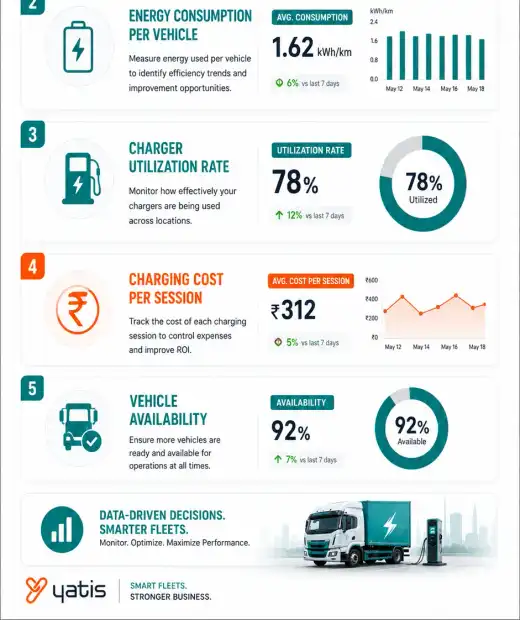
Understanding how long vehicles remain connected to chargers is critical. Long charging sessions may indicate underperforming chargers, scheduling inefficiencies, poor route planning, or vehicle utilization issues. Monitoring charging duration helps improve fleet availability.
Energy Consumption per Vehicle
Not all EVs consume energy at the same rate. Analytics can reveal high-consumption vehicles, route-related inefficiencies, driver behaviour impacts, and seasonal performance differences. Tracking energy consumption helps fleet managers benchmark vehicle efficiency more accurately.
Charger Utilisation Rate
Charging infrastructure represents a significant investment. Fleet operators should understand which chargers are heavily used, which are underutilised, peak charging periods, and infrastructure capacity requirements. This helps maximise return on charging infrastructure investments.
Charging Cost Analysis
Electricity costs vary by region, utility provider, time of use, and charging location. Charging analytics helps fleets reduce peak-hour charging, lower energy costs, improve charging schedules, and optimize operational spending. As EV fleets scale, these savings can become substantial.
Vehicle Availability
Charging directly affects fleet readiness. Analytics helps answer which vehicles are available, which are charging, which are waiting for chargers, and which may face route delays. Improved visibility supports more efficient dispatch planning.
How Telematics Enhances EV Charging Analytics
Charging data becomes significantly more valuable when integrated with telematics. Instead of viewing charging information separately, fleet managers can connect it with vehicle tracking, route performance, driver behavior, fleet utilization, and maintenance data.
This creates a more complete operational picture. For example, a vehicle with high energy consumption may not have a battery problem at all. The issue could be aggressive driving, route inefficiencies, excessive idling, or heavy traffic conditions. Telematics helps reveal those connections.

Improving Fleet Utilization Through Charging Analytics
One of the biggest goals of commercial fleet operations is maximizing vehicle utilization. Charging analytics helps fleet managers reduce idle charging time, improve scheduling, minimize vehicle downtime, balance charger usage, and improve route planning.
The result is greater operational efficiency across the fleet. For organizations managing dozens or hundreds of EVs, these improvements can significantly impact overall productivity.
Supporting Long-Term EV Infrastructure Planning
As fleets continue electrifying, charging infrastructure becomes increasingly important. Charging analytics provides valuable insights for future planning.
Fleet managers can determine whether existing chargers are sufficient, where new chargers are needed, which depots require expansion, and how future EV growth will impact charging demand. Rather than making infrastructure decisions based on assumptions, operators can use actual operational data.
Common Mistakes Fleets Make
Many organizations collect charging data but fail to use it effectively. Common mistakes include:
Only Monitoring Vehicle Charge Levels
Battery percentage alone does not explain charging efficiency.
Ignoring Charger Utilization
Underused charging assets can increase operational costs unnecessarily.
Charging During Peak Electricity Rates
Poor scheduling may increase charging expenses significantly.
Separating Charging Data from Telematics
Without operational context, charging data provides only part of the picture.
The Future of EV Fleet Operations
As commercial fleets continue adopting electric vehicles, charging analytics will become increasingly important. Future fleet management platforms are expected to provide:
- Predictive charging recommendations
- Automated charging schedules
- AI-driven energy optimization
- Advanced battery analytics
- Fleet-wide charging performance benchmarking
Organisations that begin building charging visibility today will be better prepared for large-scale EV operations tomorrow.
Final Thoughts
Electric vehicles are transforming commercial fleet operations. But successful electrification depends on more than simply adding EVs to the fleet.
Organizations need visibility into how charging impacts vehicle availability, energy consumption, operating costs, infrastructure utilization, and fleet productivity. EV charging analytics provides the insights needed to optimize these areas and improve overall fleet performance.
When combined with telematics, charging data becomes a powerful operational tool that helps fleets make smarter decisions and maximize the value of their EV investments. As EV adoption accelerates, charging visibility will become just as important as vehicle visibility.
Solutions like Yatis help bring vehicle tracking, operational visibility, and telematics intelligence together, enabling fleets to manage both vehicles and charging performance from a unified perspective.
Frequently Asked Questions
Ready to optimize your EV charging?
Contact Yatis Telematics to learn how our telematics and analytics solutions can help your fleet reduce charging costs and improve vehicle utilization.
Contact Us →