

Fleet EV Range Planning with Telematics: How to Reduce Range Anxiety and Improve Efficiency

For traditional fleet vehicles, route planning has always focused on factors such as distance, traffic conditions, delivery schedules, and fuel availability.
Electric vehicles introduce an additional variable that fleet operators cannot ignore: available battery range.
A delivery vehicle running low on fuel can often refuel quickly at thousands of available stations. An electric vehicle, however, requires charging infrastructure, charging time, and battery management. That is why EV range planning has become one of the most important aspects of commercial fleet electrification.
The good news? Modern telematics platforms now help fleet operators predict range requirements, optimize routes, monitor battery performance, and improve overall fleet efficiency.
What Is EV Range Planning?
EV range planning is the process of ensuring electric vehicles have sufficient battery capacity to complete assigned routes efficiently and safely.
It involves analyzing:
- battery charge levels
- route distance
- traffic conditions
- elevation changes
- charging station availability
- weather impacts
- vehicle utilization
The objective is simple: assign the right EV to the right route while minimizing charging disruptions and operational delays.
Why Range Planning Matters for Commercial Fleets
Range anxiety is not only a consumer concern. For commercial fleets, poor range planning can lead to missed deliveries, vehicle downtime, route interruptions, charging delays, lower productivity, and increased operational costs.
Unlike private vehicle owners, fleet operators must manage dozens or even hundreds of vehicles simultaneously. A single poorly planned route can affect delivery schedules, customer experience, dispatch efficiency, and vehicle utilization. Effective EV range planning helps avoid these issues before they occur.
The Biggest Challenges in Fleet EV Range Planning
Electric vehicle range is influenced by many variables. As a result, real-world range often differs from manufacturer estimates.
Battery State of Charge
Every route starts with the available battery charge. If charging schedules are inconsistent, vehicles may begin routes with insufficient energy reserves. Fleet managers need visibility into current battery levels, charging status, and vehicle readiness before assigning routes.
Traffic Conditions
Stop-and-go traffic affects energy consumption differently than steady highway driving. Heavy congestion can reduce operational efficiency and increase route uncertainty. This makes real-time route visibility extremely important.
Weather and Temperature
Environmental conditions have a significant impact on EV performance. Factors such as extreme heat, cold temperatures, air conditioning usage, and heating requirements can affect battery efficiency and range. Ignoring these variables may create unexpected charging requirements.
Route Terrain
Elevation changes influence battery consumption. Vehicles operating in hilly regions often consume more energy than vehicles travelling on flat routes. For fleets operating across multiple geographies, terrain analysis becomes an important part of range planning.
Charging Infrastructure Availability
An EV route is only as reliable as the charging network supporting it. Fleet managers must consider charging station locations, charger availability, charging speed, and charging schedules. Poor charging visibility can quickly create operational bottlenecks.

How Telematics Improves EV Range Planning
This is where telematics becomes essential. Modern EV telematics platforms provide real-time visibility into battery status, route performance, charging activity, vehicle utilization, and energy consumption.
Instead of estimating range manually, fleet operators can use actual vehicle data. This significantly improves route planning accuracy.
Real-Time Battery Monitoring
One of the most valuable telematics capabilities is battery visibility. Fleet managers can monitor current charge levels, charging progress, battery performance, and estimated remaining range.
This helps dispatch teams assign vehicles more confidently. Rather than relying on assumptions, they can make decisions using live operational data.
Route Optimization for EV Fleets
Not every route is equally suitable for every vehicle. Telematics helps fleet operators identify EV-friendly routes, minimize unnecessary charging stops, reduce energy consumption, and improve route efficiency.
The result is better fleet utilization and fewer operational disruptions.
Predicting Charging Requirements
A major advantage of telematics-based EV range planning is predictive visibility. Fleet managers can identify vehicles likely to require charging, upcoming energy constraints, charging infrastructure demand, and depot charging requirements.
This allows operators to address issues proactively rather than reacting to range-related problems after they occur.
Improving Fleet Utilization
Vehicle utilization is a key performance metric for commercial fleets. Poor range planning can reduce utilization by increasing charging downtime, route delays, and vehicle idle time.
Telematics helps fleets keep vehicles productive by ensuring routes align with available battery capacity. Higher utilization often translates directly into improved operational efficiency.
Using Historical Data to Improve Planning
Range planning becomes more effective over time. Telematics systems collect valuable historical information such as route energy consumption, charging behavior, seasonal performance trends, traffic-related impacts, and battery performance data.
Fleet operators can use this information to improve future route planning decisions. This creates a continuous cycle of operational optimisation.
Common Mistakes Fleets Make
Many organizations face avoidable EV range planning challenges. Some of the most common include:
Relying Solely on Manufacturer Range Estimates
Laboratory conditions rarely reflect real-world fleet operations. Actual range may vary significantly depending on route and driving conditions.
Ignoring Driver Behaviour
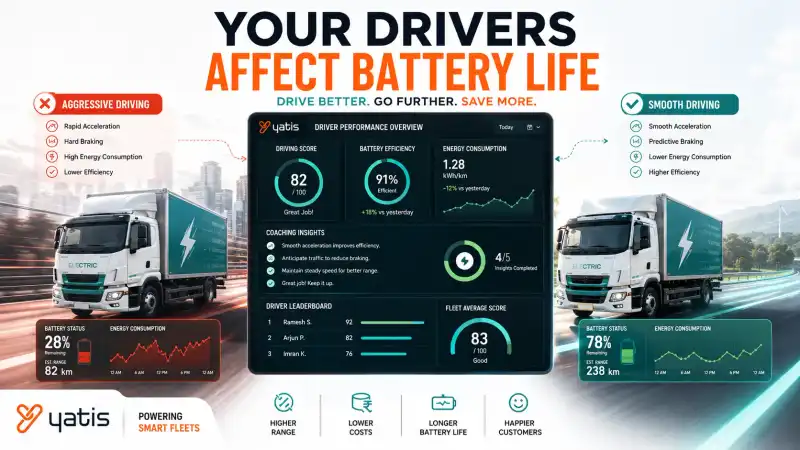
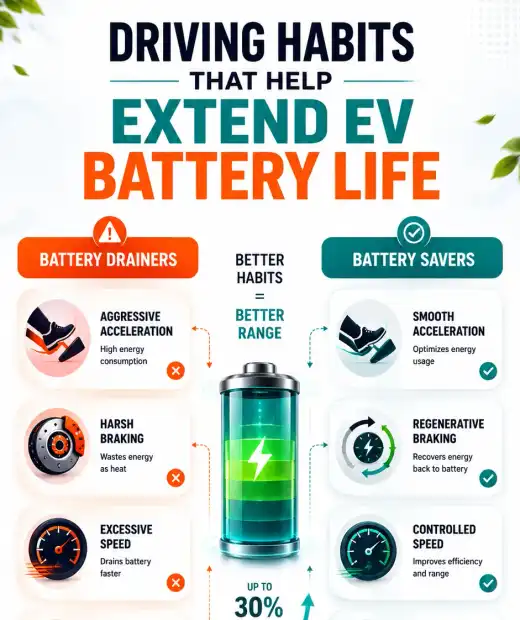
Aggressive driving can increase energy consumption substantially. Range planning should consider driver performance alongside route factors.
Overlooking Charging Infrastructure Constraints
Available chargers may become bottlenecks if fleet growth outpaces charging capacity.
Managing EVs Separately from Operational Data
Battery information alone is not enough. Range planning works best when combined with route, driver, and utilization data.
The Future of EV Range Planning
As commercial EV adoption grows, range planning will become increasingly data-driven. Future telematics platforms are expected to provide:
- AI-powered route recommendations
- predictive battery analytics
- automated charging schedules
- dynamic energy optimization
- fleet-wide range forecasting
These capabilities will help operators manage larger EV fleets with greater confidence and efficiency.
Final Thoughts
Fleet electrification is creating new opportunities for operational efficiency, but it also introduces new planning challenges. Among them, EV range planning remains one of the most important.
Successful fleet operators understand that range is not simply a battery metric—it is an operational metric. By combining telematics with battery visibility, route analytics, and charging intelligence, fleets can improve vehicle utilization, route reliability, charging efficiency, and operational productivity.
As EV adoption accelerates, organizations that invest in data-driven range planning today will be better positioned for long-term fleet success. Solutions like Yatis help commercial fleets connect vehicle visibility, telematics intelligence, and operational planning into a single platform, making EV fleet management more efficient and scalable.
Frequently Asked Questions
Ready to plan EV routes with confidence?
Contact Yatis Telematics to learn how our telematics platform helps your fleet improve EV range planning, reduce range anxiety, and maximize utilization.
Contact Us →