

Best Practices for Fleet Video Data Storage and Privacy

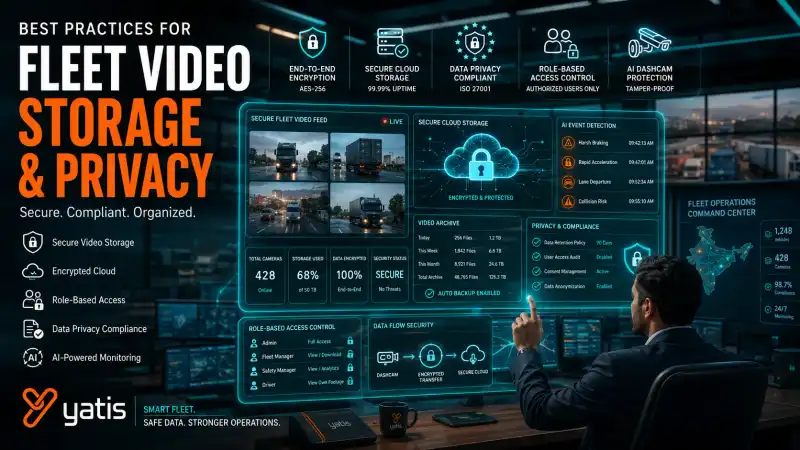
As video telematics adoption grows across commercial fleets, companies are collecting more operational footage than ever before. Dashcams, AI safety cameras, and telematics platforms now generate continuous streams of road footage, driver behavior data, GPS tracking information, incident recordings, and operational analytics.
That visibility helps fleets improve safety, strengthen claims investigations, and manage risk more effectively. But it also creates an important operational responsibility: managing fleet video data securely and responsibly.
For fleet operators, video telematics is no longer only about capturing footage. It is also about storage, access control, retention policies, driver privacy, compliance, and operational transparency.
Without a clear video data management strategy, fleets may create unnecessary security risks, operational confusion, or internal trust issues.
Why Fleet Video Data Management Matters
Modern fleet camera systems capture large amounts of sensitive operational data every day. Depending on the system, that may include continuous road recording, driver-facing footage, route history, timestamps, vehicle speed, braking events, and AI safety alerts.
This information can be extremely valuable during accident investigations, insurance disputes, driver coaching, compliance reviews, and operational analysis. However, unmanaged video storage can quickly become difficult to control as fleets scale.
Without clear policies, fleets may face inconsistent footage retention, unauthorized access, lost evidence, privacy concerns, storage overload, and inefficient investigations. A structured storage and privacy approach helps fleets avoid those operational problems.
What Data Fleet Video Systems Collect
Many fleet operators assume dashcams only record video. In reality, modern video telematics platforms often collect multiple layers of operational data simultaneously.
This may include:
- forward-facing road footage
- driver-facing video
- GPS location
- speed data
- harsh braking events
- acceleration patterns
- route history
- timestamps
- AI-detected safety incidents
When these systems are integrated into larger telematics platforms, the amount of stored operational information increases significantly.
That is why fleets need clear governance around who can access footage, how long data is stored, where footage is stored, how incidents are archived, and how driver privacy is protected.
How Long Should Fleets Store Video Footage?
One of the most common operational questions is: how long should fleet video footage be retained?
The answer depends on fleet size, operational risk, insurance requirements, incident frequency, compliance policies, and storage infrastructure. In many commercial fleet operations, footage is typically stored between 30 and 90 days.
Incident-related footage may be retained longer for insurance investigations, legal review, compliance documentation, and internal audits.
However, keeping all footage indefinitely is rarely practical. Long-term storage without a clear retention policy can create higher storage costs, inefficient retrieval, unnecessary privacy exposure, and operational clutter.
The goal is to retain important operational evidence while avoiding uncontrolled data accumulation.
Cloud Storage vs Local Storage
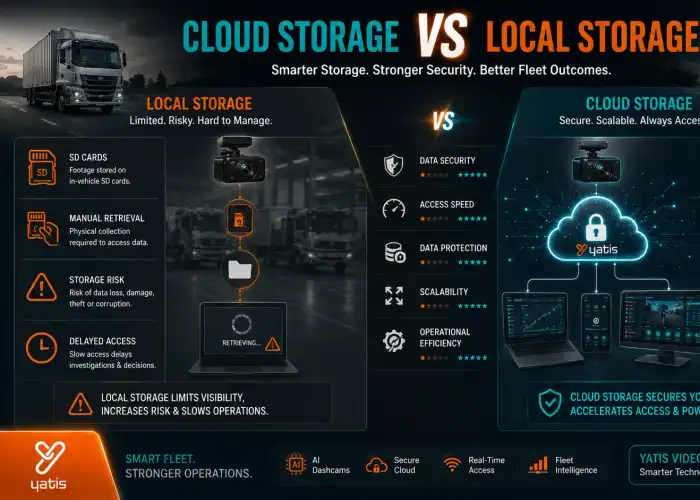
Fleet operators generally use one of two approaches for video storage: local storage or cloud-based storage. Both have operational advantages and limitations.
Local Storage
Traditional dashcams often store footage locally using SD cards, onboard hard drives, or vehicle-based storage devices. This approach may reduce immediate cloud costs, but it also creates operational challenges.
Local storage can make footage retrieval slower, multi-vehicle management harder, incident access more manual, and data backup less reliable. If footage is damaged, overwritten, or physically lost, investigations may become difficult.
Cloud-Based Fleet Video Storage
Cloud-connected video telematics systems provide centralized storage and remote access. This allows fleet managers to retrieve footage faster, review incidents remotely, manage multiple vehicles centrally, and archive important events securely.
Cloud storage also improves scalability for larger fleets managing high vehicle volumes. However, fleets still need access controls, secure login systems, encrypted storage, and defined retention policies because operational visibility should not compromise security.

Driver Privacy and Transparency
Privacy is one of the most important aspects of fleet video telematics. Drivers need to understand what is being recorded, why footage is collected, how data is used, and who can access recordings.
Without transparency, telematics systems may create driver distrust, internal resistance, and morale concerns.
The most effective fleets usually communicate clearly about safety objectives, operational policies, coaching practices, and privacy safeguards.
Video telematics should support safety improvement, operational accountability, and incident visibility—not unnecessary surveillance. That distinction matters.
Data Access Controls and Security
Fleet video footage should never be accessible without clear authorization controls.
A strong video data policy should define who can view footage, who can export recordings, who can manage retention settings, and how incident evidence is archived.
Access should typically be limited to fleet safety managers, authorized operations staff, compliance teams, and approved investigators. Secure systems often include:
- role-based permissions
- encrypted storage
- activity logs
- multi-factor authentication
- audit trails
These controls help reduce the risk of unauthorized sharing, accidental deletion, internal misuse, and data breaches.
Building a Fleet Video Retention Policy
Every fleet using video telematics should maintain a documented retention policy. The policy should define standard footage retention periods, incident evidence handling, deletion timelines, privacy guidelines, access procedures, and legal escalation processes.
Consistency is important. Without a standardized process, fleets often struggle with missing footage, inconsistent investigations, unclear accountability, and operational confusion.
A clear policy helps create faster investigations, stronger compliance, better operational trust, and more organized incident management.
Why Privacy and Visibility Must Work Together
Fleet telematics works best when safety visibility and responsible data management operate together.
Operational visibility helps fleets investigate incidents, improve driver coaching, reduce claims disputes, and monitor safety risks. Privacy practices help fleets build driver trust, maintain transparency, improve compliance, and reduce internal friction.
The goal is not simply collecting more footage. The goal is creating useful operational visibility while managing data responsibly and professionally.
Final Thoughts
As video telematics becomes more common across commercial fleet operations, data management is becoming just as important as data collection. Capturing footage is only one part of the process.
Fleets also need secure storage, clear retention policies, controlled access, transparent privacy practices, and organized operational workflows.
Companies that manage video data effectively are often better positioned to investigate incidents faster, protect sensitive information, improve operational efficiency, and build stronger fleet safety programs.
For growing fleets, responsible telematics visibility is becoming an important part of long-term operational maturity. As fleets continue adopting AI-powered video systems and connected telematics platforms, structured video data governance will play an increasingly important role in commercial fleet management.
Frequently Asked Questions
Plan a secure video data strategy
Contact Yatis Telematics to learn how our secure cloud-based video telematics platform supports retention policies, role-based access, and driver privacy across commercial fleets.
Contact Us →