

How GPS Tracking Improves Bus Safety and Operational Efficiency (2026)

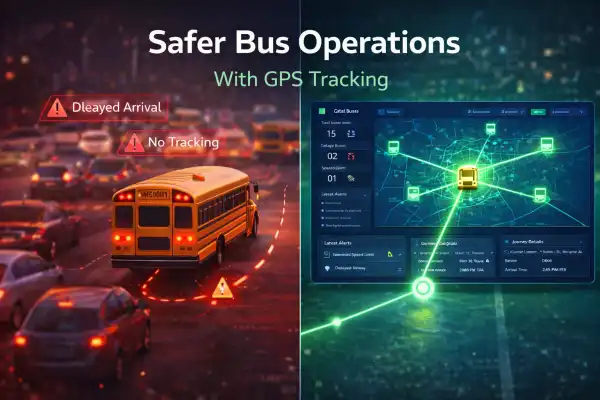
For schools and transport operators, managing buses isn't just about moving vehicles from point A to point B. It's about ensuring passenger safety, maintaining schedule reliability, controlling operational costs, and having full visibility across routes.
This is where GPS tracking for buses becomes essential — not optional.
How GPS Tracking Improves Bus Safety
1. Real-Time Location Visibility
With bus GPS tracking, operators can see where the bus is, whether it is on route, and the expected arrival time. This reduces uncertainty for parents, administrators, and fleet managers.
2. Emergency Response with Alerts
Modern systems provide SOS alerts, panic button integration, and instant notifications. In critical situations, response time becomes significantly faster.
3. Driver Behavior Monitoring
Tracking systems help identify over-speeding, harsh braking, and unauthorized usage. This improves accountability and promotes safer driving practices. Yatis's transport management solutions include comprehensive driver scoring.
4. Geo-Fencing for Route Safety
Geo-fencing allows operators to define approved routes and receive alerts on deviations. This ensures buses stay within safe and planned routes at all times.
How GPS Tracking Improves Efficiency
1. Route Optimization
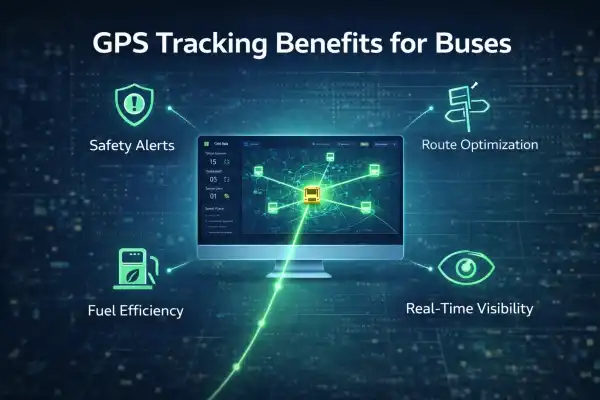
By analyzing route data, operators can reduce delays, optimize travel time, and avoid unnecessary detours. Over time, this translates to significant cost savings.
2. Reduced Idle Time
Tracking helps identify long stops and unnecessary idling. This leads to fuel savings and better time management across the fleet.
3. Better Fleet Coordination
With centralized dashboards, multiple buses can be monitored simultaneously, making operations more streamlined and reducing communication overhead.
4. Data-Driven Decisions
Historical data allows performance analysis, route improvement, and better planning. This turns tracking into a true decision-making tool rather than a passive monitoring system.
Why Basic Tracking Is Not Enough
Many systems provide only location tracking but lack alerts, analytics, and dashboards. This limits their usefulness in real operations. A system that only shows where a bus is — without telling you if it's speeding, late, or off-route — doesn't give you the control you need.
What Modern Bus Tracking Systems Offer
Advanced solutions like those from Yatis Telematics provide:
- Real-time tracking
- Route monitoring
- Safety alerts
- Control room dashboards
- AIS-140 compliance
This allows operators to move from simply tracking vehicles to actively managing operations.
Real-World Impact
Organizations using GPS tracking for buses report improved on-time performance, increased passenger safety, better fleet utilization, and reduced operational costs. These aren't incremental gains — they represent a fundamental shift in how transport operations are managed.
Frequently Asked Questions
Ready to improve your bus operations?
Contact Yatis Telematics to learn how our GPS tracking solutions can improve safety and efficiency across your fleet.
Contact Us →