

GPS Tracking vs AIS-140 GPS Devices: What's the Difference and Which One Do You Need?

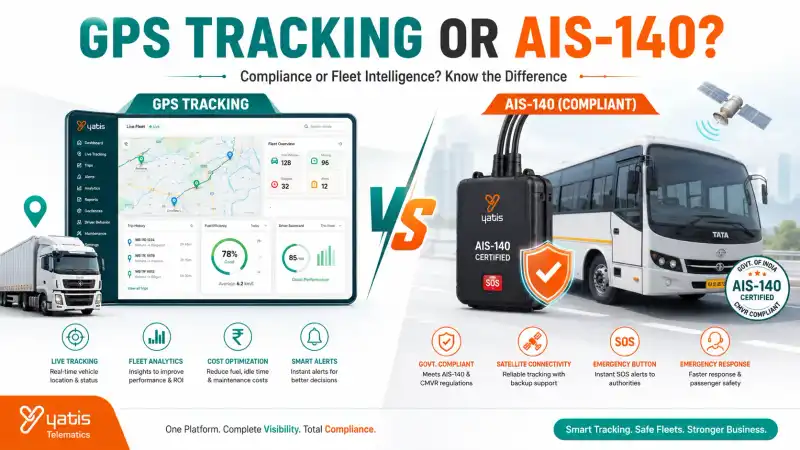
Businesses researching vehicle tracking solutions often encounter two terms that seem interchangeable: GPS Tracking System and AIS-140 GPS Device. Although both technologies involve GPS-based vehicle tracking, they serve different purposes.
A GPS tracking system is primarily designed to improve fleet visibility and operational efficiency. An AIS-140 GPS device is designed to meet the Automotive Industry Standard 140 (AIS-140), a certification framework established for specific categories of public service and commercial vehicles. Because AIS-140-certified devices also provide GPS location tracking, many buyers mistakenly assume they replace fleet management systems.
Quick Takeaways
- GPS tracking focuses on operational visibility
- AIS-140 focuses on regulatory compliance
- AIS-140 devices include certified hardware requirements
- GPS tracking systems provide broader fleet intelligence
- Many commercial fleets benefit from using both
Comparison Snapshot
| Feature | GPS Tracking System | AIS-140 GPS Device |
|---|---|---|
| Live Vehicle Tracking | Yes | Yes |
| Trip History | Yes | Yes |
| Government Compliance | Not designed for compliance | AIS-140 certified |
| Emergency Button Support | Optional | Required where applicable |
| Driver ID Integration | Optional | Often required |
| Fleet Analytics | Advanced | Limited unless integrated with fleet software |
| Fleet Dashboards | Comprehensive | Platform dependent |
| Alerts & Notifications | Extensive | Basic to moderate |
| Best For | Fleet operations | Regulatory compliance |
What Is a GPS Tracking System?
A GPS tracking system is a telematics solution that continuously monitors vehicle location, trip history, and operational activity. It helps businesses improve fleet visibility, optimize operations, and make better decisions using real-time vehicle data. A commercial GPS tracking system typically provides:
- Live vehicle location
- Route history
- Trip reports
- Vehicle activity
- Fleet dashboards
- Operational analytics
- Alerts and notifications
Its primary objective is to improve operational efficiency rather than satisfy regulatory requirements.
What Is an AIS-140 GPS Device?
An AIS-140 GPS device is a certified vehicle tracking device that complies with the Automotive Industry Standard (AIS-140). It is designed to support regulatory requirements for eligible commercial and public transport vehicles while providing location tracking and emergency communication capabilities.
Unlike a standard GPS tracker, an AIS-140-certified device must comply with specific technical and certification requirements defined under the AIS-140 standard. Depending on the implementation and applicable regulations, an AIS-140 device may include certified GPS tracking hardware, cellular communication, emergency or panic button integration, driver identification support, secure data transmission, and compliance with approved certification processes.
The emphasis is on meeting compliance standards rather than providing advanced fleet analytics. For a detailed breakdown of the standard itself, see our AIS-140 compliance guide.
Primary Purpose: Compliance vs Operations
The biggest distinction is why each solution exists.
GPS Tracking System
Designed to improve fleet visibility, operational efficiency, vehicle utilization, business intelligence, and fleet reporting.
AIS-140 GPS Device
Designed to meet regulatory requirements, support compliant vehicle tracking, enable emergency response capabilities, and satisfy applicable transport regulations.
A GPS tracking platform helps businesses answer questions such as where the vehicle is, which route it followed, and how efficiently the fleet is operating. An AIS-140 device answers a different question: does this vehicle meet the required AIS-140 compliance standard? Businesses that need both operational visibility and regulatory compliance often deploy AIS-140-certified devices integrated with a GPS tracking platform.
Feature Comparison in Detail
GPS tracking systems and AIS-140 GPS devices both provide vehicle location tracking, but they are designed for different objectives. GPS tracking emphasizes fleet operations and analytics, while AIS-140 devices prioritize regulatory compliance with certified hardware and mandatory safety requirements.
| Feature | GPS Tracking System | AIS-140 GPS Device |
|---|---|---|
| Live Vehicle Tracking | Yes | Yes |
| Trip History | Yes | Yes |
| Government Compliance | Not designed for compliance | AIS-140 certified |
| Emergency / Panic Button Support | Optional | Mandatory where applicable under AIS-140 |
| Driver Identification Support | Optional | Often supported depending on deployment |
| Fleet Analytics | Advanced | Limited unless integrated with fleet software |
| Operational Dashboards | Comprehensive | Platform dependent |
| Alerts & Notifications | Extensive | Basic to moderate |
| Best Primary Use | Fleet operations | Regulatory compliance |
The comparison clearly shows that AIS-140 certification and fleet management capabilities serve different business objectives rather than replacing one another.
Which Vehicles Require AIS-140 Compliance?
AIS-140 compliance is generally required for specific categories of commercial and public transport vehicles where applicable under government or transport authority regulations. Requirements vary depending on vehicle category and jurisdiction. Examples may include:
- Public transport buses
- School buses (where mandated)
- Commercial passenger vehicles
- State transport fleets
- Government transport projects
- Other regulated commercial vehicle categories
Businesses should always verify the latest requirements issued by the relevant transport authority because compliance obligations differ by vehicle category and jurisdiction.
When Is a GPS Tracking System Enough?
A GPS tracking system is sufficient when businesses primarily need operational visibility, fleet monitoring, reporting, analytics, and vehicle utilization without a regulatory requirement for AIS-140-certified hardware. Many commercial fleets do not require AIS-140 compliance. Instead, their priorities include:
- Monitoring vehicle movement
- Improving dispatch visibility
- Tracking trips
- Reviewing fleet performance
- Optimizing daily operations
- Supporting business decision-making
Typical examples include corporate vehicle fleets, sales fleets, service engineers, construction companies, manufacturing businesses, and private logistics operations that are not subject to AIS-140 mandates.
When Do Businesses Need Both?
Many regulated commercial fleets benefit from combining an AIS-140-certified GPS device with fleet management software, allowing them to satisfy compliance requirements while gaining advanced operational visibility and analytics.
One of the biggest misconceptions is that choosing AIS-140 eliminates the need for fleet management software. In practice, many businesses require both. A combined solution enables organizations to meet regulatory obligations, monitor vehicles in real time, generate operational reports, analyze fleet performance, improve vehicle utilization, and support centralized fleet management.
Cost vs Long-Term Business Value
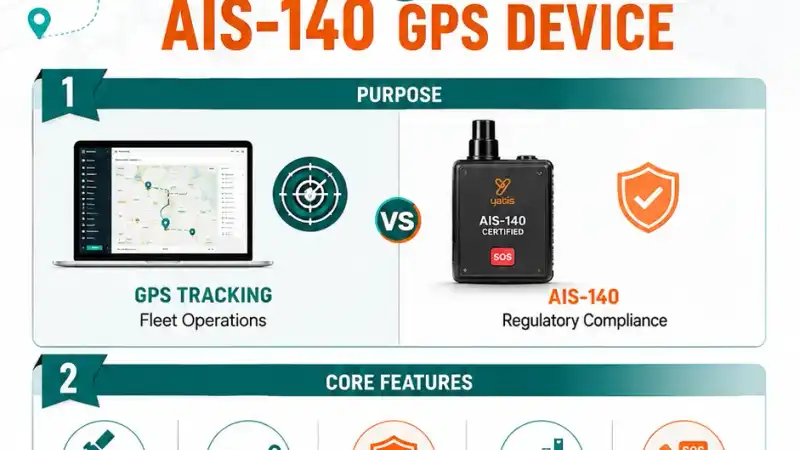
AIS-140 devices help organizations meet mandatory compliance requirements, while GPS tracking systems generate long-term operational value through improved visibility, reporting, and fleet optimization. Purchase decisions should not focus only on hardware cost.
GPS Tracking System
Provides value through operational efficiency, fleet visibility, better decision-making, reporting, and vehicle utilization.
AIS-140 GPS Device
Provides value through regulatory compliance, certified hardware, compliance readiness, mandatory tracking requirements, and approved emergency functionality where applicable.
Organizations operating regulated fleets should view AIS-140 as a compliance investment and fleet management software as an operational investment. Together, they create a more complete fleet technology strategy.
Which Solution Should You Choose?
Choose a GPS Tracking System If:
- Your primary objective is fleet visibility
- You need operational dashboards
- You require advanced reporting
- You want analytics and utilization insights
- Your vehicles are not required to comply with AIS-140
Choose an AIS-140 GPS Device If:
- Your vehicles fall under applicable AIS-140 compliance requirements
- You must install certified tracking hardware
- Your operations require government-compliant tracking
- You need approved emergency functionality where mandated
Choose Both If:
- Your fleet requires regulatory compliance and advanced fleet management
- You want centralized operational reporting
- You need scalable fleet visibility
- You manage large commercial or passenger transport fleets
Decision Guide
| If Your Goal Is... | Recommended Solution |
|---|---|
| Monitor vehicle movement | GPS Tracking System |
| Improve fleet efficiency | GPS Tracking System |
| Meet AIS-140 compliance | AIS-140 GPS Device |
| Operate regulated passenger fleets | AIS-140 GPS Device |
| Combine compliance with fleet intelligence | AIS-140 GPS Device + Fleet Management Platform |
| Scale fleet operations while remaining compliant | Integrated AIS-140 + Fleet Management Solution |
Common Mistakes Businesses Make
The biggest mistake businesses make is assuming that AIS-140 GPS devices replace fleet management systems. Choosing the wrong solution often leads to unnecessary costs, compliance issues, or limited operational visibility.
1. Assuming AIS-140 Is Just Another GPS Tracker
Although AIS-140 devices use GPS technology, they are not simply upgraded GPS trackers. Their primary objective is to comply with the AIS-140 standard, whereas a commercial GPS tracking system focuses on operational efficiency and fleet visibility.
2. Purchasing Only for Compliance
Some fleet operators install AIS-140 devices solely because regulations require them. While this satisfies compliance, they overlook the operational benefits of a modern fleet management platform. Questions such as which vehicles are underutilized, how efficiently the fleet is operating, and which assets require operational attention cannot always be answered through compliance-focused tracking alone.
3. Ignoring Future Fleet Growth
Today's fleet may consist of 20 vehicles; next year it could be 200. Businesses expecting expansion should consider whether their chosen solution supports additional vehicles, multiple users, centralized reporting, operational analytics, and enterprise-level fleet management.
4. Comparing Only Hardware
Hardware is only one part of the overall solution. Businesses should also evaluate software capabilities, reporting, analytics, platform scalability, customer support, integration options, and data accessibility. Long-term value often comes from the software ecosystem rather than the tracking hardware itself.
5. Selecting the Lowest-Cost Option
Lowest purchase price does not mean lowest total cost of ownership. Fleet technology should be evaluated based on compliance requirements, operational improvements, productivity gains, administrative efficiency, and future scalability.
Who Should Buy Which Solution?
| Business Type | Recommended Solution |
|---|---|
| Corporate Sales Fleet | GPS Tracking System |
| Service & Maintenance Fleet | GPS Tracking System |
| Private Logistics Fleet | GPS Tracking System (unless AIS-140 is mandated) |
| School Bus Operator | AIS-140 GPS Device + Fleet Management Platform |
| State Transport Operator | AIS-140 GPS Device + Fleet Management Platform |
| Taxi & Passenger Transport | AIS-140 GPS Device (where required) + Fleet Management Platform |
| Government Fleet | AIS-140 GPS Device |
| Growing Enterprise Fleet | Fleet management solution with AIS-140 support where applicable |
Final Thoughts
GPS tracking systems and AIS-140 GPS devices are not competing technologies — they solve different business challenges. A GPS tracking system helps organizations manage vehicles more efficiently by providing real-time visibility, operational analytics, reporting, and fleet intelligence. An AIS-140 GPS device helps eligible commercial and public transport vehicles meet applicable regulatory requirements through certified hardware and compliance-focused functionality.
For many organizations, particularly those operating regulated passenger transport or government fleets, the strongest approach is to combine AIS-140-certified hardware with a modern fleet management solution. This allows businesses to satisfy compliance obligations while gaining the operational insights needed to improve efficiency, enhance visibility, and support long-term fleet growth.
At Yatis, our AIS-140 GPS devices integrate with our GPS tracking platform, helping businesses meet compliance requirements while unlocking the full benefits of intelligent fleet management.
Frequently Asked Questions
Ready to get started?
Contact Yatis Telematics to learn how AIS-140 certified hardware and a modern fleet platform can deliver compliance and operational visibility together.
Contact Us →