

How Driver Behavior Impacts EV Battery Life: What Fleet Managers Need to Know

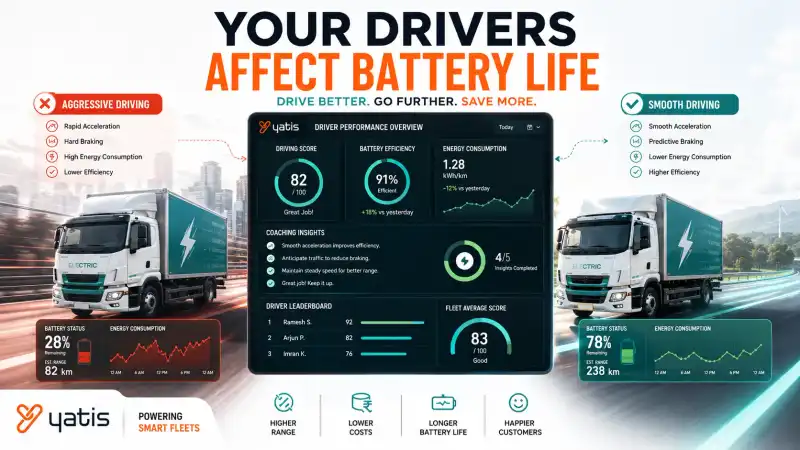
For commercial fleet operators, battery performance is one of the most important factors affecting the success of electric vehicle adoption.
Battery health influences:
- vehicle availability
- operating costs
- charging frequency
- route reliability
- long-term fleet ROI
When discussions about battery life arise, attention often focuses on battery technology, charging infrastructure, and vehicle specifications. However, one factor is frequently overlooked: driver behavior.
The way a vehicle is driven every day can have a significant impact on energy consumption, charging requirements, and long-term battery performance. For fleets managing multiple EVs, understanding the relationship between EV driver behavior and battery life is essential for maximizing efficiency and protecting battery investments.
Why EV Battery Life Matters for Commercial Fleets
Unlike fuel-powered vehicles, EVs depend entirely on battery performance to complete routes efficiently.
A healthy battery supports:
- predictable vehicle range
- lower operating costs
- reduced downtime
- improved vehicle utilization
Battery degradation, on the other hand, can result in shorter driving range, more frequent charging, increased operating expenses, and reduced asset value. Since batteries represent one of the most expensive components of an electric vehicle, extending battery life is a priority for fleet operators.
Does Driver Behavior Really Affect EV Battery Life?
The short answer is yes.
While battery chemistry and environmental conditions play important roles, driving habits directly influence how much energy the vehicle consumes and how hard the battery must work.
Over time, inefficient driving patterns can accelerate battery wear and reduce operational efficiency. The effect may not be noticeable after a single trip. However, across hundreds of vehicles and thousands of kilometers, the impact becomes significant.
Aggressive Acceleration Increases Energy Demand
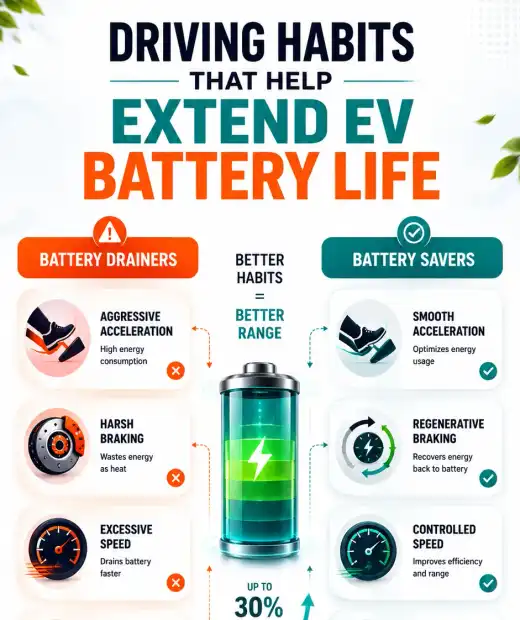
Electric vehicles deliver instant torque. This makes them highly responsive, but it also means rapid acceleration can draw large amounts of power from the battery.
Frequent aggressive acceleration may lead to:
- higher energy consumption
- reduced driving range
- increased charging frequency
- greater battery stress
For commercial fleets operating daily routes, these small inefficiencies can accumulate quickly. Drivers who accelerate smoothly often achieve better energy efficiency and longer battery performance.
Harsh Braking Reduces Energy Efficiency
Most EVs use regenerative braking technology. This system helps recover energy during deceleration and sends it back to the battery.
However, harsh braking can reduce the effectiveness of regenerative systems. Drivers who frequently brake suddenly, follow vehicles too closely, or react late to traffic conditions often miss opportunities to maximize energy recovery.
Smoother driving habits typically improve overall battery efficiency.
Excessive Speed Impacts Battery Performance
Vehicle speed has a direct effect on energy consumption. As speed increases, aerodynamic resistance rises significantly.
For EV fleets, higher speeds often result in faster battery drain, shorter operating range, and increased charging requirements. Maintaining appropriate speeds can help improve range consistency, battery efficiency, and route reliability.
This is especially important for logistics and delivery fleets operating long-distance routes.
Unnecessary Idling and Accessory Usage
Traditional vehicles waste fuel while idling. EVs do not consume fuel, but they still use battery energy when systems remain active unnecessarily.
Examples include:
- climate control systems
- heating
- cooling
- auxiliary equipment
- onboard electronics
While individual impacts may seem small, prolonged usage can reduce available range throughout the day. Fleet managers should understand how operational practices influence battery consumption beyond driving alone.
Route Awareness and Energy Efficiency
Experienced EV drivers often develop better awareness of terrain, traffic conditions, charging locations, and route energy requirements.
Poor route decisions can increase battery demand unnecessarily. Examples include avoidable congestion, inefficient detours, repeated stop-and-go driving, and excessive elevation changes. Driver awareness contributes significantly to overall fleet efficiency.
How Driver Behavior Affects Charging Frequency
Battery life is not only influenced by driving. It is also affected by how often vehicles need to be charged.
Aggressive driving habits generally lead to faster battery depletion, more charging sessions, and increased charging infrastructure demand. As charging frequency increases, fleet operations may experience longer downtime, charger congestion, and reduced vehicle availability.
Improving driver efficiency helps reduce these operational pressures.

Using Telematics to Measure Driver Impact
One of the biggest challenges for fleet operators is identifying which behaviors affect battery performance. This is where telematics becomes valuable.
Modern EV telematics systems can monitor acceleration patterns, braking behavior, speed trends, route efficiency, energy consumption, and vehicle utilization.
Rather than relying on assumptions, fleet managers can use actual operational data. This creates opportunities for targeted driver coaching and performance improvement.
Driver Coaching Can Extend Battery Life
Many fleets already use telematics for safety improvement. The same approach can support EV efficiency. By identifying inefficient driving habits, managers can help drivers improve:
Smooth Acceleration
Reducing unnecessary power demand.
Predictive Braking
Maximizing regenerative energy recovery.
Speed Management
Improving energy efficiency during longer trips.
Route Awareness
Reducing avoidable energy consumption.
Small improvements across an entire fleet can produce meaningful long-term results.
Benefits of Improving EV Driver Behavior
Better driving habits create advantages beyond battery health alone. Fleet operators may also experience:
- lower energy costs
- improved range consistency
- fewer charging interruptions
- higher vehicle utilization
- reduced operating expenses
- stronger sustainability performance
These benefits make driver behavior an important part of EV fleet management.
Common Mistakes Fleets Make
Many organizations focus heavily on vehicle technology while overlooking operational behavior. Common mistakes include:
Monitoring Battery Data Without Driver Data
Battery performance tells only part of the story.
Ignoring Energy Consumption Trends
Patterns often reveal opportunities for efficiency improvements.
Treating EV Driver Training as Optional
Driver education can significantly influence fleet performance.
Focusing Only on Charging Infrastructure
Infrastructure matters, but driving behavior affects how efficiently that infrastructure is used.
The Future of EV Fleet Efficiency
As electric fleets continue growing, driver analytics will become increasingly important. Future telematics platforms are expected to provide:
- AI-powered coaching recommendations
- predictive battery analytics
- personalized efficiency scores
- automated driver feedback
- energy consumption benchmarking
These capabilities will help fleets improve battery performance while reducing operational costs.
Final Thoughts
Battery technology plays a major role in EV performance. However, the people operating those vehicles also have a significant impact on long-term battery health and efficiency.
Understanding the relationship between EV driver behavior and battery life helps fleet operators improve range performance, charging efficiency, vehicle availability, and operating costs.
Telematics provides the visibility needed to identify driving patterns, improve coaching efforts, and support more efficient EV operations. As commercial fleets continue electrifying, driver behavior will become one of the most important factors influencing battery performance and long-term fleet success.
Solutions like Yatis help fleet operators connect telematics, driver analytics, and operational visibility into a unified platform, making it easier to improve both vehicle performance and fleet efficiency.
Frequently Asked Questions
Ready to optimize your EV fleet?
Contact Yatis Telematics to learn how our telematics and driver analytics solutions can help you extend EV battery life and improve fleet efficiency.
Contact Us →