

Real-Time Incident Alerts for Commercial Fleets: Why Faster Response Matters

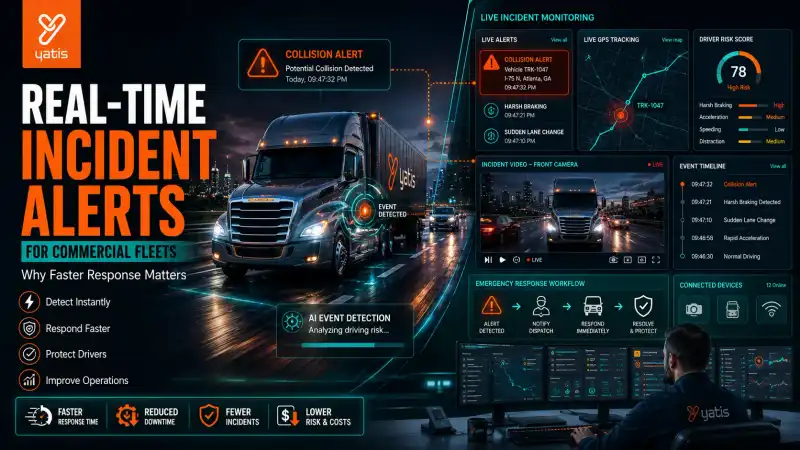
Fleet incidents do not become expensive only because of the accident itself. They become expensive when response times are slow.
A delayed response can lead to longer vehicle downtime, higher operational disruption, unresolved safety risks, delayed insurance reporting, and missed emergency situations.
For fleet operators managing multiple vehicles and drivers, visibility during incidents is critical. That is why many fleets are moving toward video telematics systems with real-time incident alerts.
Instead of discovering problems hours later, fleet managers can receive immediate notifications when risky events occur on the road. That changes how fleets respond to safety, operations, and risk management.
What Are Real-Time Incident Alerts?
Real-time incident alerts are automated notifications triggered when a fleet telematics system detects a safety-related event.
These alerts are usually generated through AI dashcams, telematics sensors, GPS tracking, and driver behavior monitoring systems.
Depending on the platform, alerts can be triggered by:
- harsh braking
- sudden acceleration
- collisions
- distracted driving
- speeding
- lane departure
- fatigue indicators
- rollover risks
Once an event occurs, fleet managers can receive immediate updates along with supporting video footage and driving data.
Why Delayed Incident Reporting Creates Problems
In many fleets, incidents are still reported manually. That process often depends on drivers calling dispatch, supervisors reviewing reports later, manual paperwork, and delayed footage retrieval.
The problem is that delays create operational blind spots. For example, a serious collision may not be reported immediately, risky driving behavior may continue unnoticed, emergency support may arrive late, or insurance evidence may become harder to organize.
Even smaller incidents can create larger operational issues if fleets do not respond quickly. Real-time alerts reduce that delay by helping managers identify events as they happen.
Faster Alerts Improve Fleet Safety Response
One of the biggest advantages of real-time incident alerts is speed. Instead of waiting until the end of a shift or after a formal report is submitted, fleet teams can react immediately.
This allows operators to check driver safety quickly, coordinate emergency response, review incident footage immediately, secure evidence faster, and prevent escalation of ongoing risks.
For example, if a vehicle experiences repeated harsh braking events within a short period, managers can intervene before a more serious accident occurs. That proactive visibility is difficult to achieve with traditional reporting systems alone.
Real-Time Alerts Support Driver Coaching
Incident alerts are not only useful after accidents. They also help fleets identify unsafe driving behavior early.
Managers can review recurring patterns such as distracted driving, aggressive acceleration, unsafe following distance, speeding trends, and fatigue-related behavior. This allows coaching conversations to happen closer to the actual event, when details are still fresh.
As a result, coaching becomes more accurate, more actionable, easier to document, and more effective over time. Instead of waiting for accidents to reveal safety problems, fleets can address risky habits before they become larger operational issues.
Better Incident Visibility Improves Claims Handling
Insurance investigations move faster when evidence is available immediately. Real-time alert systems help fleets capture incident footage automatically, preserve driving data, create accurate event timelines, and support insurance communication.
This is especially important in disputed claims where fleets need to verify vehicle speed, road positioning, braking behavior, driver response, and surrounding traffic conditions.
Without immediate evidence collection, important context can easily be lost.
Operational Visibility Matters More as Fleets Grow
For small fleets, manual reporting may still feel manageable. But as fleet size increases, delayed visibility becomes much harder to control.
Larger operations often struggle with inconsistent reporting, delayed safety reviews, limited supervisor oversight, and fragmented incident management.
Real-time telematics alerts help centralize visibility across the fleet. Managers can monitor active incidents, driver risk trends, recurring safety events, and operational hotspots from a single platform.
That level of visibility becomes increasingly valuable for multi-location or high-mileage fleets.

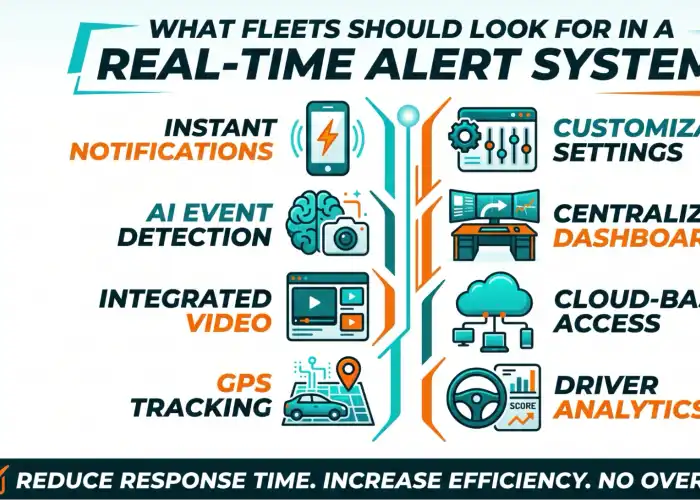
What Fleets Should Look for in a Real-Time Alert System
Not all alert systems provide the same operational value. Fleet operators should look for:
- instant event notifications
- AI-powered event detection
- integrated video footage
- GPS tracking
- customizable alert settings
- centralized dashboards
- cloud-based access
- driver behavior analytics
The system should help reduce response time without overwhelming managers with unnecessary alerts. Accuracy matters as much as speed.
Real-Time Visibility Is Becoming a Fleet Standard
Commercial fleet operations are becoming more data-driven every year. As safety expectations, insurance pressure, and operational complexity increase, fleets need faster visibility into what is happening on the road.
Real-time incident alerts help bridge that gap by allowing operators to respond faster, coach drivers earlier, investigate incidents more efficiently, and improve operational awareness.
For many fleets, the ability to react immediately instead of hours later is becoming an important part of modern fleet risk management.
Frequently Asked Questions
Need faster incident response?
Contact Yatis Telematics to learn how AI-powered real-time alerts can help your fleet respond to incidents as they happen and reduce operational downtime.
Contact Us →