

Solar + Battery Storage: Why BESS Monitoring Is the Future of Reliable Power

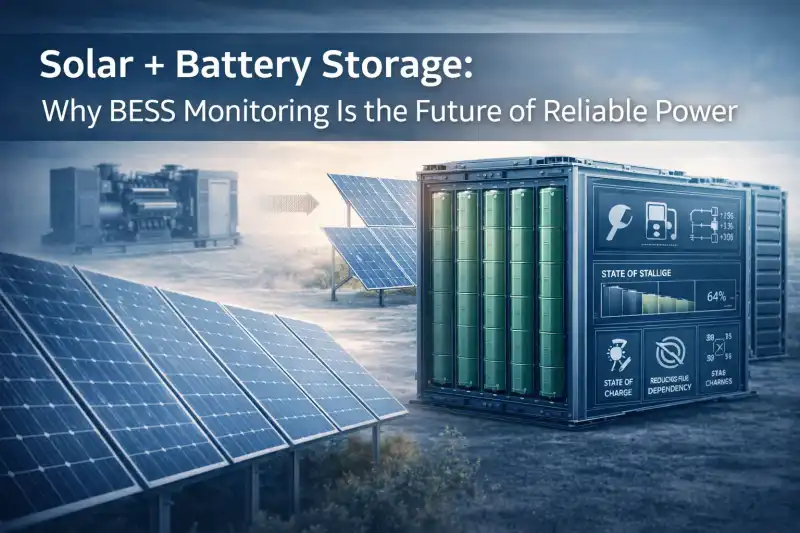
Global energy systems are undergoing a rapid transformation. Rising fuel prices, geopolitical instability, and stricter environmental regulations are pushing industries to rethink their dependence on diesel-based power backup systems. At the same time, the combination of solar energy and battery energy storage systems (BESS) is emerging as a more stable and efficient alternative for industrial power reliability.
Battery storage is now becoming a core part of energy infrastructure worldwide. The global Battery Energy Storage System market is expected to grow from about $50.8 billion in 2025 to nearly $105.9 billion by 2030, driven by renewable energy adoption and grid modernization.
For many organizations, this transition means moving from diesel generators and large UPS systems toward solar-battery hybrid energy architectures that provide cleaner and more resilient power.
Why Diesel-Based Power Backup Is Becoming Less Sustainable
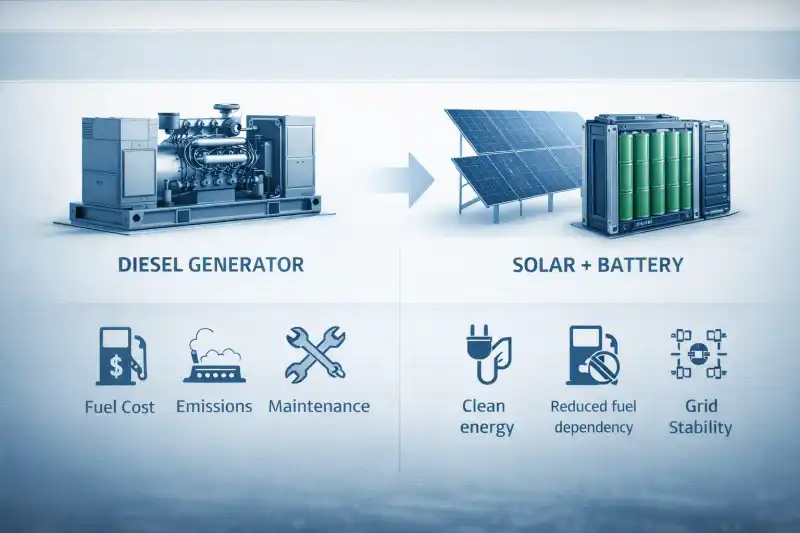
Diesel generators have historically been used as the primary backup power source for industries, telecom towers, data centers, and commercial buildings. However, several factors are reducing their long-term viability.
Rising fuel costs and supply uncertainty
Fuel price volatility—often influenced by geopolitical conflicts and supply disruptions—makes diesel-based energy planning unpredictable.
Environmental regulations
Governments are imposing stricter emission standards, which increases compliance costs for diesel generator operators.
High operational expenses
Diesel generators require continuous fuel supply and maintenance, making them significantly more expensive over time compared with battery storage solutions.
These pressures are pushing organizations to explore cleaner alternatives.
Solar + Battery: A New Model for Reliable Energy
The integration of solar power with battery storage is becoming one of the most effective solutions for reducing dependence on diesel generators.
In hybrid energy systems:
- Solar panels generate electricity during the day
- Batteries store excess energy for later use
- Diesel generators serve only as a last-resort backup
Research shows that combining solar generation with battery storage can significantly reduce diesel generator usage while improving environmental impact.
This approach allows businesses to maintain reliable power while lowering operational costs and emissions.
How BESS Reduces Dependence on Diesel Generators
Battery Energy Storage Systems support energy reliability in several ways:
Energy storage for peak demand
Stored energy can supply power during outages or high-demand periods.
Renewable energy integration
BESS allows solar power to be used even when sunlight is unavailable.
Lower fuel dependency
Hybrid systems dramatically reduce the need for continuous diesel generator operation.
Improved power stability
Battery systems respond instantly to fluctuations, unlike generators that require startup time.
These capabilities make solar + battery + smart monitoring the preferred architecture for modern energy systems.
Why BESS Monitoring Is Critical for the Future
As battery systems become larger and more complex, monitoring becomes essential to ensure reliability and safety.
Advanced BESS monitoring platforms help operators track:
- Battery voltage behavior
- Thermal performance
- Charging and discharging patterns
- Early anomaly detection
Without proper monitoring, even the most advanced battery system can lose efficiency or develop hidden risks.
The Role of Monitoring in Hybrid Energy Systems
In solar-battery installations, monitoring ensures that:
- Battery assets deliver expected performance
- Solar generation is efficiently stored
- Backup systems activate only when necessary
- Battery health remains stable over time
This intelligence transforms energy storage from a passive component into an actively managed infrastructure.
Frequently Asked Questions
Conclusion
Organizations transitioning toward solar-battery infrastructure increasingly rely on intelligent monitoring to maintain performance and safety. Explore how Yatis BESS monitoring solutions help operators gain real-time visibility across energy storage systems.
Ready to Transition to Solar + Battery?
Contact Yatis Telematics to learn how BESS monitoring can help you achieve reliable, sustainable energy with real-time visibility.
Contact Us →