

Transport Management Platforms vs Fleet Optimization Tools: What Actually Works in 2026

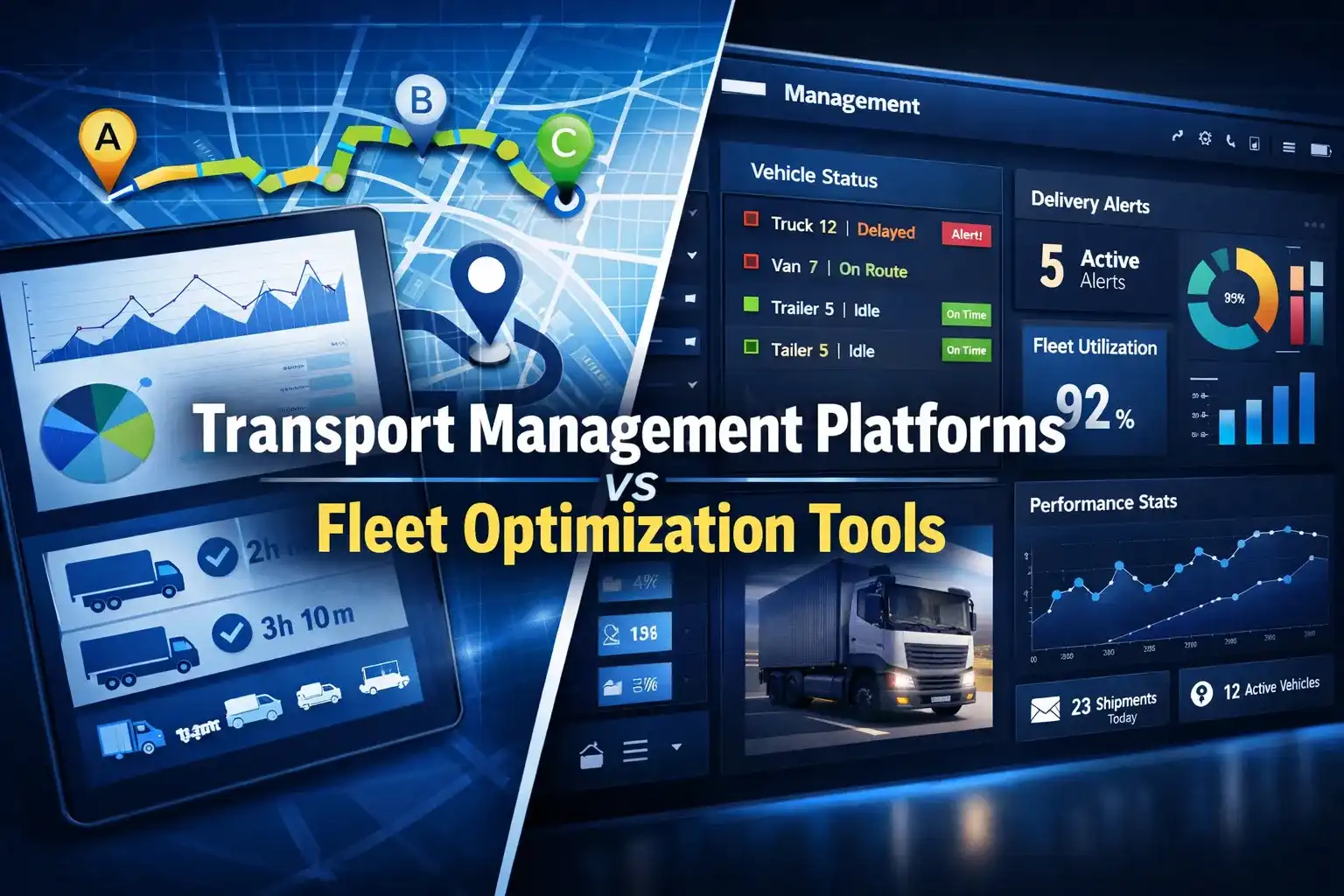
Transport management platforms and fleet optimization tools serve different but complementary purposes. Transport management solutions focus on end-to-end execution, visibility, and control of transport operations, while fleet optimization tools specialise in improving efficiency, routing, cost, and utilisation. In 2026, the most effective platforms combine both capabilities into a single transport intelligence layer.
Why This Comparison Matters More Than Ever
Many businesses searching for transport management solutions encounter tools that promise:
- Route optimisation
- Cost reduction
- Better fleet utilisation
But not all platforms that "optimize fleets" actually manage transport.
This confusion leads to:
- Underpowered software decisions
- Fragmented systems
- Rising operational complexity
Understanding the difference between transport management platforms and fleet optimization tools is critical before making a buying decision.
What Is a Transport Management Platform?
A transport management platform manages the entire lifecycle of transport operations.
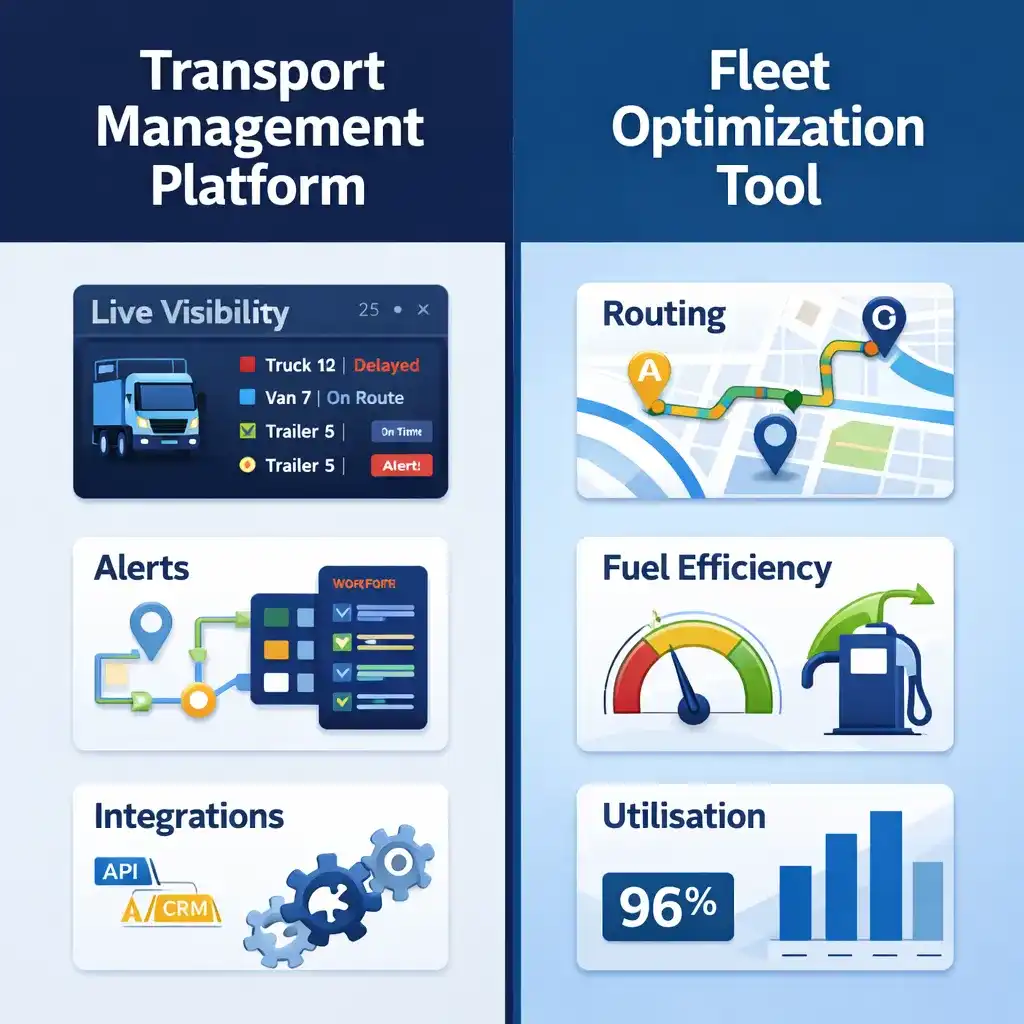
A modern transport management platform typically includes:
- Trip planning and execution
- Real-time vehicle and shipment visibility
- Route adherence monitoring
- Exception and incident handling
- Cost and performance analytics
- Integration with ERP, WMS, and customer systems
Transport management platforms answer the question:
"What is happening right now in my transport operations, and what should I do next?"
What Are Fleet Optimization Tools?
Fleet optimization tools focus on making fleets more efficient, not managing full transport workflows.
They are typically designed to:
- Optimise routes
- Reduce fuel consumption
- Improve vehicle utilisation
- Analyse driver behaviour
Fleet optimization tools answer a different question:
"How can I reduce cost and improve efficiency using my fleet data?"
They are powerful — but narrower in scope.

Transport Management Platforms vs Fleet Optimization Tools
High-Level Comparison
| Capability | Transport Management Platform | Fleet Optimization Tool |
|---|---|---|
| End-to-end transport execution | ✅ Yes | ❌ No |
| Real-time operational visibility | ✅ Yes | ⚠️ Limited |
| Route & cost optimisation | ✅ Yes | ✅ Yes |
| Exception handling | ✅ Yes | ❌ No |
| Multi-stakeholder workflows | ✅ Yes | ❌ No |
| ERP / WMS integration | ✅ Yes | ⚠️ Limited |
The key difference is control vs improvement.
Where Fleet Optimization Tools Fall Short on Their Own
Fleet optimization tools are valuable, but when used alone they often:
1. Optimise in Isolation
They improve routes but don't manage delivery commitments, SLAs, or customer communication.
2. Lack Operational Context
An "optimal route" may be unusable due to:
- Vehicle constraints
- Customer requirements
- Real-world disruptions
3. Don't Handle Exceptions
Breakdowns, delays, diversions, and incidents fall outside their scope.
This is why optimization without management often creates the illusion of efficiency.
How Modern Transport Management Solutions Embed Fleet Optimization
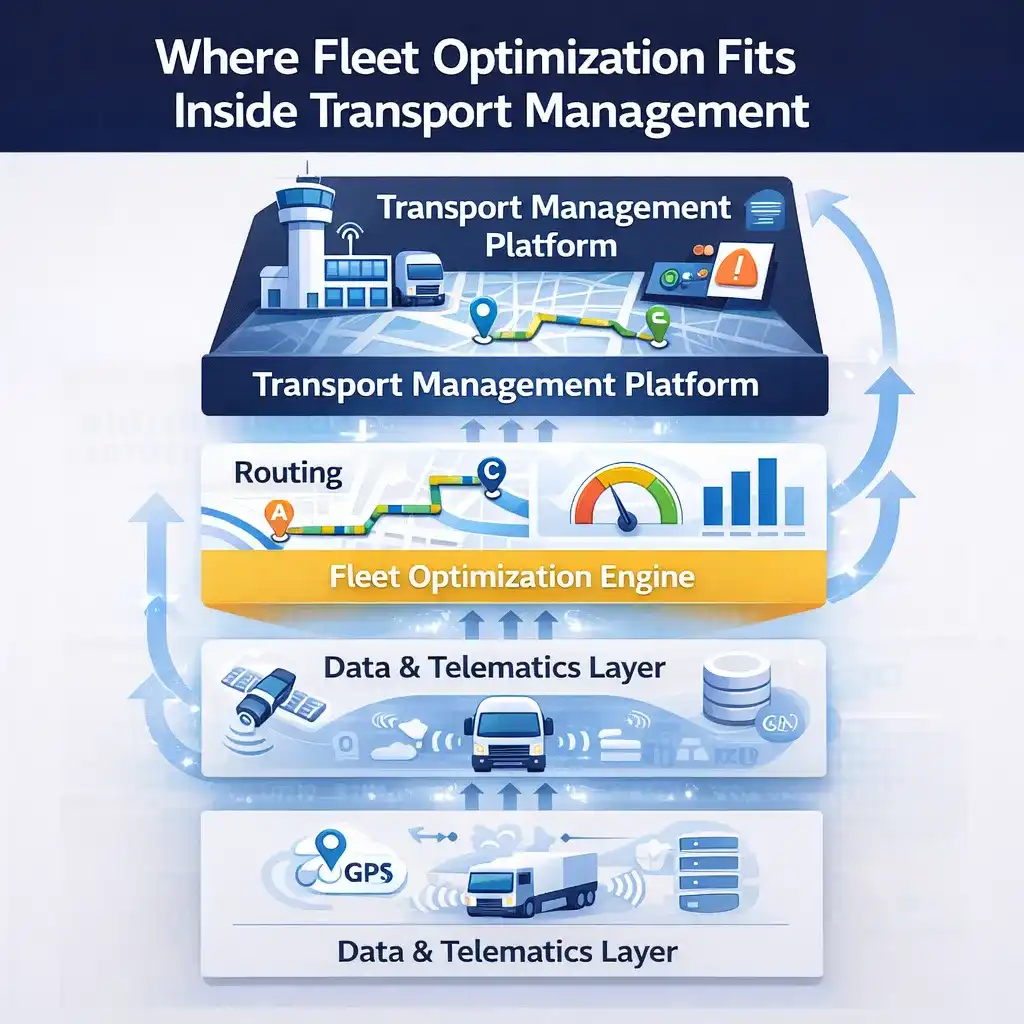
In 2026, the best transport management solutions no longer treat optimization as a separate module.
Instead, they:
- Use optimization algorithms within operational workflows
- Continuously adjust routes based on live conditions
- Balance cost, service levels, and safety simultaneously
Optimization becomes context-aware, not static.
When Fleet Optimization Tools Make Sense
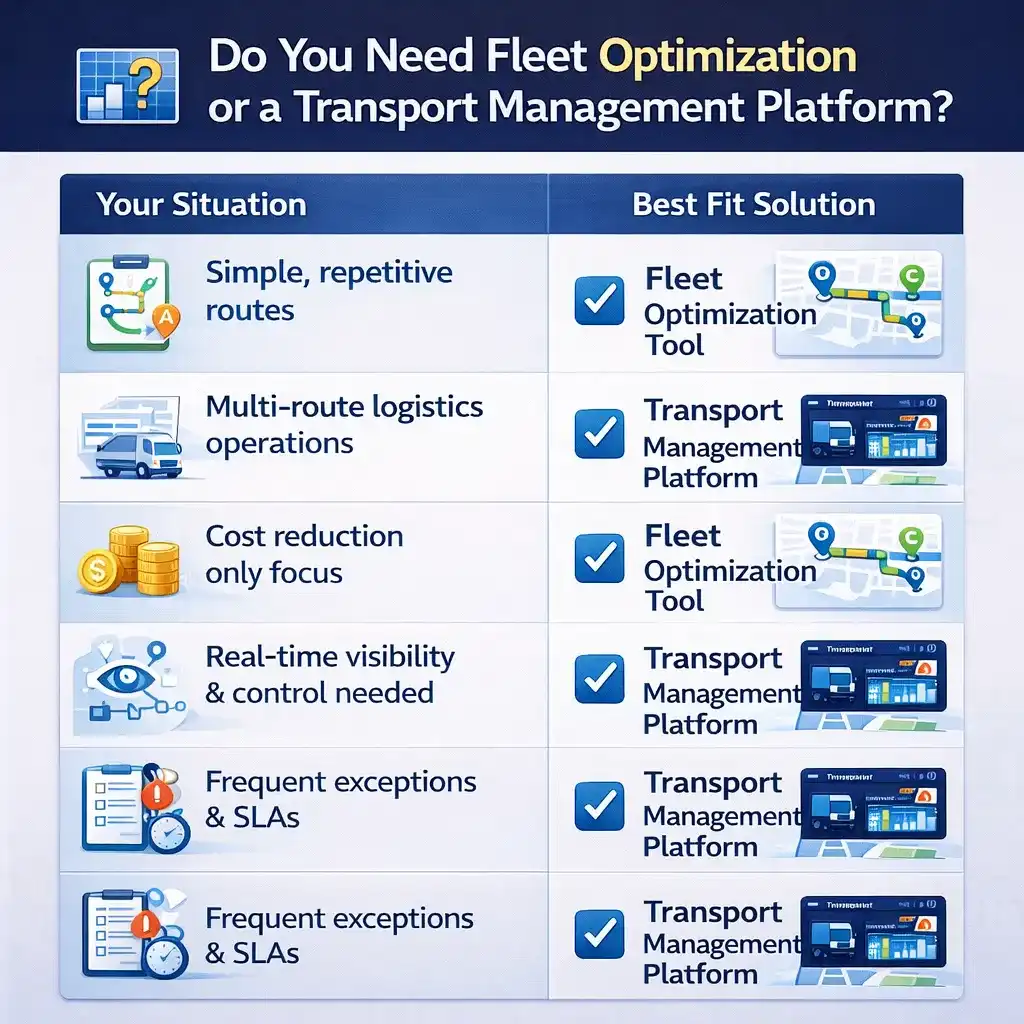
Standalone fleet optimization tools can work well when:
- Transport operations are simple
- Routes are highly repetitive
- There are minimal customer SLAs
- Execution complexity is low
For most growing logistics, manufacturing, and distribution businesses, this window is short-lived.
When You Need a Transport Management Platform
You likely need a full transport management platform if:
- You manage multiple routes, clients, or delivery types
- Real-time visibility matters
- Exceptions are frequent
- Customer communication depends on transport performance
At this stage, optimization alone is insufficient.
How to Evaluate Platforms That Claim "Fleet Optimization"
Ask vendors these questions:
- Does optimization adapt in real time or only during planning?
- How are exceptions handled?
- Is optimization linked to cost, safety, and service KPIs?
- Can the platform integrate with ERP and customer systems?
Vague answers usually indicate feature-level optimization, not platform-level intelligence.
Where Platforms Like Yatis Fit
Modern platforms such as Yatis Telematics approach fleet optimization as one layer inside transport management, not a standalone tool.
This means:
- Optimization informed by live data
- Visibility across trips, vehicles, and exceptions
- Cost and safety balanced together
- API-driven integration across systems
This architecture supports businesses that need control first, optimization second — and both continuously.
FAQs (People Also Ask)
Is fleet optimization the same as transport management?
No. Fleet optimization focuses on efficiency, while transport management covers execution, visibility, and control.
Can fleet optimization tools replace a TMS?
In most real-world logistics operations, no. Optimization tools lack end-to-end management capabilities.
Do modern TMS platforms include fleet optimization?
Yes. Leading transport management platforms embed optimization into operational workflows.
Final Take
If your goal is not just to optimise routes, but to run transport operations reliably at scale, look beyond standalone optimization tools.
Explore transport management platforms that embed fleet optimization within real-time operational control.
👉 Learn how modern transport management is evolving with Yatis Telematics
Ready to Optimize Your Transport Operations?
Get expert guidance on choosing the right transport management platform that combines optimization with operational control.
Contact Yatis Today →