

Video Telematics vs Traditional Dashcams: What Fleet Managers Need to Know

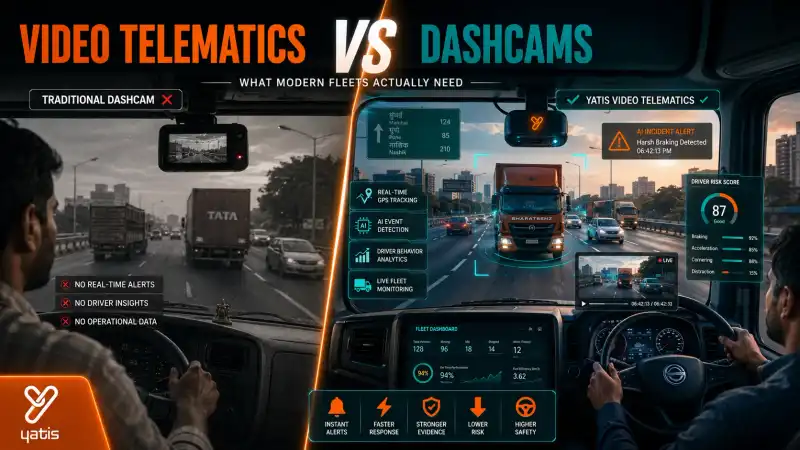
Fleet safety technology has evolved quickly over the last few years. What started as simple dashcam recording has now expanded into intelligent video telematics systems capable of real-time monitoring, AI-powered alerts, and operational visibility across entire fleets.
For many fleet operators, however, the confusion still remains: do commercial fleets really need video telematics, or is a traditional dashcam enough?
At first glance, both systems may appear similar. Both use in-vehicle cameras. Both record road activity. Both help during incidents. But operationally, they solve very different problems.
Understanding that difference is important for fleet managers evaluating safety investments, claims management processes, driver accountability, and long-term operational visibility.
Why Fleets Started Using Dashcams
Traditional dashcams became popular because they offered fleets something they previously lacked: recorded road evidence. For commercial vehicles, that was a major step forward.
Dashcams helped fleets review accidents, protect drivers during disputes, collect incident footage, improve accountability, and support insurance investigations.
In many situations, even basic video footage proved valuable. Fleets could finally verify what happened on the road instead of relying entirely on written reports or witness statements. For smaller operations, this level of visibility was often enough. But as fleets expanded and operational complexity increased, traditional dashcams started showing limitations.
What Traditional Dashcams Actually Do
A traditional fleet dashcam mainly focuses on one function: recording video footage.
Most systems continuously record while the vehicle is operating, store footage locally, allow manual playback after incidents, and provide basic evidence collection.
This works reasonably well for reviewing events after they happen. For example, if a collision occurs, fleet managers may retrieve the footage and use it during claims discussions or internal reviews.
But that process is mostly reactive. The system records events, but it usually does not help fleets actively monitor risk in real time.
Where Traditional Dashcams Fall Short
As fleet operations become more data-driven, many operators discover that recording footage alone is no longer enough. Traditional dashcams often create visibility gaps that become operational problems over time.
No Real-Time Incident Alerts
Most standard dashcams only store footage locally. That means fleet managers may not know about collisions, harsh braking, distracted driving, or unsafe maneuvers until much later. In large fleets, delayed visibility slows down incident response, driver support, insurance reporting, and operational decision-making.
Manual Footage Retrieval
Traditional dashcams usually require someone to remove storage devices, upload footage manually, search through recordings, and organize files during investigations. This process consumes time, especially when fleets manage multiple vehicles across different locations. If footage retrieval becomes difficult, investigations also become slower.
Limited Operational Visibility
A standard dashcam records what the camera sees, but it usually lacks operational context. Without telematics integration, fleets may not have GPS tracking, speed data, braking analytics, route history, or driver behavior insights. As a result, managers still struggle to fully understand what happened during an incident.
What Makes Video Telematics Different
Video telematics combines camera footage with telematics intelligence. Instead of functioning only as a recording device, the system becomes an active fleet monitoring and risk-management tool.
Modern video telematics platforms combine AI dashcams, GPS tracking, real-time alerts, driver behavior analytics, cloud connectivity, and operational dashboards. This creates a much broader level of fleet visibility.
AI Event Detection
One of the biggest differences between video telematics and traditional dashcams is automation. AI-powered systems can automatically detect harsh braking, rapid acceleration, distracted driving, mobile phone usage, tailgating, lane drifting, and fatigue indicators.
When risky behavior occurs, fleet managers can receive immediate alerts along with supporting footage. This allows fleets to respond proactively instead of waiting until after an accident.
GPS and Telematics Integration
Video telematics systems combine footage with GPS location, speed data, route history, timestamps, and vehicle movement analytics. That additional context helps fleets investigate incidents faster, improve dispatch visibility, verify driver activity, and support claims investigations.
For example, footage alone may show sudden braking. But telematics data can also show exact vehicle speed, location, braking intensity, and road timing. That operational context is extremely valuable during insurance disputes or safety reviews.
Cloud-Based Access and Centralized Visibility
Unlike many traditional dashcams, video telematics platforms often store footage securely in the cloud. This gives fleet teams remote footage access, centralized monitoring, faster incident review, and simplified data management.
For multi-location fleets, centralized visibility becomes especially important because managers no longer depend on manual retrieval processes.
Video Telematics vs Traditional Dashcams: Feature Comparison
Video telematics combines AI-powered video monitoring with GPS tracking, driver analytics, and real-time incident alerts, while traditional dashcams mainly record footage for later review.
| Feature | Traditional Dashcam | Video Telematics |
|---|---|---|
| Video Recording | Yes | Yes |
| GPS Tracking | Limited | Yes |
| Real-Time Alerts | No | Yes |
| AI Driver Monitoring | No | Yes |
| Cloud Storage | Limited | Yes |
| Driver Behavior Analytics | No | Yes |
| Remote Footage Access | Limited | Yes |
| Incident Automation | No | Yes |
| Fleet Visibility | Basic | Advanced |
Which Option Is Better for Commercial Fleets?
The answer depends on operational needs. Traditional dashcams may still work for smaller fleets, low-mileage operations, basic evidence recording, and limited budgets. If a fleet only needs occasional footage review, a standard camera may be enough.
However, growing fleets often require more operational intelligence. Video telematics becomes more valuable when fleets need real-time visibility, faster claims investigations, driver coaching, AI safety monitoring, centralized fleet oversight, and proactive risk management.
For larger or safety-sensitive operations, those capabilities can significantly improve long-term operational control.
Why More Fleets Are Moving Toward Video Telematics
Commercial fleets today operate under increasing pressure: rising insurance costs, higher safety expectations, tighter delivery timelines, and growing operational complexity.
Because of that, many companies are moving beyond passive recording systems toward platforms that provide real-time operational insight.
Video telematics helps fleets reduce blind spots, improve driver accountability, strengthen claims defense, monitor safety trends, and respond to incidents faster. The shift is not only about technology. It is about visibility and decision-making.
Final Thoughts
Traditional dashcams changed fleet safety by introducing recorded evidence into commercial vehicle operations. Video telematics expands that capability much further by combining footage with AI analytics, GPS tracking, and real-time operational visibility.
For some fleets, a basic dashcam may still meet operational needs. But for fleets managing higher risk, larger vehicle volumes, or growing safety expectations, video telematics offers a broader approach to fleet visibility and incident management.
As commercial fleet operations become increasingly data-driven, the difference between recording events and actively understanding them is becoming more important.
For fleets looking to improve visibility, strengthen claims investigations, and build more proactive safety operations, video telematics is playing an increasingly central role.
Frequently Asked Questions
Considering an upgrade from a basic dashcam?
Contact Yatis Telematics to explore how AI-powered video telematics can give your fleet real-time alerts, GPS context, and centralized incident visibility.
Contact Us →