

Is a Water-Resistant GPS Tracker Important for Indian Roads?

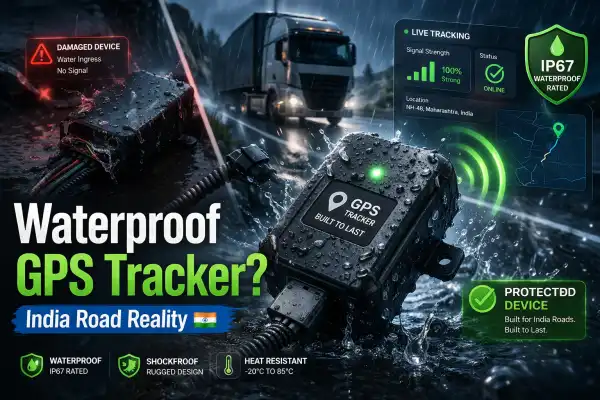
When evaluating a water-resistant vehicle tracker, most buyers treat it as an optional feature. In Indian conditions, it isn't—it's a reliability requirement.
Fleet vehicles operate across environments where exposure to water, dust, and humidity is unavoidable. From monsoon-heavy regions to mining routes and construction corridors, GPS tracking devices are constantly subjected to external stress. A tracking system is only useful when it works consistently.
Why Standard GPS Trackers Fail in Indian Conditions
Many low-cost or generic vehicle tracking devices are not built for harsh operating environments. Common failure points include moisture ingress during heavy rainfall, corrosion in high-humidity zones, dust accumulation affecting hardware, and temperature-induced component stress.
When this happens, operators experience signal drop-offs, inaccurate tracking, delayed alerts, and complete device downtime.
What "Water-Resistant" Actually Means
Not all devices marketed as water-resistant are reliable. Look for sealed casing (IP-rated, ideally IP65 or above), protection against splashes, rain, and dust, and durability for external mounting.
This is especially important for trucks and logistics fleets, mining vehicles, construction equipment, and school buses operating in monsoon regions.
What Makes a Tracker Truly Water-Resistant
A reliable water-resistant vehicle tracker is designed for environmental durability. Key indicators include an IP-rated enclosure (IP65 or higher recommended), sealed casing to prevent water ingress, resistance to dust and vibration, and stable performance in extreme weather.
Operational Impact of Non-Resistant Devices
The biggest risk is not device failure—it's loss of visibility. During critical moments such as route deviations, unauthorized vehicle movement, or emergency situations, a compromised tracker can delay or completely miss alerts. This directly impacts security, compliance, and operational control.
Why Indian Conditions Demand Water-Resistant Trackers
Unlike controlled environments, Indian vehicles operate across heavy rainfall and waterlogging, high humidity zones, dusty construction routes, and extreme temperature fluctuations. A standard GPS tracker exposed to moisture can face signal disruption, hardware corrosion, short circuits, and complete device failure.
When You Can Ignore It (Rare Cases)
If your tracker is installed inside a sealed dashboard, used for personal vehicles only, or operating in controlled environments, water resistance may not be critical. But for fleet operations, skipping this feature is risky.
Practical Recommendation
For Indian use cases, especially in logistics, always choose a water-resistant vehicle tracker. It's a small decision that prevents downtime, device replacement, and tracking failures.
Explore Yatis vehicle tracking solutions designed for reliability in Indian operating conditions.
Frequently Asked Questions
Final Insight
A vehicle tracking device is expected to work when conditions are worst—not when they are ideal. Choosing a water-resistant system ensures continuous tracking, reliable alerts, and operational stability, regardless of environment.
Track Reliably in Any Condition
Contact Yatis Telematics to explore durable, water-resistant GPS trackers built for Indian fleet operations.
Contact Us →