

What Is an OBD GPS Tracker and How Does It Work? (Fleet Guide)

Definition: What Is an OBD GPS Tracker?
An OBD GPS tracker is a compact telematics device that plugs directly into a vehicle's On-Board Diagnostics (OBD-II) port to collect and transmit vehicle data and location information.
Unlike traditional GPS trackers that only provide location, an OBD GPS tracker device provides both:
- Real-time vehicle tracking
- Engine and vehicle diagnostics
- Driver behaviour insights
- Trip and usage history
This makes it especially valuable for commercial fleet management and enterprise vehicle monitoring.
Core Components of an OBD GPS Tracker Device
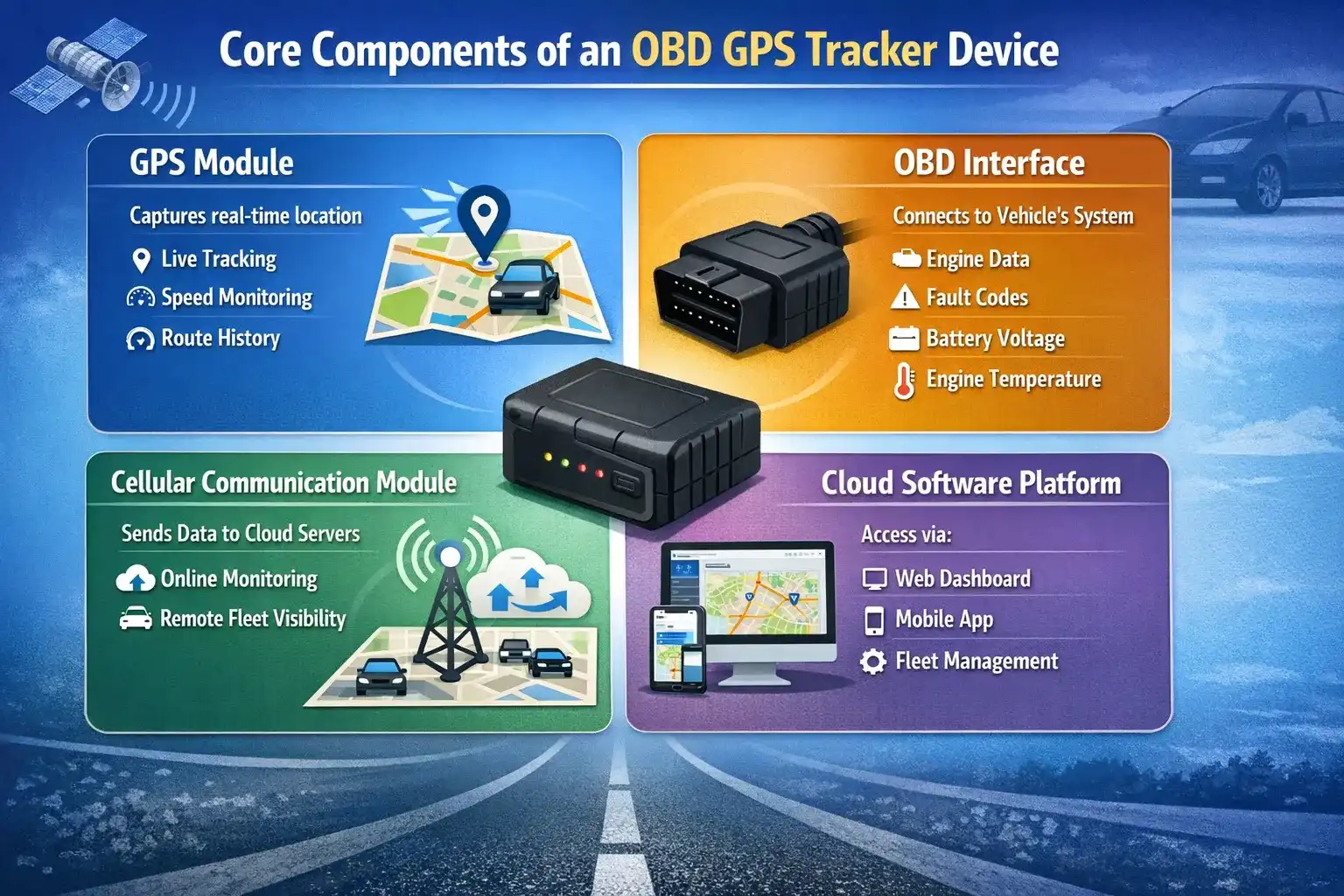
An OBD tracker for car or commercial vehicle consists of four primary components:
1. GPS Module
Captures real-time vehicle location using satellite signals.
Provides:
- Live tracking
- Speed monitoring
- Route history
2. OBD Interface
Connects to the vehicle's onboard computer system.
Collects:
- Engine performance data
- Fault codes
- Battery voltage
- Engine temperature
3. Cellular Communication Module
Transmits vehicle and GPS data to cloud servers using mobile networks.
Enables:
- Vehicle GPS tracker online monitoring
- Remote fleet visibility
4. Cloud Software Platform
Fleet operators access data through:
- Web dashboard
- Mobile app
- Fleet management platform
This is where enterprise solutions like Yatis provide operational intelligence.
How Does an OBD GPS Tracker Work? (Step-by-Step)

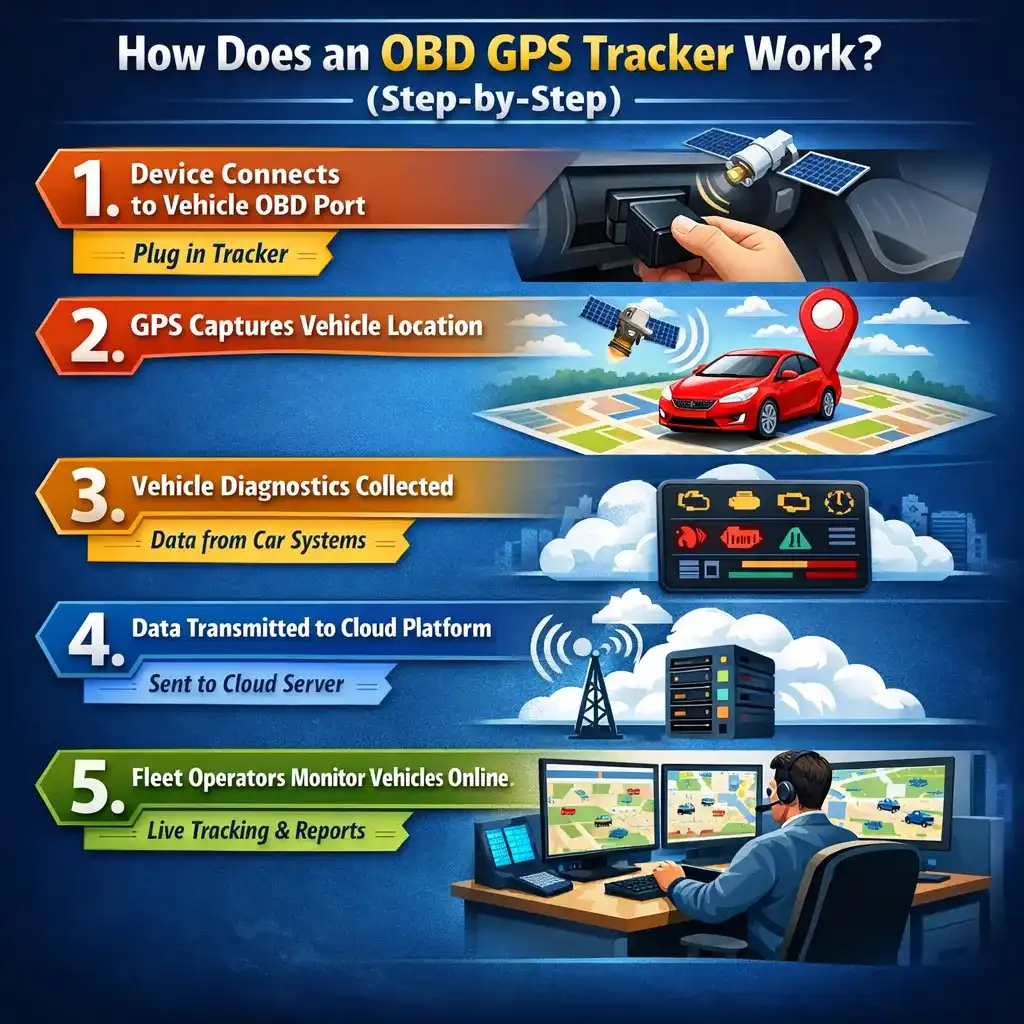
The working process follows a simple but powerful data flow:
Step 1: Device connects to vehicle OBD port
The OBD GPS tracker device plugs into the OBD port and starts receiving power and vehicle data.
Step 2: GPS captures vehicle location
The device determines vehicle position using satellite signals.
Data includes:
- Real-time location
- Speed
- Movement
Step 3: Vehicle diagnostics are collected
The tracker reads vehicle health information such as:
- Engine status
- Fault codes
- Performance data
Step 4: Data transmitted to cloud platform
Using cellular networks, the tracker sends data to secure servers.
Step 5: Fleet operators monitor vehicles online
Fleet managers can view:
- Vehicle location
- Vehicle status
- Trip history
- Fleet performance
using a vehicle GPS tracker online dashboard.
Why Commercial Fleets Use OBD GPS Trackers
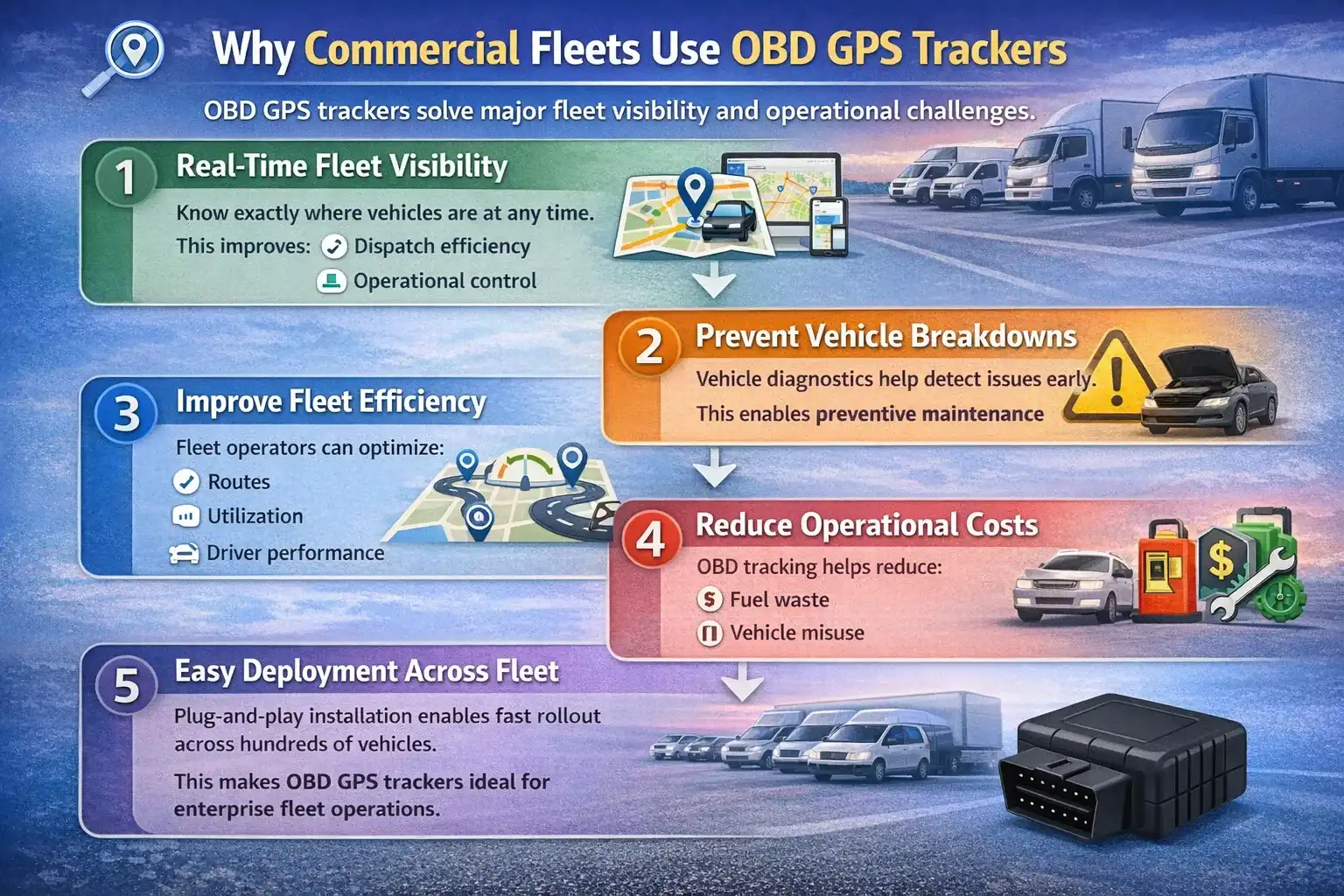
OBD GPS trackers solve major fleet visibility and operational challenges.
1. Real-Time Fleet Visibility
Know exactly where vehicles are at any time.
This improves:
- Dispatch efficiency
- Operational control
2. Prevent Vehicle Breakdowns
Vehicle diagnostics help detect issues early.
This enables preventive maintenance.
3. Improve Fleet Efficiency
Fleet operators can optimize:
- Routes
- Utilization
- Driver performance
4. Reduce Operational Costs
OBD tracking helps reduce:
- Fuel waste
- Vehicle misuse
- Maintenance expenses
5. Easy Deployment Across Fleet
Plug-and-play installation enables fast rollout across hundreds of vehicles.
This makes OBD GPS trackers ideal for enterprise fleet operations.
OBD GPS Tracker vs Basic GPS Tracker
| Feature | OBD GPS Tracker | Basic GPS Tracker |
|---|---|---|
| Installation | Plug-and-play | Requires wiring |
| Vehicle diagnostics | Yes | No |
| Installation time | Seconds | Hours |
| Fleet insights | Advanced | Basic |
| Enterprise suitability | High | Limited |
Who Should Use an OBD GPS Tracker?
OBD trackers are ideal for:
- Logistics fleets
- Commercial vehicle operators
- Delivery companies
- Mining fleets
- Enterprise fleet operators
- Rental vehicle companies
These industries require real-time visibility and operational intelligence.
How Enterprise Fleet Platforms Use OBD GPS Tracker Data
Enterprise fleet platforms transform raw vehicle data into actionable insights.
Capabilities include:
- Live fleet tracking
- Preventive maintenance alerts
- Vehicle diagnostics monitoring
- Fleet utilization analytics
For enterprise-grade fleet tracking, see: OBD GPS tracker for commercial fleets
Conclusion
An OBD GPS tracker is a powerful fleet technology that combines real-time vehicle tracking with advanced vehicle diagnostics.
It enables fleet operators to improve visibility, reduce costs, prevent breakdowns, and optimize operations.
As fleet operations become increasingly data-driven, OBD GPS trackers are becoming essential tools for modern commercial fleet management.
Frequently Asked Questions
Ready to Get Started?
Contact us to learn how OBD GPS tracking can improve your fleet operations.
Request DemoGet Pricing