

Freight Management Software: Complete Guide for Logistics in 2026

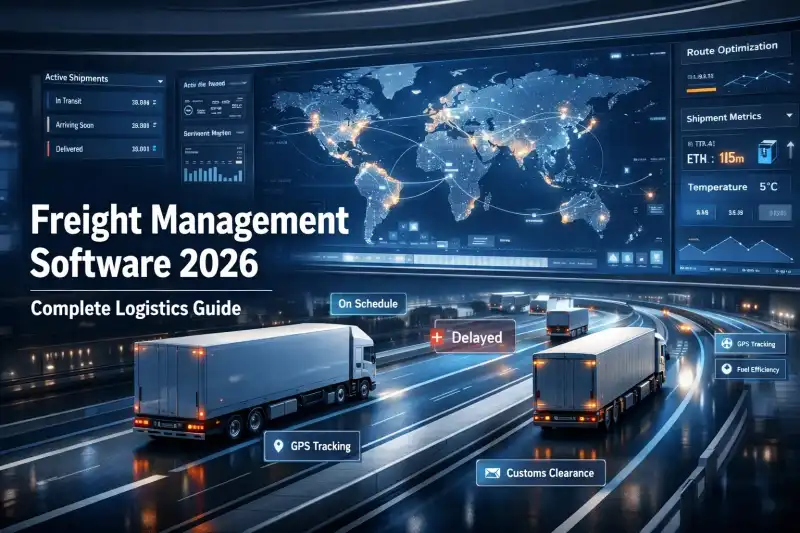
Freight management software helps logistics companies plan, execute, and monitor freight movement through a single digital platform. In 2026, businesses are moving beyond manual coordination and spreadsheets toward integrated freight management systems that improve shipment visibility, reduce transport costs, and strengthen delivery reliability.
For logistics operators managing multiple consignments, carriers, and delivery timelines, modern software has become essential for controlling operations at scale.
A modern freight management system works as the operational layer of a broader transport management system, helping teams automate dispatch planning, shipment tracking, and route execution. Instead of relying on fragmented communication between drivers, dispatchers, and customers, companies can centralize freight data and make faster operational decisions.
What Is Freight Management Software?
Freight management software is a digital shipment management software solution used to manage freight booking, route planning, carrier coordination, and real-time shipment monitoring. It supports logistics teams by providing one interface for freight movement across road transport networks.
Unlike legacy systems, current transportation management solutions connect dispatch operations with live fleet intelligence. This means transport managers can monitor vehicle location, delivery milestones, delays, and route deviations without waiting for manual updates.
For growing logistics businesses, this improves control across every shipment cycle.
Key Features of a Modern Freight Management System
A strong TMS software transportation management system should include:
- Real-time shipment tracking across active routes
- Route optimization for fuel and time efficiency
- Automated alerts for delays or route deviations
- Freight cost monitoring and trip analytics
- Geofencing for delivery checkpoints
- Carrier performance visibility
These features help logistics companies reduce manual intervention while improving service predictability. Real-time freight visibility has become especially important where delivery commitments directly affect customer retention.
Freight Management Software vs Transport Management System
Although often used interchangeably, freight management software and a transport management system serve slightly different purposes. Freight software focuses more on shipment execution, freight movement, and operational tracking.
A broader logistics TMS may also include freight billing, carrier procurement, compliance workflows, and integration with ERP systems.
Enterprise tools such as SAP Transportation Management and Oracle Transportation Management are designed for complex enterprise environments, but many mid-sized logistics businesses now prefer lighter cloud-based systems that offer faster deployment and stronger real-time operational visibility.
Why Logistics Companies Are Upgrading in 2026
The biggest reason companies adopt transportation management system software is operational efficiency. Better freight planning reduces empty runs, improves vehicle utilization, and lowers freight leakage caused by delays or poor route decisions.
In 2026, IoT integration has become a major differentiator. Freight platforms connected to telematics can monitor trip behavior, idle time, fuel trends, and delivery conditions in real time.
This creates a stronger decision layer than traditional enterprise TMS tools, especially for logistics businesses that need continuous freight intelligence rather than only transactional control.
What to Look for in Freight Management Software
The best freight platform should combine shipment visibility, route intelligence, dispatch automation, and live exception alerts.
For logistics companies evaluating alternatives to enterprise systems, software that connects freight execution with fleet intelligence often delivers faster operational ROI and stronger day-to-day control.
Freight management software is becoming the operational core of modern logistics because shipment intelligence now drives transport profitability.
Explore how Yatis enables real-time freight visibility through IoT-powered transport intelligence.
Frequently Asked Questions
Ready to Optimize Your Freight Operations?
Contact Yatis Telematics to learn how our IoT-powered transport intelligence platform can help improve shipment visibility and operational efficiency.
Contact Us →