

GPS Tracking Myths Fleet Managers Should Stop Believing (And the Facts Behind Them)

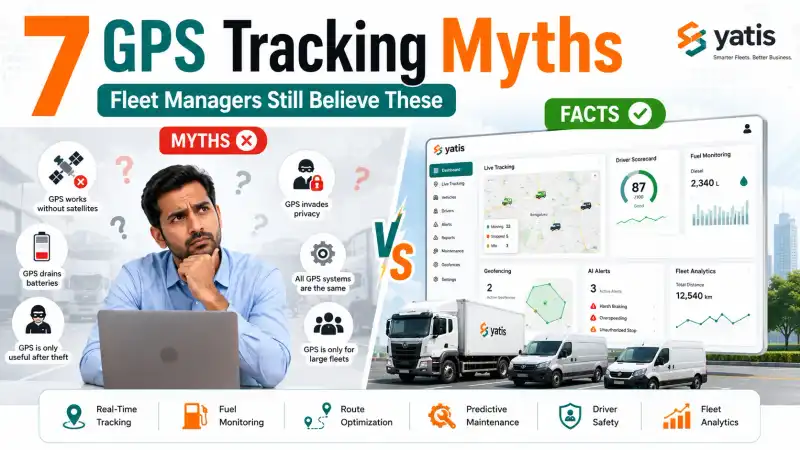
GPS tracking technology has transformed the way businesses manage commercial vehicles, yet misconceptions about how it works continue to influence purchasing decisions. From concerns about battery drain to the belief that GPS is only useful for recovering stolen vehicles, many fleet managers still rely on outdated information.
The reality is that modern GPS tracking systems have evolved far beyond simple location tracking. Today's solutions combine satellite positioning, cloud connectivity, telematics, AI-powered analytics, and real-time alerts to help businesses improve operational efficiency, reduce fuel costs, enhance driver safety, and make data-driven decisions.
In this article, we'll debunk seven of the most common GPS tracking myths and explain how modern fleet management technology is helping businesses operate smarter and more efficiently.
Why GPS Tracking Misconceptions Still Exist
Many GPS tracking myths date back to the early days of vehicle tracking technology when devices were limited in functionality, expensive to install, and primarily used for recovering stolen vehicles. Today's enterprise-grade GPS tracking systems are vastly different. They integrate with vehicle diagnostics, fuel monitoring sensors, driver behavior analytics, maintenance schedules, AI-powered dashboards, and mobile applications.
However, outdated assumptions persist because many people still confuse:
- Consumer GPS trackers with commercial fleet tracking systems
- Navigation apps with enterprise telematics platforms
- Basic location tracking with intelligent fleet management
Myth #1: GPS Works Without Satellites
One of the most common GPS tracking myths is that GPS devices can determine a vehicle's location without satellite signals. This is incorrect. GPS relies on a network of satellites orbiting the Earth. A GPS receiver inside the tracking device calculates its position by receiving signals from multiple satellites simultaneously—typically at least four for an accurate location.
Many people confuse GPS with mobile networks. In simple terms: satellites determine where the vehicle is, while cellular connectivity communicates that location to your fleet management dashboard. If a vehicle temporarily loses cellular coverage, many commercial GPS devices continue recording location data and automatically upload it once connectivity is restored.
Key takeaway: GPS cannot function without satellite signals. Cellular networks do not replace satellites—they simply transmit the collected data to your fleet management software.
Myth #2: GPS Only Shows Vehicle Location
Perhaps the biggest misconception is that GPS tracking systems simply display a moving dot on a map. While location tracking remains a core feature, modern commercial fleet solutions deliver far more operational intelligence, including:
- Real-time vehicle tracking — know exactly where every vehicle is at any moment.
- Route history — verify deliveries, identify route deviations, and optimize future journeys.
- Geofencing — create virtual boundaries around depots, customer locations, and restricted areas with instant alerts.
- Driver behaviour monitoring — track harsh braking, rapid acceleration, sharp cornering, over-speeding, and excessive idling.
- Fuel monitoring — monitor consumption, detect abnormal fuel loss, and improve efficiency.
- Maintenance alerts — reduce costly downtime with scheduled maintenance reminders.
- Live notifications — unauthorized movement, ignition events, route deviations, extended stoppages, SOS, towing, and power disconnection.
Rather than acting as a simple locator, modern GPS tracking systems serve as a centralized fleet intelligence platform that supports better operational decisions every day.
Myth #3: GPS Tracking Drains Vehicle Batteries
Some businesses hesitate to install GPS devices because they believe continuous tracking will quickly drain vehicle batteries. Fortunately, this concern is largely unfounded with modern commercial GPS hardware. Enterprise-grade tracking devices are specifically engineered for low power consumption, and many use intelligent sleep modes that significantly reduce energy usage when the vehicle is stationary.
Additionally, commercial tracking devices are typically hardwired into the vehicle's electrical system, allowing them to draw minimal power during normal operation without affecting battery health. Many devices also include backup batteries that continue transmitting critical information even if the main vehicle battery is disconnected.
Key takeaway: Modern GPS tracking devices are designed to operate efficiently with minimal power consumption, making battery drain a myth rather than a genuine operational concern.
Myth #4: GPS Is Only Useful After a Vehicle Is Stolen
Vehicle recovery is certainly an important application of GPS tracking—but limiting its value to theft recovery overlooks its greatest business benefits. For most commercial fleets, the real return on investment comes from improving day-to-day fleet operations:
- Better route optimization to identify shorter, faster, more fuel-efficient routes.
- Reduced fuel costs by monitoring idling, speeding, and inefficient routes.
- Higher vehicle utilization by revealing whether vehicles are used efficiently.
- Improved customer service through accurate ETAs and faster responses to delays.
- Driver accountability using objective trip records rather than assumptions.
- Predictive maintenance reminders based on vehicle usage.
- Compliance and reporting automation for audits and internal records.
Key takeaway: While GPS tracking certainly helps recover stolen vehicles, its greatest value lies in improving productivity, reducing operating costs, increasing safety, and enhancing overall fleet performance every single day.
Myth #5: GPS Tracking Invades Driver Privacy
One of the most sensitive concerns surrounding GPS tracking is the belief that it invades driver privacy. While understandable, it often stems from confusion about how commercial fleet tracking systems are used. For businesses operating company-owned vehicles, GPS tracking is designed to improve operational efficiency, ensure driver safety, protect valuable assets, and maintain accountability—not to monitor employees unnecessarily.
Reputable fleet management solutions are built with transparency in mind. Organizations should clearly communicate their tracking policies, explain what data is collected, and specify how it will be used. When implemented responsibly, GPS tracking supports drivers through faster roadside assistance, protection against false accident claims, more efficient route planning, recognition of safe driving habits, and improved vehicle maintenance.
Key takeaway: GPS tracking is most effective when implemented with clear policies, transparency, and a focus on safety and operational improvement—not employee surveillance.
Myth #6: All GPS Tracking Systems Are the Same
Not all GPS tracking systems offer the same capabilities. This is one of the most expensive misconceptions businesses can make, because selecting the wrong solution often leads to limited visibility, poor reporting, and missed opportunities. Basic GPS trackers typically provide only location updates, while enterprise fleet management platforms combine GPS tracking with telematics, analytics, automation, and reporting.
| Feature | Basic GPS Tracker | Modern Fleet Platform |
|---|---|---|
| Live location | Yes | Yes |
| Route history | Limited | Comprehensive |
| Geofencing | Sometimes | Advanced |
| Driver behaviour analytics | No | Yes |
| Fuel monitoring | No | Yes |
| Maintenance reminders | No | Yes |
| AI alerts | No | Yes |
| Custom reports | Limited | Extensive |
| Fleet analytics | No | Yes |
Key takeaway: A GPS device is only one part of a successful fleet management system. The real value comes from the intelligence, analytics, and automation built around it.
Myth #7: GPS Tracking Is Only for Large Fleets
Another common misconception is that GPS tracking is only worthwhile for organizations managing hundreds of vehicles. In reality, businesses of almost every size can benefit. Whether you operate five delivery vans, ten service vehicles, twenty school buses, or fifty logistics trucks, GPS tracking can improve visibility, reduce costs, and streamline operations.
Smaller businesses often have tighter budgets, so even modest improvements in fuel efficiency, route planning, or maintenance scheduling can significantly impact profitability. Growing fleets benefit from centralized dashboards, while large organizations use advanced telematics to optimize logistics and monitor compliance across multiple locations.
Key takeaway: GPS tracking isn't about fleet size—it's about improving operational efficiency. Businesses with even a handful of vehicles can achieve measurable returns.
How Modern GPS Tracking Has Evolved
Fleet tracking technology has advanced dramatically over the past decade. What began as a simple vehicle location tool has evolved into an intelligent fleet management ecosystem. Where early systems offered only basic location updates, manual reporting, and reactive maintenance, modern commercial GPS tracking systems combine real-time tracking, AI-powered fleet analytics, fuel monitoring, driver behaviour analysis, predictive maintenance alerts, geofencing, mobile apps, cloud dashboards, automated compliance reports, and video telematics integration.
This evolution enables fleet managers to move from reacting to problems after they occur to proactively preventing them through real-time insights and predictive analytics.
What Fleet Managers Should Look for Instead
Rather than focusing on outdated myths, fleet managers should evaluate GPS tracking solutions based on the features that deliver measurable business value:
- Real-time vehicle tracking and a live fleet dashboard
- Geofencing and instant alerts
- Driver behaviour monitoring
- Route history and trip replay
- Fuel monitoring and efficiency reports
- Vehicle maintenance reminders
- Custom reports and analytics
- Mobile application access and multi-user controls
- Cloud-based data storage and scalable deployment
- Integration with cameras, sensors, and enterprise systems
Final Thoughts
GPS tracking technology has come a long way from being a simple theft recovery tool. Modern fleet management systems provide businesses with the visibility and intelligence needed to optimize operations, improve driver safety, reduce fuel costs, and make informed decisions every day. Believing outdated myths can prevent organizations from taking advantage of technologies that deliver measurable operational and financial benefits.
Whether you're managing a small delivery fleet or a nationwide logistics network, investing in a modern GPS tracking solution is no longer just about knowing where your vehicles are—it's about understanding how your entire fleet performs. Yatis helps businesses turn accurate fleet data into safer, more efficient, and more competitive operations.
Frequently Asked Questions
Ready to move past the myths?
Contact Yatis Telematics to see how a modern GPS tracking and fleet intelligence platform can transform your operations.
Contact Us →