

How Does a GPS Tracking System Work? A Complete Guide for Fleet Managers

Whether you're managing a fleet of delivery vans, school buses, construction equipment, or long-haul trucks, knowing where your vehicles are—and how they're being used—is essential for improving operational efficiency. That's why GPS tracking systems have become an indispensable tool for modern fleet management.
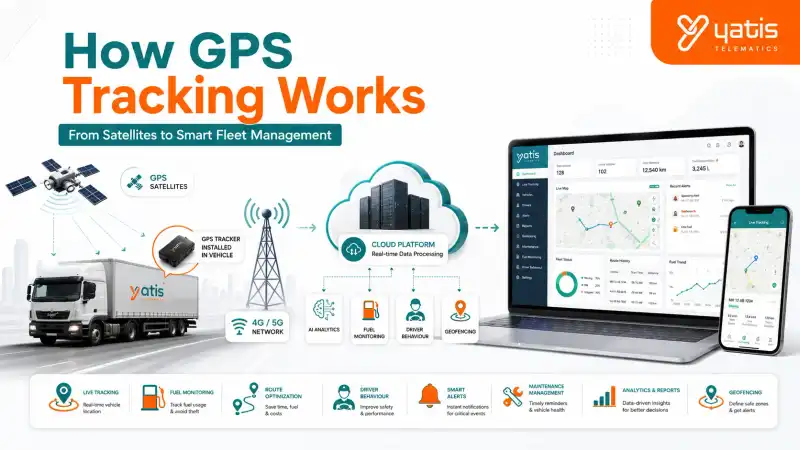
Many people assume that a GPS tracker simply "knows" where a vehicle is. In reality, a GPS tracking system relies on a sophisticated combination of satellites, onboard hardware, cellular communication, cloud computing, and intelligent software working together in real time.
In this guide, we'll break down how a GPS tracking system works step by step, explain the role of each component, and explore how businesses use GPS technology to improve safety, reduce costs, and streamline operations.
What Is a GPS Tracking System?
A GPS tracking system is a combination of hardware and software that determines a vehicle's location using satellite signals and transmits that information to a centralized platform where fleet managers can monitor and analyze vehicle activity in real time.
Unlike consumer navigation apps that simply help drivers reach a destination, commercial GPS tracking systems provide businesses with a comprehensive view of fleet operations. A modern fleet tracking solution typically includes:
- GPS tracking device installed inside the vehicle
- GPS satellites orbiting the Earth
- Cellular or IoT communication network
- Cloud-based fleet management platform
- Web dashboard and mobile application
- Reporting and analytics engine
The Five Core Components of a GPS Tracking System
1. GPS Satellites
Everything begins in space. The Global Positioning System (GPS) consists of a constellation of satellites orbiting approximately 20,200 kilometers above the Earth. These satellites continuously broadcast signals containing their location and precise timestamps. By measuring the time it takes for each satellite signal to reach the device, the tracker determines its exact geographic position using a process called trilateration. Under normal conditions, a GPS receiver requires signals from at least four satellites to calculate latitude, longitude, altitude, and time.
2. GPS Tracking Device
The GPS tracking device is installed inside the vehicle and serves as the system's central hardware component. Its primary responsibilities include receiving satellite signals, calculating vehicle position, recording movement data, monitoring vehicle status, collecting sensor information, and preparing data for transmission. Modern commercial GPS devices often include additional capabilities such as ignition status monitoring, engine diagnostics, driver identification, fuel monitoring integration, panic button connectivity, CAN Bus integration, OBD diagnostics, and AI Dash Cam compatibility.
3. Cellular Communication Network
Once the tracker determines the vehicle's location, the information must be transmitted to fleet managers. Commercial GPS trackers typically use 4G LTE, 5G, NB-IoT, or LTE-M. The tracker packages location and operational data into encrypted packets and securely sends them to cloud servers. If the vehicle temporarily enters an area with poor network coverage, the tracker stores the information internally and automatically uploads it once connectivity is restored.
4. Cloud Platform
The cloud platform serves as the processing center of the GPS tracking system. Once data arrives from the tracker, the cloud platform processes incoming information, stores historical records, generates reports, triggers alerts, performs analytics, detects anomalies, calculates driver scores, manages geofences, and updates dashboards. Modern cloud platforms can process millions of location updates every day while maintaining high reliability and scalability.
5. Fleet Management Dashboard
The final component is the interface used by fleet managers. Accessible through a web browser or mobile app, the dashboard transforms raw GPS data into meaningful business insights such as live vehicle locations, route history, trip replay, driver behaviour, fuel reports, idle time, maintenance schedules, geofence alerts, vehicle utilization, compliance reports, and performance analytics.
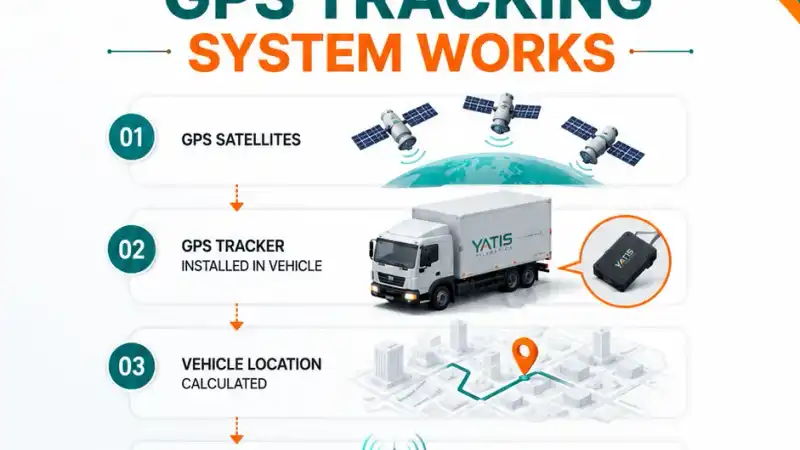
How GPS Tracking Works: Step-by-Step
To understand the complete process, let's follow what happens when a company vehicle starts its journey.
Step 1: Vehicle Ignition Turns On
The GPS tracker powers up and begins receiving signals from nearby satellites.
Step 2: Position Is Calculated
Using signals from multiple satellites, the tracker determines the vehicle's exact location, speed, direction, and time.
Step 3: Vehicle Data Is Collected
The device gathers additional operational information, including vehicle speed, ignition status, distance travelled, driver behaviour, engine diagnostics, and fuel data (if sensors are installed).
Step 4: Data Is Sent Securely
Using the cellular network, the tracker transmits encrypted data to the cloud platform in real time.
Step 5: Cloud Processing
The platform processes incoming information, stores historical data, updates reports, and checks for predefined rules such as speed violations, route deviations, unauthorized vehicle movement, extended idling, and geofence breaches.
Step 6: Fleet Manager Receives Live Updates
Within seconds, the dashboard displays vehicle location, live route, alerts, driver behaviour, fleet performance, and operational reports. This continuous cycle repeats every few seconds or minutes depending on the reporting interval configured for the GPS device.
Types of GPS Tracking Systems
Not all GPS tracking systems are built for the same purpose. The right solution depends on how frequently you need location updates, the type of vehicles you manage, and your operational goals.
1. Active GPS Tracking System (Real-Time Tracking)
Active GPS tracking systems continuously transmit location and vehicle data to a cloud platform using a cellular network. Fleet managers can monitor vehicle movements live, receive instant alerts, and make operational decisions in real time. This is the most commonly used GPS tracking solution for commercial fleets today. To dig deeper into this distinction, see our guide on Real-Time GPS Tracking vs Historical Tracking.
2. Passive GPS Tracking System
Passive GPS trackers store location data internally rather than transmitting it continuously. Fleet managers retrieve the recorded data later by connecting the device to a computer or uploading it manually. While passive tracking is generally less expensive, it does not provide the real-time visibility required for active fleet operations.
How GPS Tracking Helps Fleet Businesses
Modern GPS tracking systems deliver value far beyond knowing where a vehicle is located. They help businesses optimize nearly every aspect of fleet management.
Improved Route Optimization
GPS data helps identify inefficient routes, traffic congestion, and unnecessary detours—reducing travel time, saving fuel, and improving on-time deliveries.
Lower Fuel Costs
GPS tracking helps reduce fuel consumption by identifying excessive idling, speeding, unauthorized trips, poor route planning, and aggressive driving.
Better Driver Safety
Modern systems monitor harsh braking, rapid acceleration, sharp cornering, speed violations, and long driving hours—helping managers coach drivers and reduce accident risks.
Increased Vehicle Utilization
GPS tracking helps organizations identify underutilized vehicles, excess idle time, duplicate routes, and scheduling inefficiencies for better resource allocation.
Preventive Maintenance
GPS platforms can generate maintenance reminders based on distance travelled, engine hours, service intervals, and diagnostic fault codes—improving reliability and extending asset life.
Enhanced Customer Service
GPS tracking enables businesses to share accurate ETAs, respond quickly to delays, verify completed deliveries, and improve service reliability.
Key Features of Modern GPS Tracking Systems
Today's GPS tracking platforms are intelligent business tools rather than simple tracking devices. The most valuable features to look for include:
- Real-time vehicle tracking with live location updates
- Geofencing with automatic entry and exit alerts
- Trip history and route replay
- Driver behaviour analytics and scorecards
- Fuel monitoring and theft detection
- Automated maintenance management
- Instant alerts for overspeeding, geofence violations, towing, and SOS events
- Comprehensive reports and analytics
Industries That Benefit from GPS Tracking
GPS tracking has become an essential technology across multiple industries, including logistics and transportation, e-commerce last-mile delivery, construction, healthcare, education, field service businesses, and mining and infrastructure. Each uses GPS to improve visibility, safety, and operational efficiency in ways suited to its operations.
Best Practices for Choosing a GPS Tracking System
When evaluating solutions, don't focus solely on the hardware. Consider the complete ecosystem and long-term value. Look for a platform that offers:
- Real-time tracking with minimal latency
- Easy-to-use web and mobile applications
- Reliable customer support
- Automated reports and analytics
- Geofencing capabilities
- Driver behaviour monitoring
- Fuel monitoring integration
- Maintenance scheduling
- Scalable cloud infrastructure
- Secure data encryption
- Integration with cameras, sensors, ERP, or fleet software
Location updates are only as useful as they are precise, so it's also worth understanding the factors covered in our guide on GPS Tracking Accuracy Explained. For fleet operators, these fundamentals are packaged into a ready-to-deploy GPS tracking system for commercial vehicles.
Final Thoughts
A GPS tracking system is much more than a device that displays a vehicle's location on a map. It is an integrated technology ecosystem that combines satellite positioning, onboard hardware, wireless communication, cloud computing, and intelligent analytics to provide complete visibility into fleet operations.
The benefits extend well beyond location tracking. Modern GPS systems help organizations optimize routes, improve driver safety, reduce fuel costs, schedule preventive maintenance, strengthen compliance, and enhance customer service. At Yatis, we help businesses turn accurate location data into smarter, safer, and more efficient fleet operations.
Frequently Asked Questions
Ready to see GPS tracking in action?
Contact Yatis Telematics to learn how our end-to-end GPS tracking platform can give your fleet real-time visibility and operational intelligence.
Contact Us →