

GPS Tracking ROI: How Fleets Save Money with Modern Fleet Management

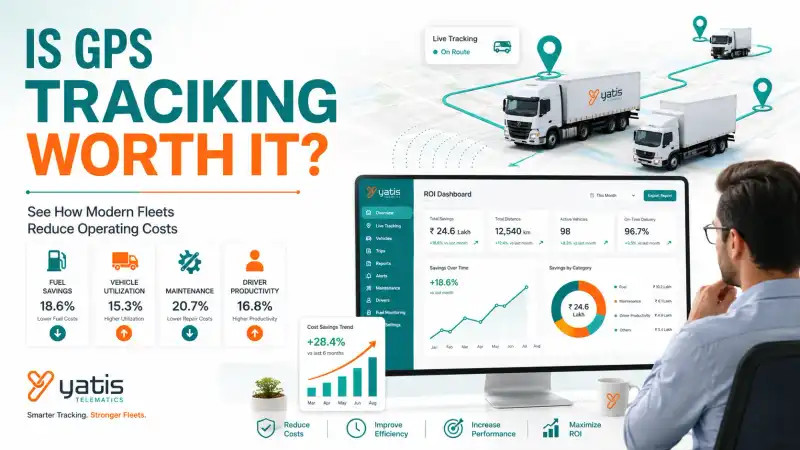
Fleet operating costs continue to rise due to fuel prices, vehicle maintenance, labor expenses, insurance, and increasing customer expectations. Many businesses initially view GPS tracking as an operational expense. In reality, a modern fleet management platform should be viewed as an investment.
The objective isn't simply to know where vehicles are. The objective is to make better business decisions using reliable operational data. A fleet that can reduce unnecessary fuel usage, improve vehicle utilization, automate reporting, and respond to operational issues more quickly is positioned to operate more efficiently than one relying on manual processes. That's where GPS Tracking ROI becomes meaningful.
Key Takeaways
- Reduce unnecessary fuel consumption
- Improve vehicle utilization
- Minimize maintenance-related downtime
- Increase driver accountability
- Reduce administrative workload
- Improve dispatch efficiency
- Make data-driven operational decisions
- Generate measurable long-term business value
At a Glance: Where GPS Tracking Creates ROI
| Cost Area | How GPS Tracking Helps |
|---|---|
| Fuel | Reduces unnecessary idling, inefficient routes, and unauthorized vehicle usage |
| Maintenance | Supports preventive maintenance and reduces unplanned downtime |
| Driver Productivity | Improves accountability and reduces inefficient driving habits |
| Fleet Utilization | Identifies underused and overused vehicles |
| Administration | Automates reports and reduces manual paperwork |
| Customer Service | Provides better delivery visibility and more accurate ETAs |
What Is GPS Tracking ROI?
GPS Tracking ROI (Return on Investment) measures the financial value a business gains after implementing a GPS tracking system. Instead of focusing only on the purchase cost, ROI considers the operational savings generated through improved fleet visibility, reduced fuel waste, lower maintenance expenses, higher driver productivity, and better asset utilization.
Unlike a single cost-saving initiative, GPS tracking improves multiple areas of fleet operations simultaneously. These improvements compound over time, making the overall return significantly greater than the value of any one feature.
How Does GPS Tracking Save Money?
Rather than creating savings from one source, GPS tracking improves operational efficiency across several interconnected areas. The biggest opportunities typically include fuel management, vehicle utilization, driver productivity, preventive maintenance, administrative efficiency, asset security, and customer service. Let's examine each one in detail.
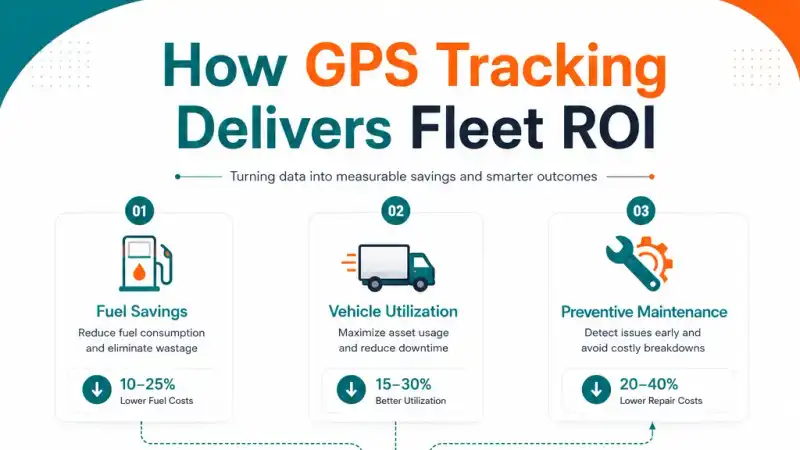
1. Fuel Savings Through Better Operational Visibility
For most commercial fleets, fuel is one of the largest ongoing operating expenses. However, not all fuel costs are unavoidable. Businesses often lose money because of excessive idling, unnecessary vehicle usage, poor dispatch decisions, unauthorized trips, congested routing, and inefficient driver habits.
A modern fleet management platform gives managers greater visibility into these operational patterns. Instead of relying on assumptions, they can identify where fuel is being consumed inefficiently and take corrective action—reducing unnecessary engine idle time, assigning the nearest available vehicle to a job, identifying recurring operational delays, monitoring unauthorized vehicle usage, and reviewing historical trip trends.
Related Reading: Learn about the essential capabilities that support operational efficiency in 15 Features Every Commercial GPS Tracking System Should Have.
Does GPS tracking reduce fuel costs?
Yes. GPS tracking helps reduce fuel costs by improving operational visibility, identifying excessive idling, reducing unauthorized vehicle usage, supporting better dispatch decisions, and helping managers monitor inefficient driving patterns that increase fuel consumption.
2. Higher Vehicle Utilization Means Better Returns
GPS tracking improves vehicle utilization by helping fleet managers identify underused, overused, and idle vehicles. Better utilization reduces unnecessary asset purchases, balances workloads, and increases the productivity of every vehicle in the fleet.
Many businesses unknowingly own more vehicles than they actually need. Modern fleet management platforms answer these questions through utilization reports and operational dashboards. Instead of purchasing additional vehicles immediately, businesses can often improve productivity by reallocating existing assets more effectively.
Fleet KPI Example
| KPI | Why It Matters |
|---|---|
| Vehicle Utilization | Maximizes asset productivity |
| Daily Distance | Identifies underused vehicles |
| Engine Idle Time | Highlights unnecessary fuel consumption |
| Active Driving Hours | Measures operational efficiency |
| Trips Completed | Evaluates fleet productivity |
3. Lower Maintenance Costs Through Preventive Planning
GPS tracking helps reduce maintenance costs by monitoring vehicle usage, supporting preventive maintenance schedules, and identifying operating patterns that may lead to unnecessary wear and unexpected breakdowns.
Vehicle breakdowns are expensive—not just because of repair bills. A single breakdown can also result in missed deliveries, customer dissatisfaction, driver downtime, emergency repair costs, and reduced fleet availability.
Modern fleet management platforms help businesses shift from reactive maintenance to preventive maintenance, scheduling servicing based on distance travelled, engine hours, vehicle usage, and service intervals.
Before vs After
| Reactive Fleet | Modern Fleet Management |
|---|---|
| Unexpected breakdowns | Planned maintenance |
| Emergency repairs | Scheduled servicing |
| Vehicle downtime | Higher availability |
| Lost productivity | Better operational continuity |
4. Better Driver Productivity Without Micromanagement
GPS tracking improves driver productivity by providing operational visibility rather than constant supervision. Fleet managers can identify workflow bottlenecks, improve dispatch decisions, and support drivers with better planning instead of relying on manual follow-ups.
Driver productivity isn't about monitoring every movement. It's about removing operational inefficiencies—dispatching the nearest available vehicle, reducing unnecessary waiting time, improving communication, eliminating duplicate trips, and reducing manual reporting. When drivers spend less time waiting for instructions or completing paperwork, they spend more time completing productive work.
5. Less Administrative Work Means More Productive Teams
Fleet operations generate large amounts of data every day—trip records, distance travelled, working hours, vehicle activity, and service schedules. When this information is managed manually, administrative workload increases rapidly as fleets grow.
Modern fleet management platforms automate many of these routine tasks, including trip reports, daily summaries, mileage reports, vehicle activity logs, and driver reports. Automation allows managers to spend less time compiling information and more time improving operations.
Quick Comparison
| Manual Fleet Operations | GPS Fleet Management |
|---|---|
| Spreadsheet reporting | Automated dashboards |
| Manual trip verification | Digital trip history |
| Phone-based updates | Live operational visibility |
| Paper records | Centralized reporting |
6. Better Customer Service Creates Long-Term Business Value
Customer expectations continue to increase. Clients expect accurate delivery updates, reliable ETAs, and quick responses when delays occur. Fleet visibility enables businesses to communicate with greater confidence. Instead of estimating arrival times, teams can access current trip status and historical journey information when responding to customer enquiries.
This improves customer trust, delivery transparency, response times, and service consistency. Although customer satisfaction is difficult to measure as a direct financial return, it often contributes to repeat business and stronger client relationships over time.
Real-World Fleet Scenario
Consider a distribution company operating 60 commercial vehicles across multiple cities. The business relies on a basic GPS tracker that shows vehicle locations but provides little operational insight. Managers face recurring challenges: drivers frequently call dispatch for updated assignments, weekly reports are prepared manually using spreadsheets, several vehicles remain idle while others are heavily utilized, maintenance is scheduled only after issues are reported, and customer service teams struggle to provide accurate delivery updates.
After upgrading to a modern fleet management platform, the company can monitor fleet activity from a centralized dashboard, generate automated operational reports, improve vehicle allocation based on utilization data, schedule preventive maintenance, and respond to delays more quickly using live fleet visibility.
Rather than relying on one major improvement, the business benefits from many smaller efficiencies that collectively strengthen operational performance and long-term profitability.
Fleet ROI Checklist
Is Your Fleet Maximizing ROI?
Use this checklist to evaluate your current operations:
- Are vehicle utilization reports reviewed regularly?
- Can managers identify excessive idle time?
- Are maintenance schedules based on vehicle usage?
- Are reports generated automatically?
- Can dispatch teams see live fleet activity?
- Does management receive actionable operational insights?
- Is fleet data accessible from mobile devices?
If several of these questions are answered No, your business may not be realizing the full value that a modern fleet management platform can deliver.
How does GPS tracking improve fleet ROI?
GPS tracking improves fleet ROI by reducing unnecessary fuel consumption, increasing vehicle utilization, lowering maintenance costs, improving driver productivity, automating administrative tasks, and providing operational insights that support faster, data-driven decisions.
How to Measure GPS Tracking ROI
GPS Tracking ROI is measured by comparing the operational savings generated after implementation against the total investment in the GPS tracking system. Fleet managers should track improvements in fuel efficiency, vehicle utilization, maintenance costs, driver productivity, and administrative time to evaluate overall return on investment.
Many organizations make one common mistake—they evaluate GPS tracking based only on the subscription cost. A more accurate approach is to measure how the platform improves everyday fleet operations. Instead of asking "How much does GPS tracking cost?", ask "How much operational waste has GPS tracking helped us eliminate?" That shift in perspective provides a much clearer picture of long-term business value.
Fleet KPIs That Help Measure ROI
Rather than tracking only financial metrics, monitor operational KPIs that directly influence profitability.
| KPI | Why It Matters | Business Impact |
|---|---|---|
| Fuel Consumption | Measures operational efficiency | Lower fuel expenditure |
| Vehicle Utilization | Identifies underused assets | Better return on fleet investment |
| Idle Time | Highlights unnecessary engine runtime | Reduced fuel waste |
| Fleet Availability | Measures vehicle uptime | Higher productivity |
| Maintenance Compliance | Prevents unexpected breakdowns | Lower repair costs |
| Driver Productivity | Tracks completed work | Improved operational efficiency |
| On-Time Deliveries | Measures service performance | Better customer satisfaction |
| Report Preparation Time | Evaluates administrative efficiency | Lower administrative overhead |
Instead of reviewing these KPIs independently, successful fleet managers monitor trends over time to understand how operational improvements contribute to overall business performance.
Common Mistakes That Reduce GPS Tracking ROI
Even the most advanced GPS tracking platform cannot deliver maximum value if it is not implemented effectively. Avoid these common mistakes:
1. Treating GPS as a Vehicle Locator Only
Businesses often use GPS solely to see where vehicles are located. The greatest value comes from using operational data to improve planning, utilization, maintenance, and decision-making.
2. Ignoring Reports
Modern platforms generate valuable insights every day. If reports are never reviewed, opportunities to improve efficiency remain hidden. Schedule regular operational reviews to identify recurring trends and areas for improvement.
3. Focusing Only on One Cost Category
Fuel savings are important, but they represent only one part of the overall ROI. Long-term value also comes from higher vehicle utilization, better maintenance planning, improved driver productivity, reduced administrative effort, and stronger customer service.
4. Not Defining Success Metrics
Without clear objectives, it's difficult to evaluate performance. Before implementation, identify measurable goals such as reducing idle time, improving vehicle utilization, increasing on-time deliveries, shortening report preparation time, and improving maintenance compliance.
Final Thoughts
Modern fleet management is no longer about answering a single question: "Where is my vehicle?" Today's fleet managers need answers to more important business questions, such as which vehicles are creating the highest operating costs, where operational delays are occurring, whether fleet assets are being fully utilized, how productivity can improve without increasing fleet size, and which decisions will reduce operating costs over the next year.
A modern GPS tracking platform helps answer these questions with reliable operational data. The true return on investment doesn't come from the hardware itself—it comes from the decisions businesses make using the insights that platform provides.
At Yatis, we believe GPS tracking should do more than display vehicle locations. It should empower businesses with actionable intelligence that improves efficiency, supports growth, and helps fleets make smarter decisions every day. Whether you're managing delivery vehicles, service fleets, logistics operations, or enterprise assets, the right fleet management platform can transform operational data into measurable business value.
Frequently Asked Questions
Ready to get started?
Contact Yatis Telematics to learn how a modern GPS tracking platform can deliver measurable ROI for your fleet.
Contact Us →