

15 Features Every Commercial GPS Tracking System Should Have in 2026

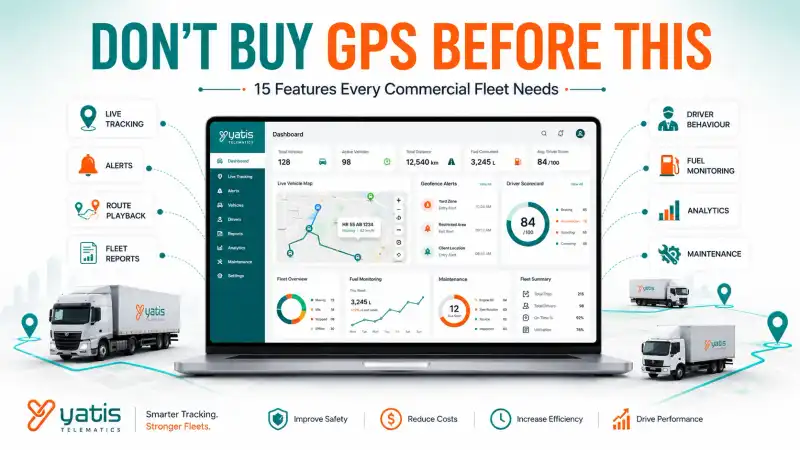
Choosing a GPS tracking system is no longer just about knowing where your vehicles are. Today's commercial fleets need far more than a moving location pin on a map. A modern GPS tracking platform should help businesses improve operational efficiency, reduce costs, increase driver accountability, strengthen customer service, and make faster decisions using real-time fleet intelligence.
However, not every GPS tracking solution offers the same capabilities. Some platforms focus only on vehicle location, while others combine live tracking with reporting, analytics, maintenance management, driver insights, and intelligent alerts.
If you're evaluating a GPS tracking solution for your business, understanding which features actually create value can help you make a better long-term investment. In this guide, we'll explore the 15 essential GPS tracking system features every commercial fleet should look for before choosing a solution.
New to GPS technology? Before evaluating features, it's helpful to understand How GPS Tracking Systems Work so you know how location data is collected and delivered.
Why Features Matter More Than Hardware
When businesses purchase a GPS tracking solution, they often compare hardware specifications first. While device quality is important, the software platform ultimately determines how much operational value you'll receive.
Think of the GPS device as the sensor. The platform is where that data becomes useful. A well-designed GPS tracking platform transforms raw location updates into actionable insights that help dispatchers, fleet managers, and business owners make better decisions every day.
Instead of asking "Which tracker has the best hardware?", a better question is "Which platform helps my business operate more efficiently?" That's where the right feature set becomes critical.
1. Live Vehicle Tracking
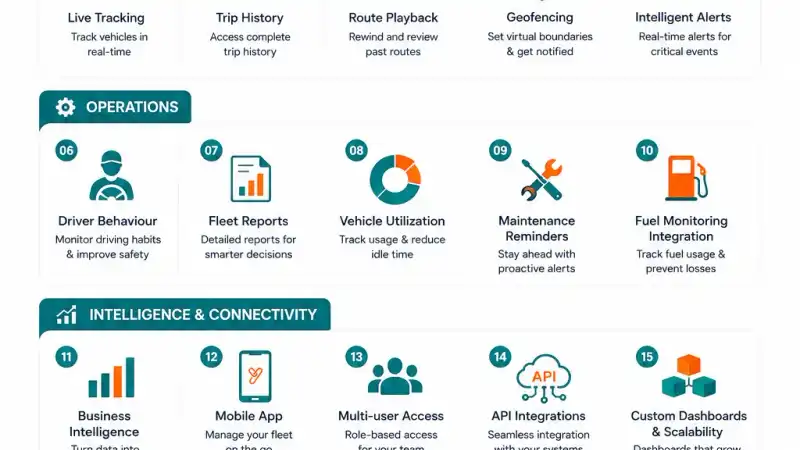
Live tracking remains the foundation of every commercial GPS tracking system. It allows fleet managers to monitor vehicle locations as journeys unfold, improving dispatch decisions, customer communication, and operational visibility.
Businesses managing deliveries, field service teams, logistics operations, or emergency response vehicles rely heavily on this capability. Rather than waiting until a trip is complete, managers can respond immediately to delays, route deviations, or unexpected situations. To understand when live tracking is most valuable compared with trip history, read our guide on Real-Time GPS Tracking vs Historical Tracking.
2. Historical Trip History
Historical tracking allows businesses to review completed journeys. Instead of asking where a vehicle is now, managers can analyse where it travelled, how long it stopped, and whether the planned route was followed.
Trip history supports customer dispute resolution, driver performance reviews, operational reporting, compliance documentation, and fleet optimization. Historical records turn everyday journeys into valuable business insights.
3. Geofencing
Geofencing enables businesses to create virtual boundaries around important locations such as warehouses, customer sites, fuel stations, or restricted areas. Whenever a vehicle enters or exits one of these predefined zones, the system automatically generates an alert.
This feature helps improve operational visibility without requiring constant manual monitoring. Beyond location awareness, geofencing supports better dispatch coordination, asset security, and service verification.
4. Intelligent Alerts and Notifications
A commercial GPS tracking system should notify managers when something important happens—not require them to watch the dashboard continuously. Common alerts include overspeed, excessive idling, ignition on/off, geofence entry and exit, towing detection, device disconnection, and power removal.
Timely alerts help businesses respond quickly before small operational issues become larger problems.
5. Driver Behaviour Monitoring
A GPS tracking system should do more than monitor vehicles—it should help businesses understand how they are being driven. Driver behaviour monitoring provides insights into habits that affect safety, fuel consumption, vehicle wear, and operating costs.
Common metrics include overspeeding, harsh braking, rapid acceleration, excessive idling, sharp cornering, and long engine runtime. Rather than using this data to penalize drivers, leading fleets use it to identify coaching opportunities, recognize good driving practices, and reduce preventable incidents. For businesses operating large fleets, even small improvements in driving behaviour can translate into significant fuel savings and lower maintenance costs over time.
6. Fleet Reports and Analytics
Raw GPS data has limited value until it is converted into actionable information. A commercial GPS tracking platform should generate reports that help managers answer operational questions such as which vehicles travelled the most, which vehicles remained idle for long periods, which drivers completed the highest number of trips, which routes consistently experience delays, and which vehicles have low utilisation.
Instead of manually reviewing hundreds of journeys, managers can use dashboards and scheduled reports to identify trends and make informed business decisions. Good reporting turns tracking data into measurable business improvements.
7. Route Playback
When investigating a completed trip, a list of locations often isn't enough. Route playback reconstructs an entire journey on a digital map, allowing managers to review how a vehicle travelled from start to finish.
This feature is useful for investigating customer complaints, verifying completed deliveries, reviewing route deviations, supporting internal investigations, and training new drivers. By replaying journeys visually, businesses gain context that standard reports cannot provide.
8. Vehicle Utilisation Monitoring
Vehicles are significant business assets. Understanding how effectively those assets are being used is essential for improving fleet productivity. Vehicle utilisation reports help managers evaluate daily operating hours, trip frequency, distance travelled, idle time, and asset availability.
These insights help businesses determine whether additional vehicles are required—or whether existing assets can be used more efficiently.
9. Maintenance Reminders
Unexpected vehicle breakdowns often lead to missed deliveries, operational disruption, and higher repair costs. Modern GPS tracking platforms can support preventive maintenance by reminding businesses when vehicles require servicing based on distance travelled, engine hours, scheduled maintenance intervals, and time-based service plans.
Instead of reacting to breakdowns, fleet managers can plan maintenance proactively and reduce unplanned downtime.
10. Fuel Monitoring Integration
Fuel is one of the largest operating expenses for commercial fleets. A GPS tracking platform that integrates with fuel monitoring solutions gives businesses greater visibility into fuel consumption patterns and potential losses.
Integrated fuel monitoring can help identify fuel theft, abnormal consumption, excessive idling, inefficient routes, and vehicle-specific fuel performance. When combined with GPS data, these insights help businesses control costs and improve operational efficiency.
11. Mobile Application Access
Fleet operations don't stop when managers leave the office. A mobile application allows authorised users to access important fleet information from anywhere. Key mobile capabilities include live vehicle tracking, instant alerts, driver information, trip history, dashboard summaries, and report access.
Whether responding to an operational issue or checking vehicle status during travel, mobile accessibility keeps decision-makers connected.
12. Multi-User Access and Role-Based Permissions
Different users require different levels of access. Dispatch teams monitor live operations, operations managers review reports, senior management focuses on KPIs, and maintenance teams monitor service schedules.
A commercial GPS tracking platform should support role-based access so users see only the information relevant to their responsibilities. This improves both security and operational efficiency.
13. API and Software Integrations
GPS tracking rarely operates in isolation. Many businesses already use ERP, CRM, transport management, HR, or dispatch software. An open API enables GPS data to integrate with these existing systems, reducing manual work and creating a unified operational workflow.
Integration capabilities become increasingly important as businesses scale and digitalise their operations.
14. Customisable Dashboards
Every fleet operates differently. A courier company may prioritise delivery status, while a construction business may focus on equipment utilisation. Customisable dashboards allow users to configure the information that matters most to their operations, improving productivity and reducing unnecessary complexity.
Instead of navigating multiple screens, managers can monitor key performance indicators from a single view.
15. Scalability for Future Growth
A GPS tracking solution should support your business not only today but also as your fleet grows. When evaluating a platform, consider whether it can accommodate additional vehicles, multiple branches, larger user teams, new reporting requirements, integration with future technologies, and expanding operational needs.
Choosing a scalable platform reduces the need for costly system replacements as the business evolves. A solution that grows with your organisation provides better long-term value than one designed only for current requirements. If your fleet is already feeling the limits of a basic tracker, our guide on 7 Signs Your Fleet Has Outgrown Basic GPS Tracking explains what to look for next.
Questions to Ask Before Buying a GPS Tracking System
Before making a purchasing decision, fleet managers should look beyond product brochures and ask practical questions such as:
- Does the platform provide both live tracking and historical reports?
- Can alerts be customised to suit operational requirements?
- Are reports easy to generate and understand?
- Does the solution integrate with existing business software?
- Can the platform support future fleet expansion?
- Is mobile access available for field teams?
- Does the provider offer reliable support and onboarding?
These questions help ensure that the chosen platform aligns with operational goals rather than simply meeting basic tracking requirements.
How to Choose the Right GPS Tracking System
Every fleet operates differently, which means there is no one-size-fits-all GPS tracking solution. Instead of selecting a platform based solely on price or the number of advertised features, evaluate whether those features solve your operational challenges.
When comparing providers, ask yourself: does the system provide accurate, real-time vehicle visibility? Can I access historical trip data and reports easily? Will the platform scale as my fleet grows? Can it integrate with my existing business software? Are reports simple enough for different teams to use? Does the provider offer reliable onboarding, support, and future updates?
The best GPS tracking system is the one that fits your operational workflow, supports informed decision-making, and continues delivering value as your business expands.
Final Thoughts
A commercial GPS tracking system should be more than a tool for locating vehicles. It should become a central part of your fleet operations—helping you monitor assets, improve driver accountability, optimize resource utilization, reduce operational costs, and make better decisions every day.
The right combination of features allows fleet managers to move beyond simple tracking and build a more connected, data-driven operation. As your business grows, the importance of scalability, reporting, integrations, and actionable insights becomes just as important as live vehicle visibility.
At Yatis, we've built our GPS tracking platform to help businesses manage fleets with confidence. From live tracking and intelligent alerts to detailed reporting and fleet analytics, our solutions are designed to support operational efficiency today while preparing businesses for tomorrow's mobility challenges.
If you're evaluating a GPS tracking system for your fleet, focus on the features that create measurable operational value—not just the specifications listed on a product brochure.
Frequently Asked Questions
Ready to get started?
Contact Yatis Telematics to see how our GPS tracking platform combines the features commercial fleets need to operate more efficiently.
Contact Us →