

GPS Tracking and Route Optimization: How Smarter Routing Reduces Costs and Improves Deliveries

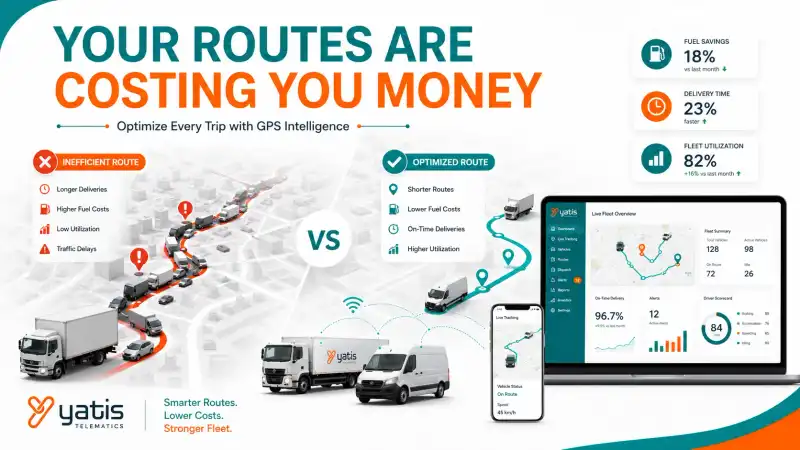
For many businesses, reducing fleet costs doesn't always require purchasing more vehicles or hiring additional drivers. Often, the biggest opportunity lies in improving how existing vehicles move throughout the day.
Two drivers may complete the same number of deliveries while traveling vastly different distances. Two delivery vehicles may leave the same depot, yet one finishes its schedule an hour earlier because it follows a more efficient route. These differences directly affect fuel consumption, driver productivity, vehicle wear, customer satisfaction, and overall operating costs.
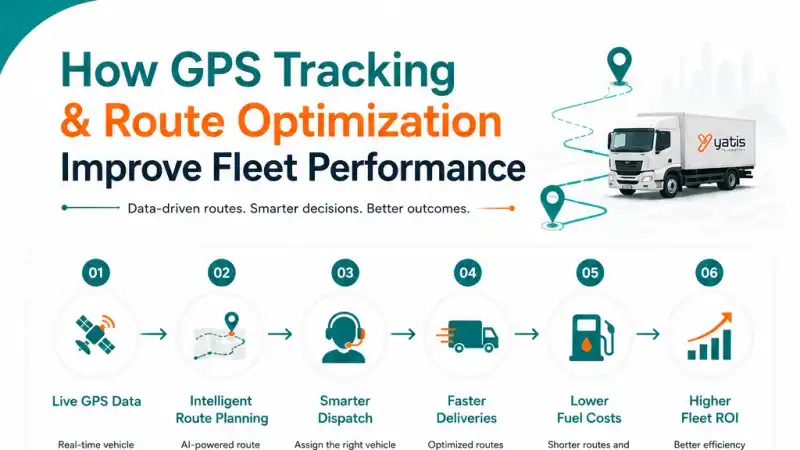
This is where GPS tracking and route optimization work together. GPS tracking provides real-time visibility into fleet movement, while route optimization helps determine the most efficient way for vehicles to complete their assigned jobs. Together, they enable fleet managers to reduce unnecessary travel, improve delivery performance, and make smarter operational decisions every day.
Quick Takeaways
- Reduce unnecessary kilometres
- Improve delivery speed
- Lower fuel consumption
- Increase vehicle utilization
- Improve ETA accuracy
- Support better dispatch decisions
- Reduce operational costs
At a Glance
| Challenge | GPS + Route Optimization Solution |
|---|---|
| Long travel times | Smarter route planning |
| High fuel usage | Reduced unnecessary driving |
| Delivery delays | Dynamic routing |
| Manual dispatch | Intelligent vehicle assignment |
| Poor ETA accuracy | Live traffic-aware planning |
| Uneven workloads | Balanced fleet allocation |
Why Route Optimization Matters
Route optimization identifies the most efficient route for each vehicle by considering factors such as distance, traffic conditions, delivery priorities, vehicle availability, and operational constraints. The goal is to reduce travel time, improve efficiency, and maximize fleet productivity.
Many fleets assume the shortest route is always the best route. In reality, the shortest route isn't always the fastest—or the most efficient. Consider two delivery routes:
| Route A | Route B |
|---|---|
| 18 km | 22 km |
| Heavy traffic | Free-flowing traffic |
| 11 traffic lights | 3 traffic lights |
| Multiple right turns | Continuous movement |
| 65 minutes | 42 minutes |
Although Route B covers a longer distance, it completes deliveries more quickly and may consume less fuel due to fewer stops and smoother traffic flow. Effective route optimization evaluates multiple variables instead of relying on distance alone.
How GPS Tracking Enables Smarter Route Optimization
GPS tracking provides the real-time operational data that route optimization depends on. Unlike historical tracking, real-time GPS tracking enables dispatchers to respond instantly to traffic, delays, and changing delivery priorities.
Without live fleet visibility, dispatchers often rely on assumptions or outdated information. With GPS tracking, they can make informed decisions based on current vehicle locations and operational conditions. Key capabilities include live vehicle locations, current trip progress, vehicle availability, historical route performance, estimated arrival times, traffic-aware routing, and dispatch visibility.
This combination allows dispatch teams to assign the most appropriate vehicle for each job instead of simply choosing the next available driver.
Static Routing vs Dynamic Route Optimization
| Static Routes | Dynamic Route Optimization |
|---|---|
| Fixed daily schedules | Continuously adapts to changing conditions |
| Manual adjustments | Automatic recommendations |
| Limited flexibility | Responds to traffic and delays |
| Same routes every day | Optimized based on real-time information |
| Higher risk of delays | Better on-time performance |
For fleets handling deliveries, field services, or logistics operations, dynamic routing often provides greater flexibility when unexpected conditions arise.
1. Lower Fuel Consumption Through Smarter Routing
GPS route optimization reduces fuel consumption by selecting more efficient routes, minimizing unnecessary mileage, avoiding traffic congestion, reducing engine idle time, and assigning the nearest available vehicle to each job.
Fuel is one of the largest recurring expenses for commercial fleets. While fuel prices are outside a fleet manager's control, how efficiently fuel is used is not. Every unnecessary kilometre, avoidable detour, traffic delay, and idle minute increases operating costs. With GPS tracking and route optimization, dispatchers gain better visibility into vehicle locations and road conditions, allowing them to make informed routing decisions throughout the day.
Route Optimization Helps Reduce Fuel Waste By:
- Selecting shorter or faster routes when appropriate
- Avoiding heavily congested roads
- Reducing unnecessary detours
- Minimizing duplicate trips
- Assigning the closest available vehicle
- Reducing excessive engine idle time
2. Faster Deliveries and More Reliable ETAs
Route optimization improves delivery performance by calculating efficient routes, adapting to changing traffic conditions, and helping dispatchers provide more accurate estimated arrival times (ETAs). This improves customer communication and supports more reliable service.
Today's customers expect accurate delivery updates—not broad delivery windows. Modern GPS platforms continuously monitor vehicle movement and help dispatchers respond to changing conditions. If traffic congestion, road closures, or unexpected delays occur, routes can be adjusted before they impact additional deliveries. This results in more predictable delivery schedules, better customer communication, improved on-time performance, and fewer missed service commitments.
3. Smarter Dispatch Decisions
GPS tracking improves dispatch efficiency by giving managers real-time visibility into vehicle availability, location, and trip status. This enables faster job assignments and reduces unnecessary travel between customer locations.
Without live visibility, dispatchers often rely on phone calls or assumptions to determine which vehicle should receive the next assignment. GPS tracking removes much of this uncertainty, letting dispatchers immediately see which vehicles have completed their current jobs, which drivers are closest to the next customer, which vehicles are delayed, and which assets remain available.
4. Better Vehicle Utilization
Route optimization improves vehicle utilization by balancing workloads across the fleet, reducing unnecessary trips, and helping businesses maximize the productivity of existing vehicles before adding new assets.
Fleet expansion is expensive. Purchasing additional vehicles should be based on operational demand—not inefficient planning. Route optimization helps managers understand which vehicles are consistently overutilized, which vehicles remain underused, whether workloads are distributed evenly, and where additional capacity is genuinely required.
5. Reduced Driver Stress and Improved Productivity
Optimized routing supports driver productivity by reducing unnecessary travel, minimizing confusion, simplifying daily schedules, and helping drivers spend more time completing jobs rather than navigating inefficient routes.
Poor routing often results in frequent backtracking, congested roads, missed appointments, confusing schedules, and increased driving time. When routes are planned intelligently, drivers can focus on completing their work instead of constantly adapting to avoidable operational issues.
6. Better Customer Experience
GPS tracking and route optimization improve customer experience by enabling accurate ETAs, reducing delivery delays, improving communication, and increasing service reliability throughout the delivery process.
Operational efficiency ultimately affects customer satisfaction. Customers value reliability just as much as speed. A business that consistently communicates accurate arrival times builds greater trust than one that repeatedly changes delivery estimates. This strengthens customer confidence, delivery transparency, service consistency, and brand reputation.
Dynamic Route Optimization vs Traditional Route Planning
Traditional route planning creates fixed routes before vehicles leave the depot. Dynamic route optimization continuously adjusts routes using real-time GPS data, traffic conditions, vehicle availability, and operational changes to improve efficiency throughout the day.
| Traditional Route Planning | Dynamic Route Optimization |
|---|---|
| Fixed routes | Live route adjustments |
| Manual dispatch | Intelligent dispatch recommendations |
| Traffic checked once | Continuous traffic awareness |
| Delays affect the entire schedule | Routes adapt to disruptions |
| Limited operational flexibility | Real-time operational optimization |
For businesses handling same-day deliveries, field services, FMCG distribution, or logistics, dynamic route optimization helps maintain service quality even when daily conditions change unexpectedly.
Common Route Planning Mistakes That Increase Fleet Costs
The most common route planning mistakes include relying on manual planning, ignoring live traffic, assigning distant vehicles, failing to monitor route performance, and treating every delivery equally.
1. Choosing the Shortest Route Instead of the Fastest
The shortest distance is not always the quickest journey. Congestion, road conditions, intersections, and traffic signals all affect travel time.
2. Assigning Jobs Without Checking Vehicle Proximity
Dispatching the first available driver instead of the nearest available vehicle often results in unnecessary travel.
3. Ignoring Historical Route Performance
Past trip data helps identify recurring delays and inefficient routes. Businesses that review historical performance continuously improve future route planning.
4. Planning Routes Only Once Per Day
Operations change throughout the day. Road closures, urgent deliveries, and traffic conditions require flexible route management.
5. Measuring Drivers Instead of Processes
Many routing problems originate from inefficient planning rather than driver performance. Optimizing operational workflows often delivers greater improvements than focusing solely on individual drivers.
Route Optimization KPIs Every Fleet Manager Should Track
Fleet managers should measure route optimization using KPIs such as average delivery time, route completion rate, fuel consumption, idle time, vehicle utilization, on-time delivery performance, and distance travelled per job.
| KPI | Why It Matters |
|---|---|
| Average Delivery Time | Measures delivery efficiency |
| On-Time Delivery Rate | Tracks customer service performance |
| Distance per Delivery | Identifies unnecessary travel |
| Fuel Consumption | Measures routing efficiency |
| Idle Time | Highlights operational waste |
| Vehicle Utilization | Maximizes asset productivity |
| Jobs Completed per Vehicle | Measures fleet efficiency |
| Dispatcher Response Time | Evaluates operational agility |
Rather than focusing on one KPI, review these metrics together to identify trends and continuous improvement opportunities.
Route Optimization Best Practices
Businesses that achieve consistent operational improvements typically follow these best practices:
- Review route performance regularly.
- Monitor fleet activity in real time.
- Balance workloads across available vehicles.
- Update routing strategies as operations change.
- Use historical trip data to refine future planning.
- Combine operational data with dispatcher experience.
- Monitor KPIs consistently rather than occasionally.
Route optimization is an ongoing operational discipline, not a one-time software configuration.
Executive Checklist
Is Your Fleet Ready for Route Optimization?
Use this checklist to evaluate your operations.
- Drivers regularly encounter avoidable traffic delays.
- Dispatch teams manually assign jobs.
- Delivery schedules frequently change during the day.
- Customers request frequent ETA updates.
- Some vehicles travel significantly farther than others.
- Reports show inconsistent fleet utilization.
- Fuel expenses continue increasing despite stable workloads.
- Dispatchers rely on phone calls instead of live fleet visibility.
If you answered Yes to several of these questions, your business is likely ready to benefit from advanced GPS tracking and route optimization.
Final Thoughts
Efficient fleet management is no longer measured simply by how many vehicles a business owns. It is measured by how effectively those vehicles are used. GPS tracking provides the visibility needed to understand where vehicles are and how they are performing. Route optimization transforms that visibility into action by helping businesses move people, goods, and services more efficiently.
When these capabilities work together, fleets can reduce unnecessary travel, improve delivery reliability, optimize resource allocation, and create better experiences for both customers and drivers. At Yatis, we help businesses move beyond basic vehicle tracking with intelligent fleet management solutions that combine live GPS visibility, advanced reporting, and operational insights to support smarter routing and more efficient fleet operations.
Whether you're managing logistics fleets, service vehicles, FMCG distribution, or enterprise transportation, better routing begins with better visibility.
Frequently Asked Questions
Ready to get started?
Contact Yatis Telematics to learn how GPS tracking and route optimization can reduce fleet costs and improve delivery performance.
Contact Us →