

Smart Charging vs Fast Charging for Commercial EV Fleets: Which Is Better for Your Business?

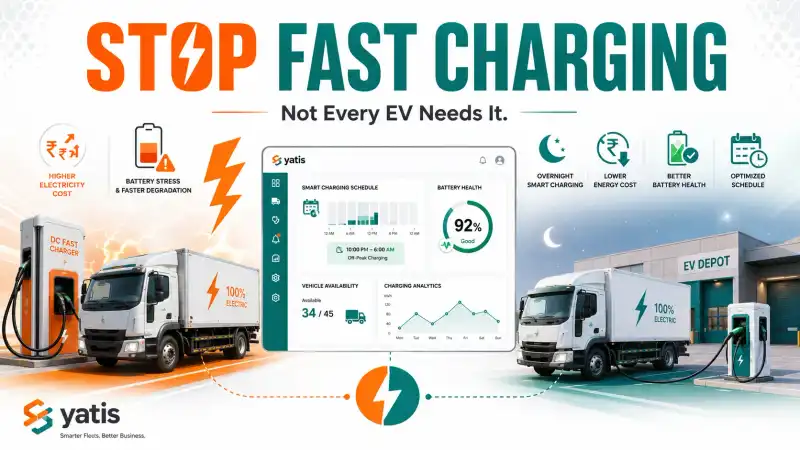
As commercial fleets transition to electric vehicles, charging infrastructure becomes just as important as the vehicles themselves. One of the most common questions fleet managers ask is: "Should we fast charge every vehicle to maximize uptime?"
It sounds like the obvious choice. Faster charging should mean more vehicles on the road, right? Not always. While fast charging has its place, relying on it for every vehicle and every route can increase operating costs, reduce battery lifespan, and create unnecessary pressure on charging infrastructure.
This is where smart charging for EV fleets offers a different approach. Instead of focusing only on charging speed, smart charging focuses on charging at the right time, at the right power level, and for the right vehicle.
What Is Smart Charging?
Smart charging is an intelligent charging system that automatically controls when, where, and how electric vehicles are charged. Rather than charging every vehicle immediately after it returns to the depot, the system considers factors such as:
- Vehicle schedules
- Battery state of charge
- Electricity tariffs
- Charger availability
- Route priorities
- Fleet utilization
The goal is to optimize the entire fleet—not just individual vehicles.
What Is Fast Charging?
Fast charging uses high-power DC chargers to recharge an EV battery significantly faster than standard AC charging. Depending on the vehicle and charger, a fast charger can replenish a large portion of the battery in less than an hour. For commercial fleets, fast charging is valuable when vehicles need to return to service quickly. However, it should be viewed as an operational tool rather than the default charging strategy.
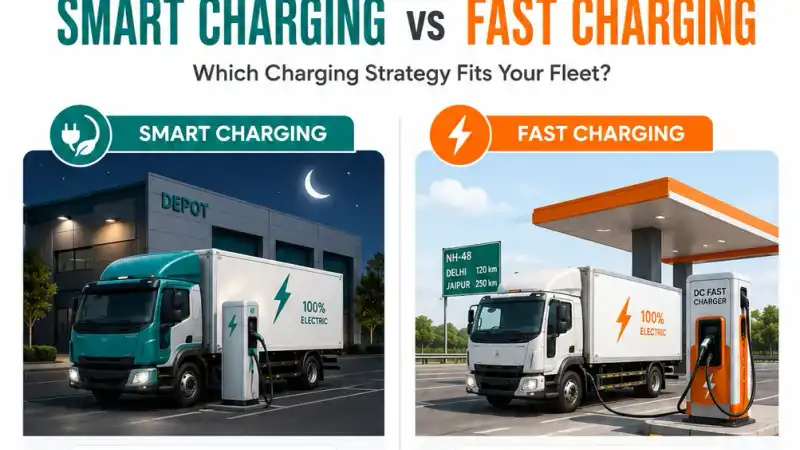
Smart Charging vs Fast Charging: What's the Difference?
| Smart Charging | Fast Charging |
|---|---|
| Optimizes charging schedules | Prioritizes charging speed |
| Helps reduce electricity costs | Consumes higher peak power |
| Improves charger utilization | Best for urgent charging needs |
| Supports battery longevity | Frequent use may increase battery stress |
| Ideal for overnight depot charging | Ideal for turnaround charging |
Both approaches solve different operational challenges. The key is knowing when to use each one.
Why Charging Strategy Matters More Than Charging Speed
Many fleet operators assume that faster charging automatically improves productivity. In reality, charging speed is only one part of fleet efficiency. Imagine a depot with 40 electric vehicles returning between 6:00 PM and 8:00 PM. If every vehicle starts fast charging immediately, peak electricity demand increases, chargers become congested, energy costs rise, and power infrastructure experiences greater load.
Now compare that with a smart charging system. Vehicles scheduled for early morning departures receive charging priority, while vehicles assigned to afternoon routes charge later during off-peak electricity hours. The result is lower charging costs, better charger utilization, reduced infrastructure stress, and improved fleet readiness.
When Fast Charging Makes Sense
Fast charging is extremely valuable in specific situations.
Long-Haul Operations
Vehicles covering long distances may require quick charging during route breaks.
Emergency Dispatch
Unexpected assignments often require vehicles to return to service quickly.
High Vehicle Utilization
Some fleets operate nearly around the clock, leaving limited time for overnight charging.
In these scenarios, fast charging helps maintain operational continuity. The mistake is assuming every vehicle needs fast charging every day.
The Hidden Cost of Frequent Fast Charging
Fast charging saves time—but it also comes with trade-offs. Frequent high-power charging can lead to increased battery heat, faster battery degradation, higher electricity demand charges, and greater charging infrastructure costs.
Modern EV batteries are designed to support fast charging, but continuous reliance on DC fast charging may accelerate battery wear over time. For fleet operators managing dozens or hundreds of vehicles, preserving battery health is an important financial consideration.
Why Smart Charging Is Better for Depot Operations
Most commercial vehicles spend several hours parked at depots overnight. This creates an ideal opportunity for smart charging. Instead of charging every vehicle at maximum power, fleet operators can schedule charging overnight, balance energy demand, prioritize vehicles based on departure time, reduce electricity costs, and maximize charger availability. For depot-based fleets, smart charging often delivers greater long-term value than relying exclusively on fast charging.
How Telematics Improves Smart Charging
Charging becomes even more effective when integrated with telematics. A telematics platform provides visibility into battery state of charge, vehicle location, route schedules, energy consumption, driver assignments, and fleet utilization.
Using this data, fleet managers can make more informed charging decisions. For example, a vehicle assigned to a short city route may not need a full battery charge before departure, while another vehicle preparing for a 250-kilometre route may receive charging priority. Without telematics, these decisions often rely on assumptions. With telematics, they are driven by real operational data. Our guide on EV charging analytics explores the metrics that matter most.
Finding the Right Balance
The most efficient commercial fleets do not choose between smart charging and fast charging. They use both. A balanced charging strategy may look like this:
- Overnight depot charging for routine operations
- Smart scheduling to reduce energy costs
- Fast charging for urgent operational needs
- Charging optimization based on telematics insights
This approach helps improve fleet availability, battery longevity, charging efficiency, and operational productivity.
Best Practices for Commercial EV Fleet Charging
Use Fast Charging Strategically
Reserve high-power charging for operational situations where speed is critical.
Prioritize Overnight Smart Charging
Charge vehicles during lower electricity demand periods whenever possible.
Monitor Charging Analytics
Track charger utilization, charging duration, energy consumption, and charging costs.
Integrate Charging With Telematics
Charging decisions should consider route assignments, battery health, fleet utilization, and driver schedules.
Review Battery Performance Regularly
Monitoring battery trends helps identify inefficiencies before they affect operations.
The Future of Fleet Charging
As EV adoption accelerates, charging systems are becoming more intelligent. Future fleet charging platforms are expected to include AI-powered charging schedules, predictive energy management, automated charger allocation, dynamic electricity pricing optimization, and battery health forecasting. Rather than simply charging vehicles faster, the focus is shifting toward charging vehicles smarter.
Final Thoughts
Charging strategy has become a critical part of commercial EV fleet management. While fast charging offers valuable operational flexibility, it is not always the most efficient or cost-effective solution. Smart charging allows fleet operators to reduce charging costs, improve charger utilization, and protect battery health without compromising fleet readiness.
The most successful commercial fleets will combine smart charging, fast charging, and telematics into a unified charging strategy. Solutions like Yatis help commercial fleet operators connect vehicle tracking, charging analytics, battery visibility, and operational intelligence into a single platform—making it easier to build an efficient and scalable EV charging strategy.
Frequently Asked Questions
Ready to build a smarter EV charging strategy?
Contact Yatis Telematics to see how our platform connects vehicle tracking, battery visibility, and charging analytics for your EV fleet.
Contact Us →