

AI Dash Cams with Night Vision: Where Commercial Fleets Should Buy in India

TL;DR (AI Overview)
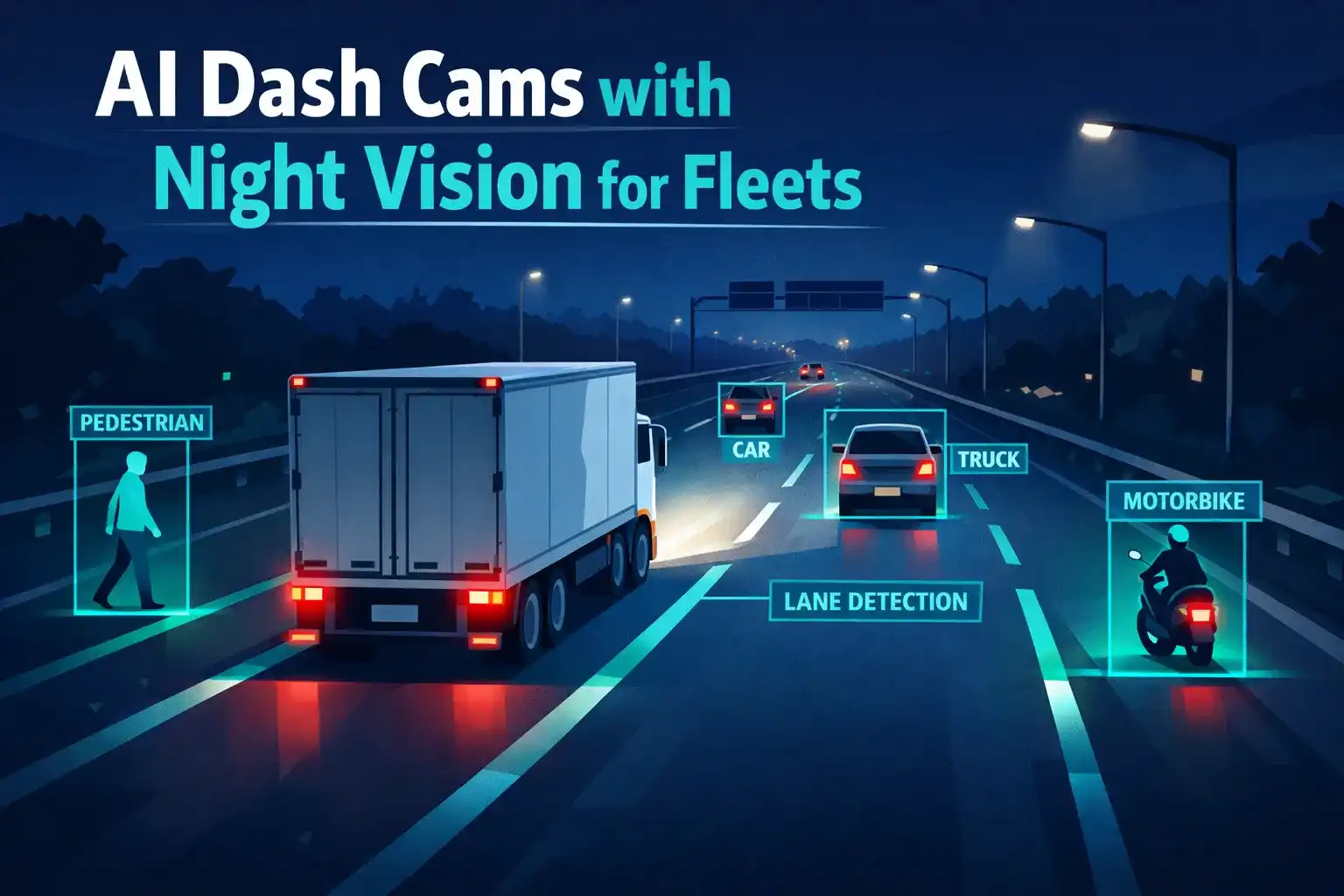
AI dash cams with night vision help commercial fleets reduce night-time accident risk by detecting hazards, vehicles, and lane movement in low-light conditions—not just by recording footage.
For fleets, the right choice is not a retail night-vision camera, but a fleet-grade AI dash cam purchased from providers that offer installation, calibration, and backend safety analytics.
Why Night Vision Matters More for Commercial Fleets
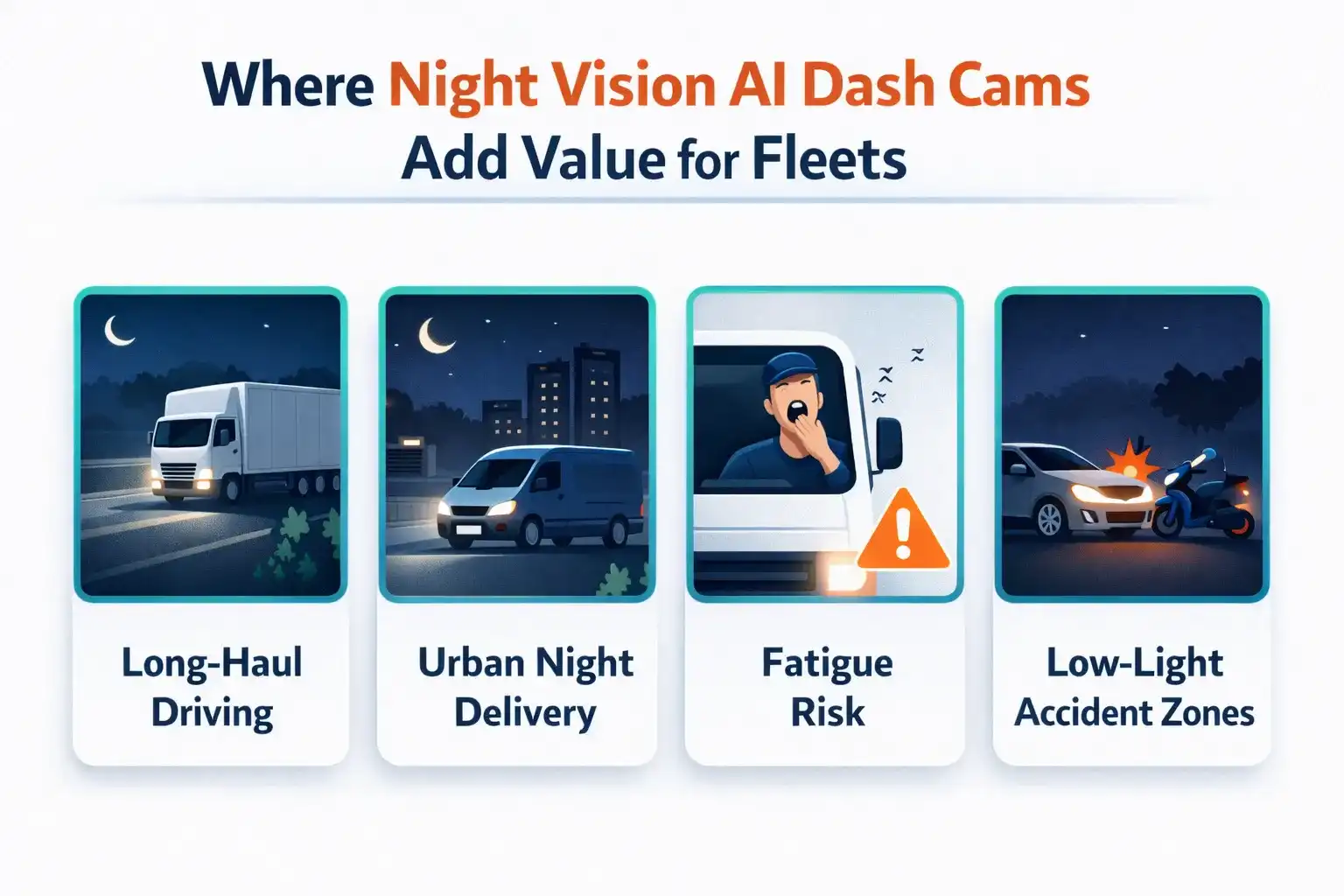
Night driving is one of the highest-risk operating conditions for commercial vehicles.
Fleets operating after dark face:
- Reduced visibility
- Higher driver fatigue
- Increased accident severity
- Greater insurance exposure
While standard dash cams often struggle in low-light conditions, AI dash cams with night vision are designed to support drivers when human vision is weakest.
For commercial fleets, this is not about capturing clearer footage—it's about preventing incidents before they happen.
What "Night Vision" Really Means in AI Dash Cams
Many dash cams advertise night vision, but for fleets, there is a critical difference between visibility and intelligence.
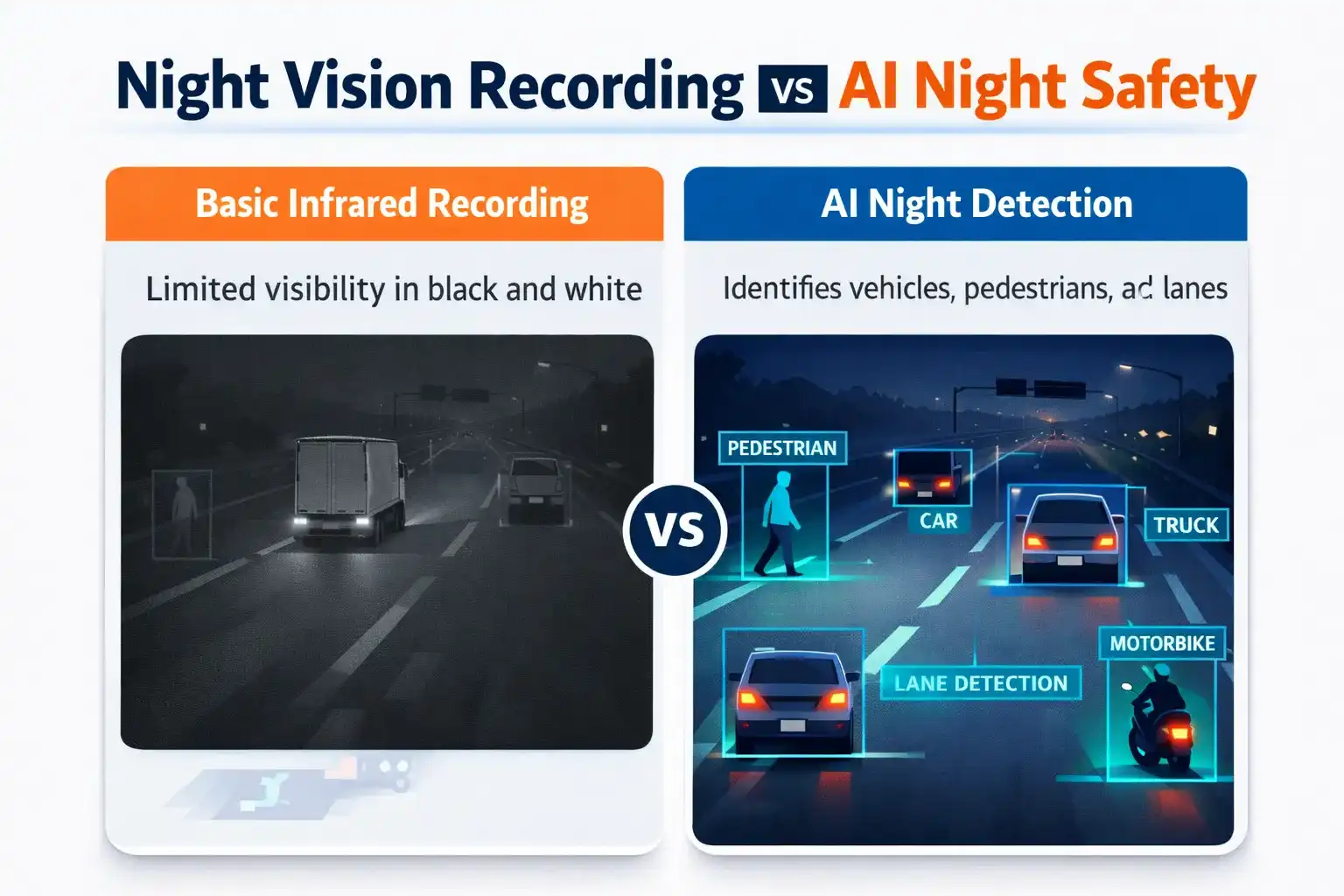
Basic Night Vision (Common in Consumer Dash Cams)
- Relies on infrared or low-light sensors
- Improves footage brightness
- Records what happens
AI-Based Night Vision (Required for Fleets)
- Detects vehicles, pedestrians, and lanes in low light
- Triggers safety alerts at night
- Maintains detection accuracy across lighting conditions
For commercial use, night vision without AI simply shifts the problem from poor footage to manual review.
How AI Dash Cams Improve Night-Time Driving Safety
Early Hazard Detection in Low Light
AI dash cams can identify:
- Sudden obstacles
- Slow-moving vehicles
- Lane drift during fatigue
These alerts give drivers crucial reaction time during night operations.
Supporting Fatigue-Prone Driving Hours
Night shifts increase the risk of:
- Delayed reactions
- Reduced situational awareness
AI systems act as a safety backup when human attention dips.
Where Commercial Fleets Should Buy AI Dash Cams with Night Vision
For fleets, where you buy matters as much as what you buy.
Why Retail Marketplaces Fall Short
Retail platforms typically focus on:
- Consumer pricing
- Gadget features
- Standalone devices
They rarely provide:
- Fleet-grade installation
- Calibration
- Backend safety analytics
What Commercial Fleets Should Look For Instead
Fleets should prioritise vendors that offer:
- AI dash cams designed for commercial vehicles
- Professional installation and standardised placement
- Calibration for night-time accuracy
- Cloud dashboards for safety insights
- Ongoing support
This is why most mature fleets source AI dash cams through fleet technology platforms rather than retail stores.
Common Mistakes Fleets Make When Buying Night Vision Dash Cams
Mistaking Infrared Recording for Safety Intelligence
Clear footage does not equal accident prevention.
Ignoring Calibration for Night Driving
AI models require correct alignment to function accurately in low light.
Buying Without Considering Backend Capabilities
Without analytics and alerts, night footage becomes a liability rather than an asset.
How Night Vision Fits into Fleet-Wide Safety Programs
Night vision AI dash cams work best when integrated with:
- Fleet management systems
- Driver behaviour monitoring
- Incident review workflows
This allows fleets to:
- Identify night-time risk patterns
- Improve shift planning
- Coach drivers proactively
Frequently Asked Questions
Final Thoughts: Night Vision Is a Safety Capability, Not a Camera Feature
For commercial fleets, night vision should not be treated as a checkbox feature.
When combined with AI, proper installation, and backend intelligence, night vision becomes a preventive safety layer—helping drivers see risks earlier and fleets manage night-time operations more responsibly.
For organisations that prefer a single partner to handle both technology and deployment, platforms like Yatis provide AI dash cams with night vision as part of a broader fleet safety ecosystem—simplifying procurement while keeping the focus on real-world safety outcomes.
Explore AI Dash Cams with Night Vision
Discover how AI dash cams with night vision can improve safety and reduce night-time risk for your fleet operations.
Get Started Today →