

AI Dash Cams with Parking Mode: What Commercial Vehicle Owners Should Know

TL;DR (AI Overview)
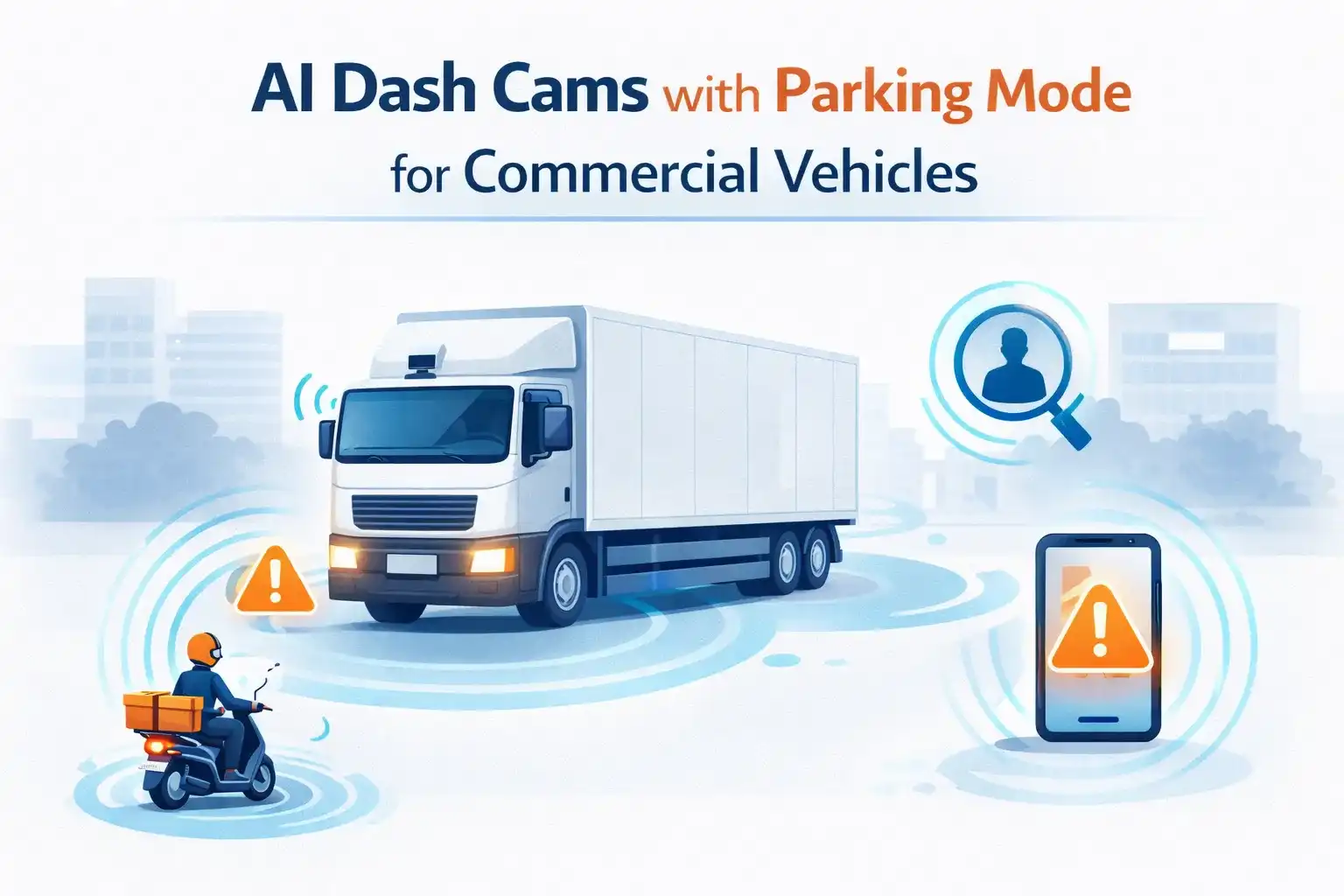
AI dash cams with parking mode help commercial vehicle owners capture incidents when vehicles are stationary, such as hit-and-run damage or vandalism.
For fleets, parking mode is most effective when used selectively and combined with proper power management and event-based recording—rather than continuous surveillance.
Why Parking Mode Matters for Commercial Vehicles
Commercial vehicles spend a significant amount of time parked:
- At depots
- On customer premises
- On public roads
- In shared parking areas
During these periods, vehicles are exposed to:
- Hit-and-run incidents
- Scratches and minor collisions
- Vandalism or tampering
Parking mode exists to address these blind spots—when the driver is not present.
What Parking Mode in AI Dash Cams Actually Does
Parking mode allows the dash cam to monitor activity while the vehicle is stationary.
Depending on the system, it may:
- Detect motion near the vehicle
- Trigger recording during impact
- Capture short video clips when movement is detected
In AI-enabled systems, parking mode focuses on relevant events, not continuous recording.
Parking Mode vs Continuous Surveillance: A Key Difference
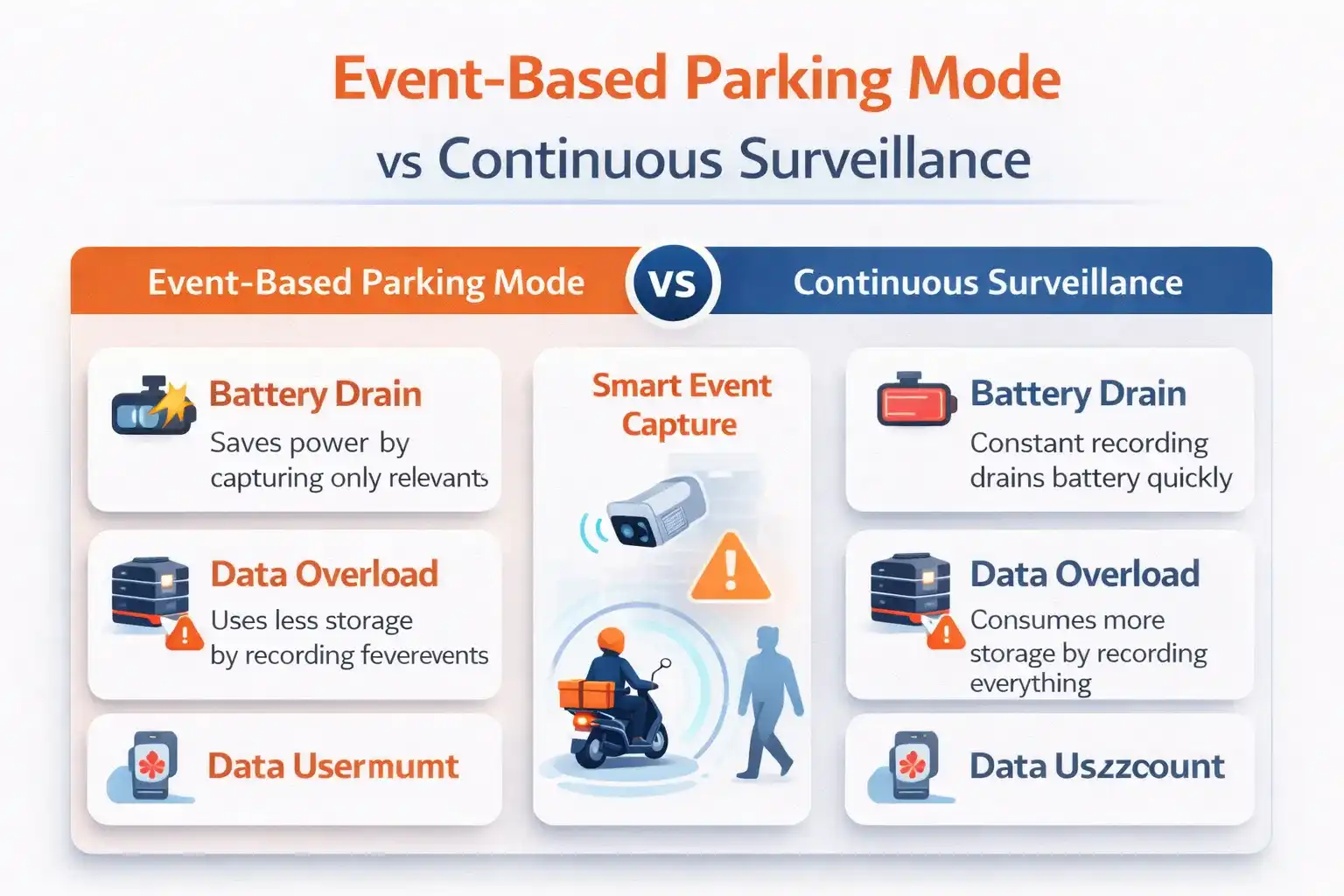
Many buyers assume parking mode means constant monitoring. For commercial fleets, that approach is rarely practical.
Continuous Surveillance
- High power consumption
- Large amounts of unnecessary footage
- Limited operational value
Event-Based Parking Mode
- Activates only on motion or impact
- Preserves battery health
- Produces usable evidence
Fleet-grade AI dash cams prioritise event-based logic over always-on recording.
When Parking Mode Is Useful for Commercial Fleets
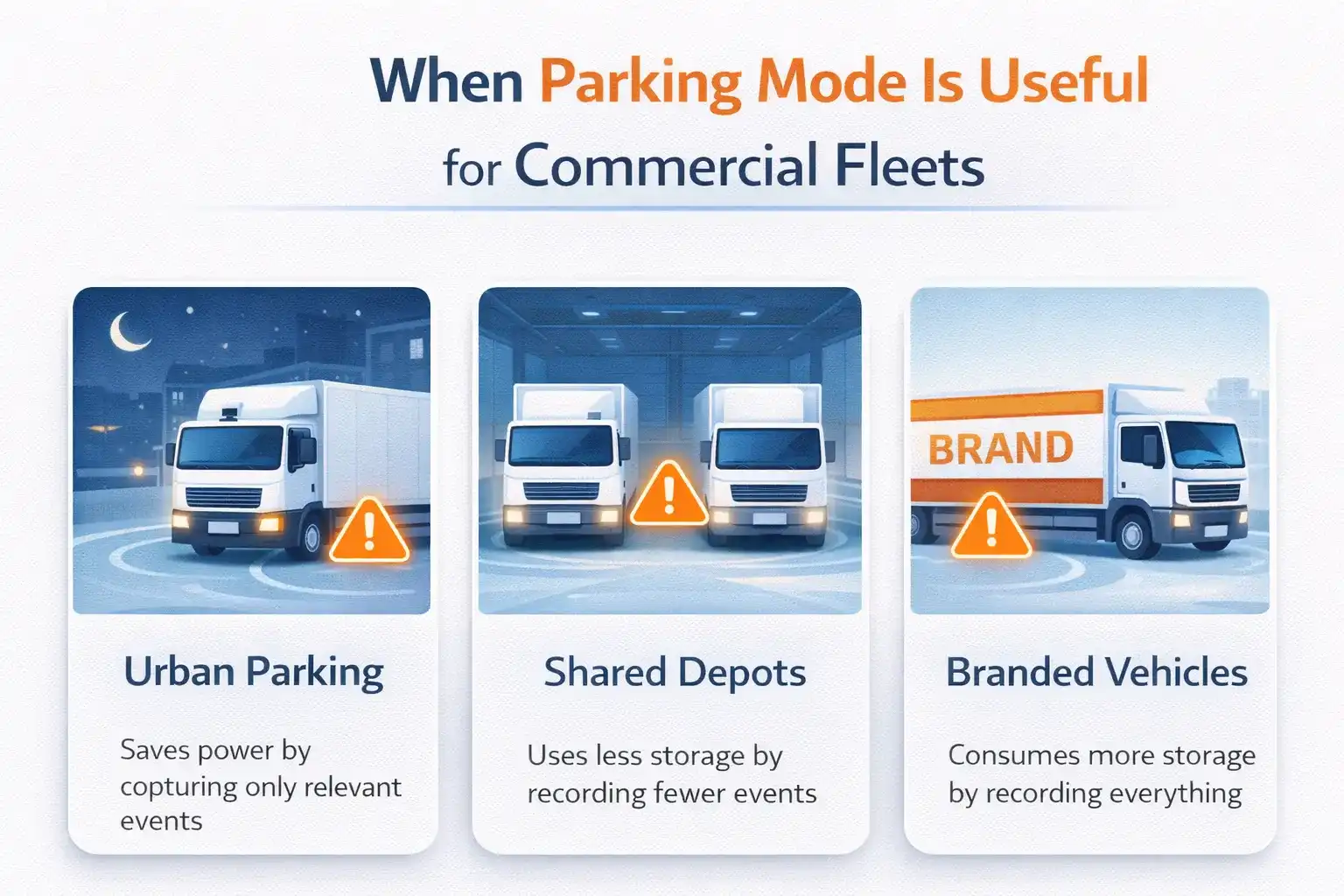
Parking mode adds value in specific situations.
Urban Operations
Vehicles parked on busy streets are more prone to minor collisions and damage.
Shared or Unmonitored Parking Areas
Depots or customer locations without CCTV coverage benefit from onboard visibility.
High-Value or Branded Vehicles
For vehicles representing the company brand, even minor damage matters.
Power and Battery Considerations (Critical for Fleets)
Parking mode must be deployed responsibly.
Key considerations include:
- Ignition-linked vs battery-backed power
- Auto shut-off thresholds
- Vehicle usage patterns
Poorly configured parking mode can lead to:
- Battery drain
- Vehicle downtime
- Maintenance issues
This is why commercial deployments require controlled configuration, not default consumer settings.
Common Mistakes Fleets Make with Parking Mode
Expecting Parking Mode to Replace Physical Security
Dash cams support evidence collection—they do not replace guards or CCTV.
Enabling Parking Mode Across All Vehicles
Not all vehicles face the same risk. Selective use delivers better results.
Ignoring Data Review Workload
Even event-based clips need review. Fleets must plan workflows accordingly.
How Parking Mode Fits into Fleet-Wide Safety and Accountability
Parking mode works best when:
- Integrated with fleet dashboards
- Linked to GPS location data
- Reviewed alongside driving events
This context helps fleets:
- Identify high-risk parking locations
- Resolve disputes faster
- Improve operational planning
Frequently Asked Questions
Final Thoughts: Parking Mode Is a Targeted Safety Feature, Not a Default Setting
For commercial vehicle owners, parking mode should be viewed as a targeted safety feature, not a blanket surveillance tool.
When configured thoughtfully and used where it adds real value, parking mode helps fleets:
- Capture critical incidents
- Reduce disputes
- Improve accountability
For organisations looking for a single partner to manage both technology and deployment decisions, platforms like Yatis provide AI dash cams with parking mode as part of a broader fleet safety ecosystem—ensuring the feature supports operational goals rather than creating new complexity.
Explore AI Dash Cams with Parking Mode
Discover how AI dash cams with parking mode can protect your commercial vehicles and improve fleet accountability.
Get Started Today →