

GPS Tracking for Driver Safety: How Fleet Visibility Reduces Risk and Builds Safer Drivers

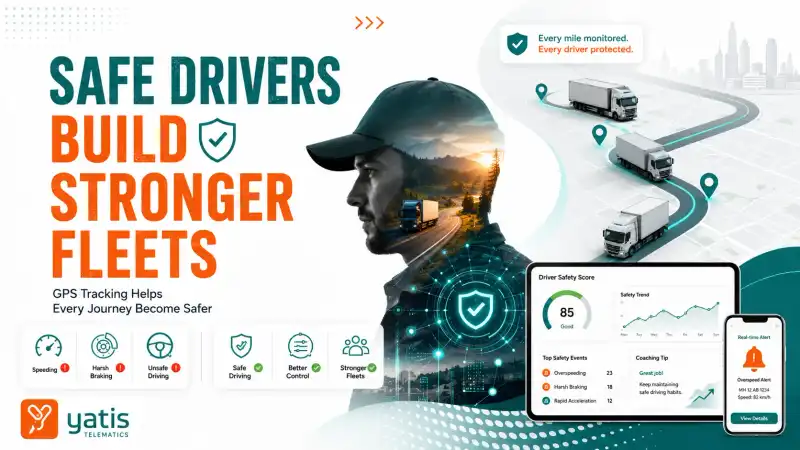
Driver safety is one of the most important factors influencing fleet performance. Unsafe driving behaviours not only increase the likelihood of accidents but also contribute to higher operating costs, vehicle wear, insurance claims, and reputational risk. For fleet managers, improving safety starts with understanding how vehicles are being driven — not just where they are.
A modern GPS tracking system provides continuous visibility into vehicle movement and driving patterns, enabling businesses to identify unsafe behaviours, measure driver performance, and build structured coaching programs based on real operational data.
Quick Takeaways
- Improve driver behaviour visibility
- Monitor safety KPIs
- Reduce risky driving habits
- Support driver coaching
- Encourage safer driving practices
- Improve fleet safety culture
- Make informed operational decisions
At a Glance
| Driver Safety Challenge | GPS Tracking Benefit |
|---|---|
| Limited visibility into driving habits | Real-time behaviour monitoring |
| Frequent speeding | Speed alerts and reports |
| Unsafe driving patterns | Safety KPIs and analytics |
| Inconsistent coaching | Performance-based coaching |
| Lack of accountability | Objective trip data |
| Difficulty measuring improvement | Driver scorecards |
What Is GPS Tracking for Driver Safety?
GPS tracking for driver safety is the use of vehicle location data and driving behaviour insights to monitor, measure, and improve how commercial vehicles are operated. It helps fleet managers identify unsafe driving patterns, coach drivers, and reduce operational risk.
Unlike traditional tracking systems that focus only on vehicle location, modern GPS platforms generate actionable safety insights. Fleet managers can review driving events, compare driver performance, and identify behaviours that increase operational risk. These insights create opportunities for continuous improvement rather than reactive incident management.
Why Driver Safety Matters in Fleet Operations
Every unsafe driving event carries potential consequences that extend beyond the driver. Poor driving behaviour can lead to:
- Increased accident risk
- Higher insurance costs
- Vehicle damage
- Unexpected downtime
- Delivery disruptions
- Reduced customer confidence
Improving driver safety isn't only about reducing incidents — it's about building a safer, more efficient operation. Businesses that consistently monitor safety performance are better positioned to identify trends, support drivers with targeted coaching, and improve long-term fleet performance.
1. Monitor Driver Behaviour with Real-Time GPS Data
GPS tracking gives fleet managers visibility into how vehicles are being operated throughout every journey. Instead of relying on occasional observations or incident reports, managers receive continuous operational data that highlights driving patterns across the fleet. Common behaviours that GPS tracking helps identify include:
- Speeding
- Harsh acceleration
- Sudden braking
- Excessive idling
- Unauthorized vehicle usage
- Extended stop durations
By identifying these behaviours early, fleet managers can intervene before they contribute to safety incidents or higher operating costs. For fleets that require deeper behavioural analysis with visual event verification, video telematics adds contextual video evidence alongside GPS data.
2. Measure Driver Safety Using Meaningful KPIs
Improving safety requires measurable performance indicators. GPS tracking systems help businesses monitor driver performance through objective metrics instead of subjective assessments. Common safety KPIs include:
- Speeding events per trip
- Harsh braking incidents
- Rapid acceleration events
- Idle time
- Trip duration
- Driver safety score
- Repeated high-risk events
These KPIs provide a consistent framework for evaluating performance, recognizing improvement, and identifying coaching opportunities.
3. Turn Data into Driver Coaching
The greatest value of GPS tracking lies in how the data is used. Rather than using reports solely for compliance or disciplinary action, fleet managers can use safety insights to create structured coaching programs.
Performance discussions supported by real operational data help drivers understand where improvements are needed and encourage safer driving habits over time. A coaching-first approach also helps build trust by focusing on continuous improvement instead of fault-finding. For a deeper look at this process, see our guide to driver coaching with video telematics.
4. Build Driver Safety Scorecards for Continuous Improvement
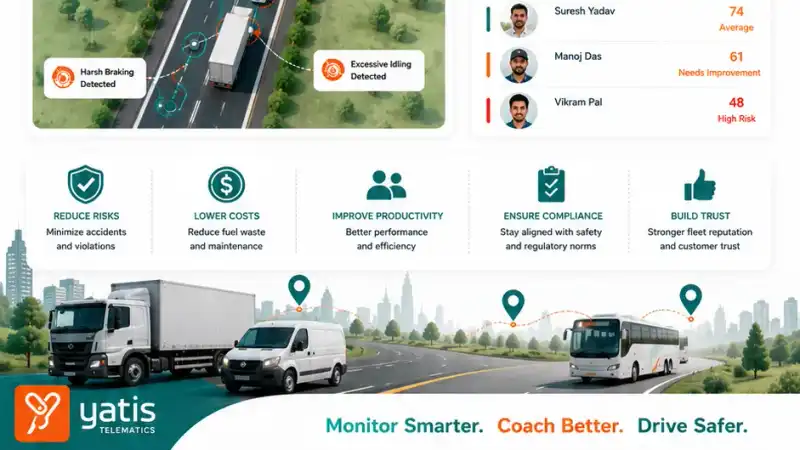
Driver safety scorecards use GPS tracking data to measure driving performance over time. By tracking safety KPIs consistently, fleet managers can identify high-risk behaviours, recognize improvements, and create structured coaching programs.
A single speeding incident doesn't define a driver's overall performance. Fleet managers need a broader view that considers driving behaviour across multiple trips and over extended periods. Typical scorecards include speeding incidents, harsh braking events, rapid acceleration, idle time, trip compliance, driving consistency, and the safety trend over time.
Rather than relying on assumptions, managers can evaluate performance using objective data and identify where coaching is most needed.
5. Reduce Accident Risk Through Proactive Monitoring
GPS tracking helps reduce accident risk by identifying unsafe driving patterns before they result in incidents. Most accidents are preceded by repeated risky behaviours rather than isolated events — frequent speeding, aggressive acceleration, sudden braking, long periods of distracted or inconsistent driving, and fatigue-related driving patterns.
GPS tracking helps identify these behaviours before they escalate into serious incidents. Instead of reacting after an accident occurs, businesses can implement preventive coaching based on measurable driving data.
6. Improve Fleet-Wide Safety Reporting
GPS tracking simplifies fleet safety reporting by automatically recording driving events, safety KPIs, and trip data, enabling businesses to monitor safety performance across the entire fleet. Manual safety reporting is often inconsistent and time-consuming. GPS tracking platforms automatically generate reports covering:
- Driver performance
- Vehicle activity
- Safety events
- Speeding trends
- Trip summaries
- Fleet-wide safety metrics
These reports help managers identify recurring issues, compare drivers fairly, and monitor improvements over time while reducing administrative effort.
7. Encourage a Positive Safety Culture
GPS tracking supports a positive fleet safety culture by encouraging continuous improvement, objective performance reviews, and data-driven coaching instead of relying on assumptions or isolated incidents.
Technology alone doesn't improve driver safety. Long-term improvement comes from how businesses use the information available to them. A positive safety culture focuses on coaching instead of punishment, continuous learning, transparent performance measurement, driver recognition, and consistent communication. When drivers understand that GPS tracking is being used to improve safety rather than simply monitor activity, they are more likely to engage with coaching programs.
8. Identify High-Risk Trends Across the Fleet
GPS tracking enables fleet managers to look beyond individual trips and identify recurring operational risks:
- Routes where speeding frequently occurs
- Locations with repeated harsh braking
- Vehicles involved in recurring safety events
- Drivers requiring additional coaching
- Operational patterns that increase risk
Recognizing these trends helps businesses improve not only individual driver performance but also overall fleet operations. For organisations managing large commercial fleets, combining GPS tracking with fleet management software provides centralized dashboards that make these trends easier to visualize and act upon.
9. Support Safer Operations as Your Fleet Grows
As fleets expand, maintaining consistent safety standards becomes increasingly challenging. More vehicles, more drivers, and more trips create additional operational complexity. GPS tracking provides centralized visibility that scales with business growth.
Whether managing logistics fleets, transport companies, construction vehicles, utility service fleets, or field service operations, fleet managers can monitor driver performance using standardized safety metrics and reporting. This consistency helps ensure that safety expectations remain uniform across the organization, regardless of fleet size.
10. Use Safety Data to Build a Smarter Fleet
Collecting driver behaviour data is only valuable if it leads to better decisions. Modern GPS tracking systems provide dashboards and reports that help answer critical questions such as:
- Which drivers consistently exceed speed limits?
- Which routes generate the highest number of safety events?
- Which drivers have shown measurable improvement?
- Which vehicles are associated with recurring incidents?
- Which coaching initiatives produce the best results?
These insights allow fleet managers to focus on continuous improvement rather than simply responding to incidents after they occur.
Driver Safety Challenges vs GPS Tracking Solutions
| Driver Safety Challenge | GPS Tracking Solution |
|---|---|
| Limited visibility into driver behaviour | Real-time driving insights |
| Frequent speeding | Speed alerts and reports |
| Unsafe driving habits | Driver behaviour analytics |
| Inconsistent coaching | Safety scorecards |
| Manual safety reporting | Automated fleet reports |
| Difficulty measuring improvement | Historical performance tracking |
| Growing fleet complexity | Centralized safety dashboard |
Industries That Benefit from GPS-Based Driver Safety
Driver safety monitoring delivers measurable value across many fleet-dependent industries, including logistics and distribution, transport and trucking, construction, mining, oil and gas, utilities, field service, public transportation, school transportation, and municipal fleets. Regardless of industry, improving driver behaviour helps reduce operational risk while supporting safer and more efficient fleet operations.
Common Mistakes Fleet Managers Make
GPS tracking is most effective when it becomes part of an ongoing safety improvement program. Avoid these common mistakes:
1. Treating GPS Tracking Only as a Vehicle Locator
Many businesses install GPS tracking solely to answer one question: where is the vehicle? While location tracking is important, modern GPS systems also provide valuable insights into driver behaviour, safety trends, operational risks, and performance improvements. Ignoring these capabilities limits the return on your investment.
2. Using GPS Data Only After an Incident
Some organizations review GPS reports only when an accident or complaint occurs. Reviewing safety reports regularly allows managers to identify risky behaviours early and provide coaching before incidents happen.
3. Focusing Only on Negative Events
A successful safety program should recognize improvement as well as identify risk. Use safety scorecards to reward consistent safe driving, recognize improvement, encourage healthy competition, and build driver engagement. Positive reinforcement often leads to stronger long-term behaviour change.
4. Ignoring Fleet-Wide Trends
Looking at individual drivers alone can hide broader operational issues. Recurring speeding events on the same road or repeated harsh braking at specific locations may indicate route or scheduling problems rather than individual driver performance.
5. Skipping Structured Coaching Sessions
Reports alone won't improve safety. GPS tracking should support regular coaching conversations where managers review performance, discuss improvements, and establish measurable safety goals. This transforms tracking from a monitoring tool into a driver development program.
Driver Safety KPIs Every Fleet Should Track
| KPI | Why It Matters |
|---|---|
| Driver Safety Score | Overall safety performance |
| Speeding Events | Identifies high-risk driving |
| Harsh Braking | Indicates aggressive driving |
| Rapid Acceleration | Measures unsafe driving habits |
| Idle Time | Highlights unnecessary engine operation |
| Safety Events per 1,000 km | Enables fair driver comparison |
| Coaching Completion Rate | Tracks coaching effectiveness |
| Safety Improvement Trend | Measures long-term progress |
| Preventable Incident Rate | Evaluates overall fleet safety |
Monitoring these KPIs consistently helps organizations identify patterns, benchmark performance, and measure the effectiveness of coaching initiatives.
Driver Safety Improvement Checklist
Use this checklist to evaluate your current approach:
- Driver behaviour is monitored continuously
- Safety KPIs are reviewed regularly
- Speeding alerts are enabled
- Driver scorecards are shared with drivers
- Coaching sessions are scheduled consistently
- Safe driving achievements are recognized
- Fleet-wide safety trends are analyzed
- Driver improvement is measured over time
If several of these practices are missing, your fleet may benefit from a more structured driver safety program supported by GPS tracking and coaching.
Final Thoughts
Improving driver safety isn't achieved through technology alone — it's achieved through visibility, consistency, and continuous coaching. GPS tracking gives fleet managers the data they need to understand how vehicles are being driven, identify opportunities for improvement, and create measurable safety programs that benefit both drivers and the business.
When driver behaviour is monitored using objective performance metrics rather than assumptions, organizations can reduce operational risk, strengthen accountability, and create a culture where safe driving becomes part of everyday fleet operations.
At Yatis, our GPS tracking system, fleet management platform, and video telematics solution help businesses build safer, smarter, and more efficient fleet operations through real-time visibility and actionable driver insights.
Frequently Asked Questions
Ready to get started?
Contact Yatis Telematics to learn how GPS tracking and driver behaviour insights can make your fleet measurably safer.
Contact Us →