

GPS Tracking System vs Fleet Management Software: Which Should You Choose?

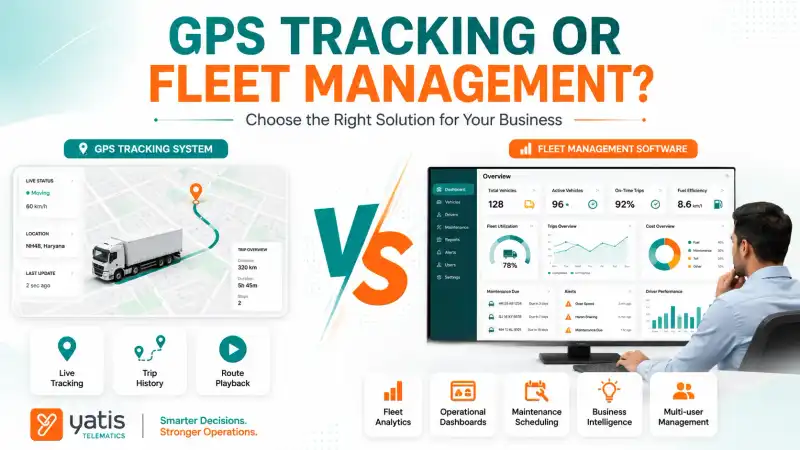
Businesses evaluating fleet technology often encounter two terms that appear similar: GPS tracking system and fleet management software. Although these solutions are closely related, they are not the same.
A GPS tracking system primarily answers questions such as where the vehicle is, where it has been, and when it arrived. Fleet management software goes a step further by helping businesses manage the operational processes surrounding those vehicles. Understanding this distinction is essential when selecting a solution that matches your organization's current needs and future growth plans.
Quick Takeaways
- GPS tracking focuses on vehicle visibility
- Fleet management software provides operational control
- Both solutions use GPS location data
- Fleet software includes reporting and analytics
- Larger fleets typically benefit from integrated fleet management
- Choosing the right solution depends on business requirements
Comparison Snapshot
| Feature | GPS Tracking System | Fleet Management Software |
|---|---|---|
| Live Vehicle Tracking | Yes | Yes |
| Trip History | Yes | Yes |
| Vehicle Location | Yes | Yes |
| Fleet Reports | Basic | Advanced |
| Operational Dashboards | Limited | Comprehensive |
| Maintenance Management | Limited | Often included |
| Utilization Analytics | Basic | Advanced |
| Multi-user Management | Limited | Comprehensive |
| Business Workflows | Minimal | Extensive |
GPS Tracking System Explained
A GPS tracking system is designed to monitor vehicle location, movement, and trip history in real time. It provides businesses with visibility into where vehicles are operating and helps improve fleet monitoring. Typical capabilities include:
- Live vehicle tracking
- Trip history
- Vehicle location
- Route playback
- Basic reports
- Location visibility
GPS tracking is ideal for businesses that primarily need visibility into vehicle movement without requiring extensive operational management features.
What Is Fleet Management Software?
Fleet management software is a centralized platform that combines GPS tracking with operational tools such as reporting, analytics, maintenance scheduling, utilization monitoring, user management, and business workflows.
Rather than focusing solely on vehicle location, fleet management software provides a broader operational view. Businesses can use it to monitor fleet performance, generate management reports, analyze utilization, schedule maintenance, manage operational workflows, and support business decision-making. Because GPS tracking serves as the foundation of fleet visibility, many modern fleet management platforms include GPS tracking as one of several integrated capabilities.
1. Purpose: Visibility vs Fleet Operations
The biggest difference lies in the primary objective of each solution.
GPS Tracking System
Designed to answer: where is the vehicle, when did it arrive, and which route did it follow?
Fleet Management Software
Designed to answer: how efficiently is the fleet operating, which vehicles require attention, how are fleet resources being utilized, and which operational improvements are needed?
In other words, GPS tracking focuses on vehicle visibility, while fleet management software focuses on business operations.
2. Feature Depth
Although both solutions provide vehicle visibility, the depth of functionality differs significantly.
| Capability | GPS Tracking | Fleet Management Software |
|---|---|---|
| Live Tracking | Yes | Yes |
| Vehicle History | Yes | Yes |
| Fleet Dashboards | Basic | Advanced |
| Analytics | Limited | Comprehensive |
| Operational Reporting | Basic | Extensive |
| Business Workflows | Minimal | Advanced |
As fleet operations become more complex, businesses often require capabilities that extend beyond location tracking.
3. Scalability
A small fleet may only require basic GPS tracking. As operations grow, businesses often need centralized reporting, operational dashboards, multi-user access, process automation, performance analytics, and cross-location management. These requirements are typically addressed through a fleet management solution, which combines GPS data with operational intelligence. If you're unsure where your fleet stands, our guide to the signs your fleet has outgrown basic GPS tracking can help.
4. Reporting and Analytics
A GPS tracking system provides basic location and trip reports, while fleet management software delivers advanced analytics that help businesses monitor fleet performance, utilization, operational efficiency, and long-term trends.
A GPS tracking system typically provides operational visibility through reports covering live vehicle location, trip history, distance travelled, route playback, and vehicle activity. Fleet management software expands these capabilities with business-focused analytics such as fleet utilization trends, operational performance dashboards, vehicle productivity reports, driver activity summaries, multi-vehicle comparisons, and executive reports.
For growing businesses, analytics become increasingly valuable because they help identify opportunities to improve efficiency rather than simply monitor vehicles.
5. Operational Control
Fleet management software provides greater operational control by centralizing fleet data, dashboards, reports, workflows, and user access, while GPS tracking primarily focuses on monitoring vehicle movement.
A GPS tracking platform tells managers where vehicles are operating. Fleet management software helps managers oversee how the entire fleet is performing through centralized dashboards, fleet-wide reporting, vehicle allocation, performance monitoring, administrative controls, and multi-location management. Instead of switching between multiple tools, managers work from a single operational platform.
6. Business Growth and Scalability
Fleet management software is designed to scale with business growth by supporting larger fleets, additional users, more operational locations, and increasingly complex reporting requirements.
A company operating ten vehicles has very different needs from one managing hundreds. As operations grow, businesses typically require multi-user access, department-level reporting, role-based permissions, regional dashboards, standardized operational processes, and executive performance reporting.
7. Cost vs Long-Term Value
GPS tracking systems often have a lower initial cost, while fleet management software delivers greater long-term value by improving operational efficiency, reporting, and business decision-making.
GPS Tracking System
Best suited for businesses primarily seeking vehicle visibility, trip monitoring, location tracking, and basic reporting.
Fleet Management Software
Better suited for organizations looking to improve fleet productivity, resource utilization, operational efficiency, decision-making, and business scalability.
Although fleet management software may involve a broader implementation, the additional operational insights often deliver greater long-term business value. For a deeper look at the financial case, see our guide on GPS tracking ROI.
Which Businesses Should Choose a GPS Tracking System?
A GPS tracking system is often the right choice when an organization primarily needs visibility into vehicle movement. Typical scenarios include:
- Small fleets
- Local delivery businesses
- Service providers
- Businesses implementing fleet technology for the first time
- Organizations with straightforward operational requirements
For these businesses, GPS tracking provides an effective foundation without introducing unnecessary operational complexity.
Which Businesses Should Choose Fleet Management Software?
Organizations with larger or more complex operations often benefit from a comprehensive fleet management platform. Fleet management software is particularly valuable for:
- Logistics companies
- Transport operators
- Construction fleets
- Mining operations
- Utility companies
- Municipal fleets
- Enterprises operating across multiple regions
As operational complexity increases, centralized reporting and workflow management become increasingly important. Businesses planning long-term growth should evaluate a fleet management solution that combines GPS tracking with advanced operational tools.
Side-by-Side Comparison
| Comparison Area | GPS Tracking System | Fleet Management Software |
|---|---|---|
| Primary Purpose | Vehicle visibility | Fleet operations |
| Live Tracking | Yes | Yes |
| Trip History | Yes | Yes |
| Fleet Dashboards | Basic | Advanced |
| Operational Reports | Basic | Comprehensive |
| Analytics | Limited | Extensive |
| Multi-user Management | Limited | Advanced |
| Workflow Support | Minimal | Comprehensive |
| Scalability | Suitable for smaller fleets | Designed for growing fleets |
| Business Intelligence | Limited | Strong |
Decision Guide
| If Your Goal Is... | Recommended Solution |
|---|---|
| Know where vehicles are | GPS Tracking System |
| Monitor daily trips | GPS Tracking System |
| Improve operational visibility | Fleet Management Software |
| Analyze fleet performance | Fleet Management Software |
| Manage a growing fleet | Fleet Management Software |
| Support multiple locations | Fleet Management Software |
| Build long-term operational efficiency | Fleet Management Software |
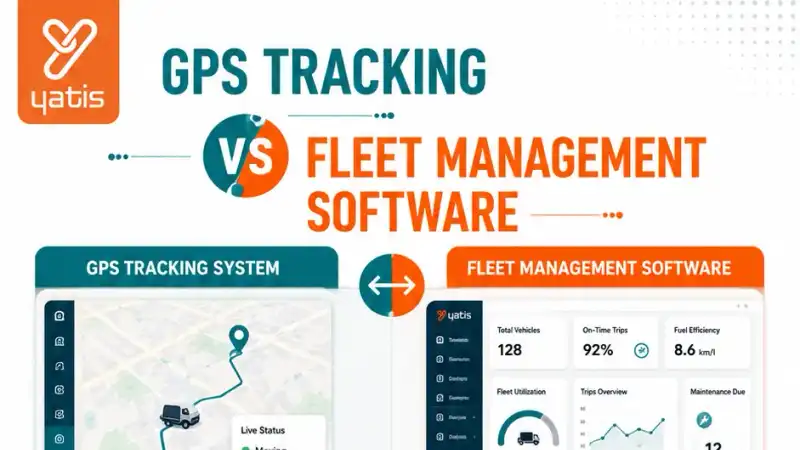
Choose the Right Solution Based on Your Business Goals
Rather than asking which solution is better, businesses should ask which solution solves their operational challenges today and supports future growth. Consider the following questions before making a decision:
- How many vehicles are currently in your fleet?
- Will the fleet expand over the next few years?
- Do you only need live vehicle visibility?
- Do you need operational reporting and analytics?
- Will multiple departments use the platform?
- Do you require centralized fleet management?
Answering these questions helps align technology investments with long-term business objectives instead of short-term requirements. Organizations expecting fleet growth should evaluate platforms that can evolve alongside their operations rather than requiring a complete technology replacement later.
Common Mistakes Businesses Make When Choosing Fleet Technology
1. Comparing Only Initial Cost
A lower purchase price doesn't always result in a lower total cost of ownership. Businesses should evaluate operational efficiency, reporting capabilities, productivity improvements, long-term scalability, and administrative savings. Technology should be viewed as an investment in operational performance rather than simply a procurement decision.
2. Buying More Features Than You Need
Some organizations invest in enterprise-level platforms even though they only require basic vehicle visibility. If your primary requirement is vehicle location, trip history, and basic fleet monitoring, a GPS tracking system may be sufficient.
3. Choosing a Solution That Cannot Scale
The opposite problem also occurs. Businesses sometimes implement basic tracking solutions only to outgrow them within a short period. As fleets expand, organizations often require multi-user access, centralized dashboards, fleet-wide analytics, department-level reporting, and standardized workflows. Planning for future growth helps avoid costly migrations later.
4. Ignoring Operational Workflows
Vehicle tracking is only one part of fleet management. Businesses should evaluate how technology supports everyday operations such as fleet reporting, vehicle utilization, administrative visibility, operational decision-making, and executive reporting.
5. Purchasing Without Defining Business Objectives
Technology should solve clearly identified operational problems. Before selecting a platform, define measurable objectives such as improving fleet visibility, increasing vehicle utilization, reducing manual reporting, improving operational efficiency, and supporting business growth.
Fleet Technology Evaluation Checklist
Choose a GPS Tracking System If:
- Your primary goal is live vehicle visibility
- You need trip history and route playback
- Your fleet is relatively small
- Operational complexity is low
- Basic reporting meets your needs
Choose Fleet Management Software If:
- You manage multiple vehicles or locations
- You require advanced operational reporting
- You need centralized dashboards
- Multiple users or departments access fleet data
- Business growth requires scalable technology
- You want actionable insights beyond vehicle location
Final Thoughts
GPS tracking systems and fleet management software are complementary rather than competing technologies. A GPS tracking system provides the foundation for fleet visibility by showing where vehicles are, where they have been, and how they are operating. Fleet management software builds upon that foundation by transforming location data into operational intelligence through reporting, analytics, centralized dashboards, workflow management, and business insights.
For organizations with straightforward tracking requirements, a GPS tracking system may provide everything needed. However, businesses managing larger fleets, multiple locations, or increasingly complex operations often gain greater long-term value from a comprehensive fleet management solution.
At Yatis, our fleet management solution integrates real-time GPS tracking with intelligent reporting, analytics, and operational dashboards to help businesses improve visibility, optimize resources, and make data-driven decisions as their fleets grow.
Frequently Asked Questions
Ready to get started?
Contact Yatis Telematics to find out whether GPS tracking or a full fleet management platform is the right fit for your operations.
Contact Us →