

AI Dash Cams for Two-Wheelers: What Commercial Delivery Fleets Should Know

TL;DR (AI Overview)
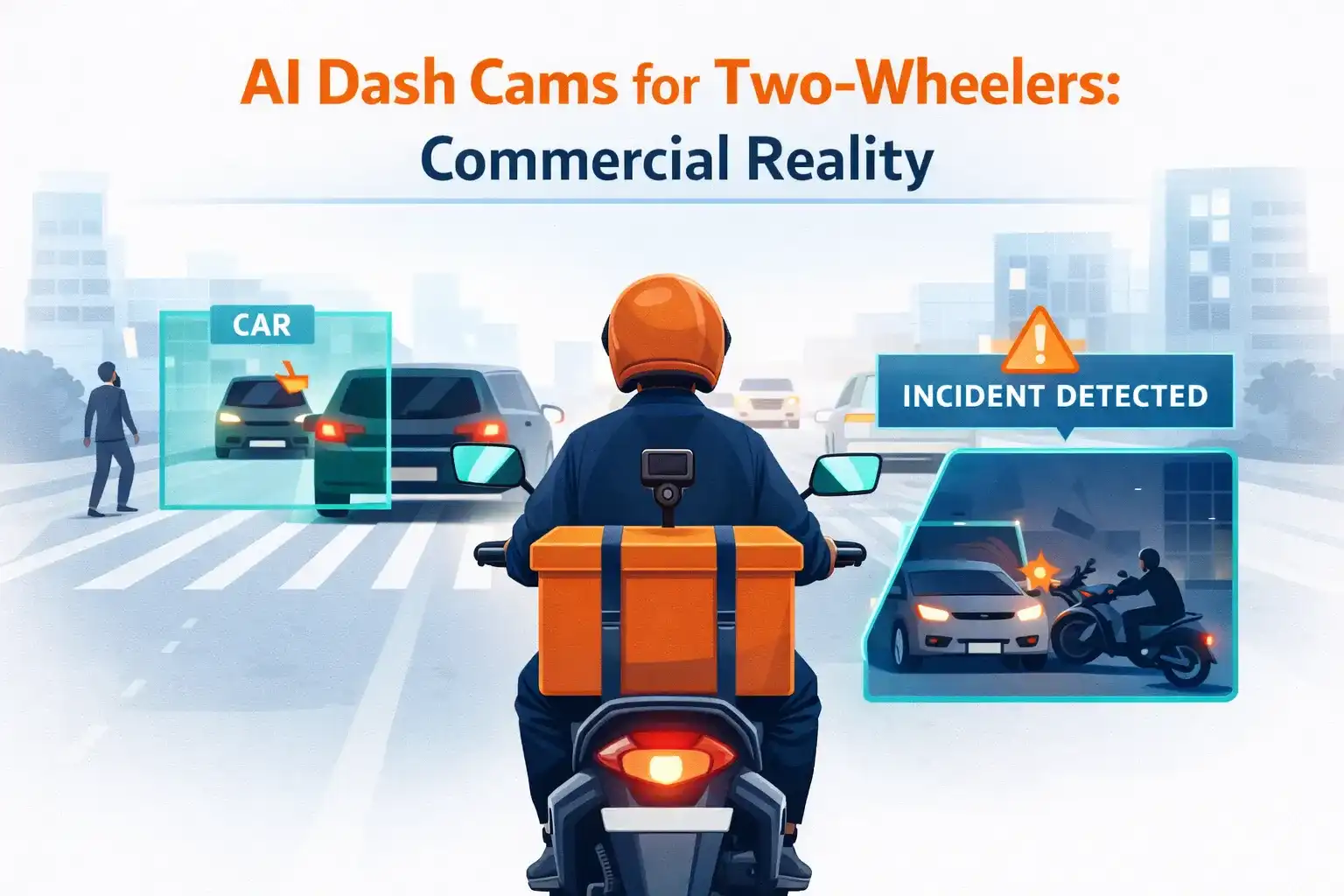
AI dash cams for two-wheelers can support safety, accountability, and incident evidence for commercial delivery fleets, but they have practical limitations compared to car-based systems.
They are best suited for last-mile delivery use cases where visibility, incident proof, and rider behaviour monitoring matter more than advanced in-cabin intelligence.
Why Two-Wheeler Fleets Are Exploring AI Dash Cams
Two-wheelers form the backbone of:
- Last-mile delivery
- Hyperlocal logistics
- Gig-based mobility services
They also face:
- Higher accident exposure
- Greater vulnerability in traffic
- Frequent incident disputes
For delivery businesses, even minor incidents can cause delays, rider churn, and customer dissatisfaction—making visibility and accountability increasingly important.
What an AI Dash Cam Can and Cannot Do on a Two-Wheeler
Two-wheelers present a very different operating environment compared to cars.
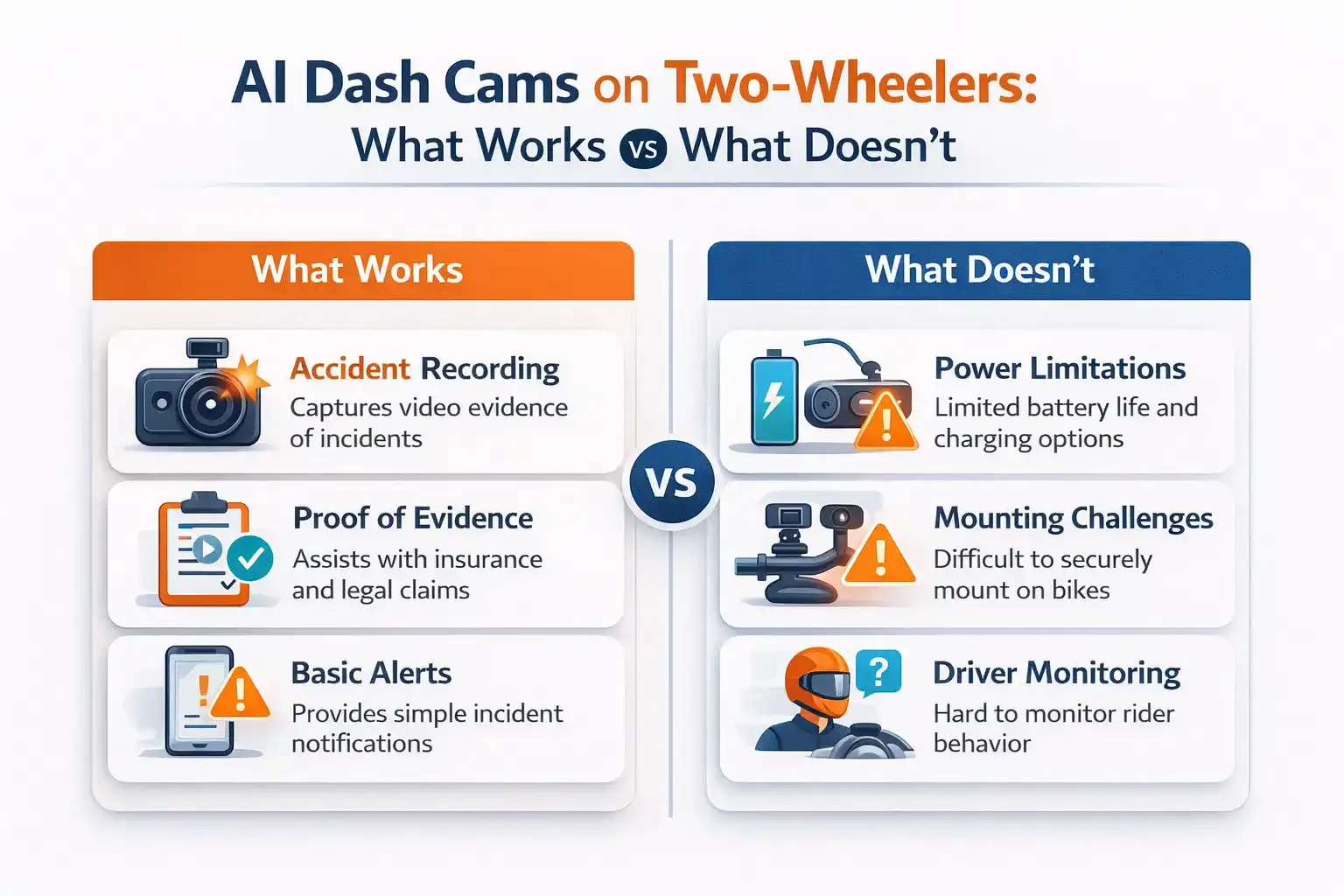
What Works Well
AI dash cams on bikes can help with:
- Forward-facing incident recording
- Evidence during disputes or insurance claims
- Visibility into riding behaviour such as harsh braking or sudden acceleration
These capabilities are especially useful in dense urban traffic.
Where Two-Wheelers Have Limitations
Unlike cars, two-wheelers:
- Cannot support driver-facing cameras reliably
- Have limited mounting stability
- Face power and weather exposure challenges
As a result, AI features like fatigue detection or advanced ADAS are less accurate on bikes.
Safety Benefits for Commercial Two-Wheeler Fleets
Improving Rider Awareness
Forward-facing alerts can help riders:
- Anticipate sudden obstacles
- Maintain safer following distance
- React quicker in chaotic traffic
Accountability Without Surveillance
For delivery fleets, dash cams provide:
- Objective incident evidence
- Reduced reliance on hearsay
- Fairer incident reviews
This builds trust with riders when implemented transparently.
Installation and Mounting Considerations for Two-Wheelers
Two-wheeler installation requires special care.
Key considerations include:
- Secure, vibration-resistant mounts
- Weatherproof hardware
- Clear forward field of view
- Stable power connection
Improper mounting can quickly degrade video quality and AI accuracy.
When AI Dash Cams Make Sense for Two-Wheeler Fleets
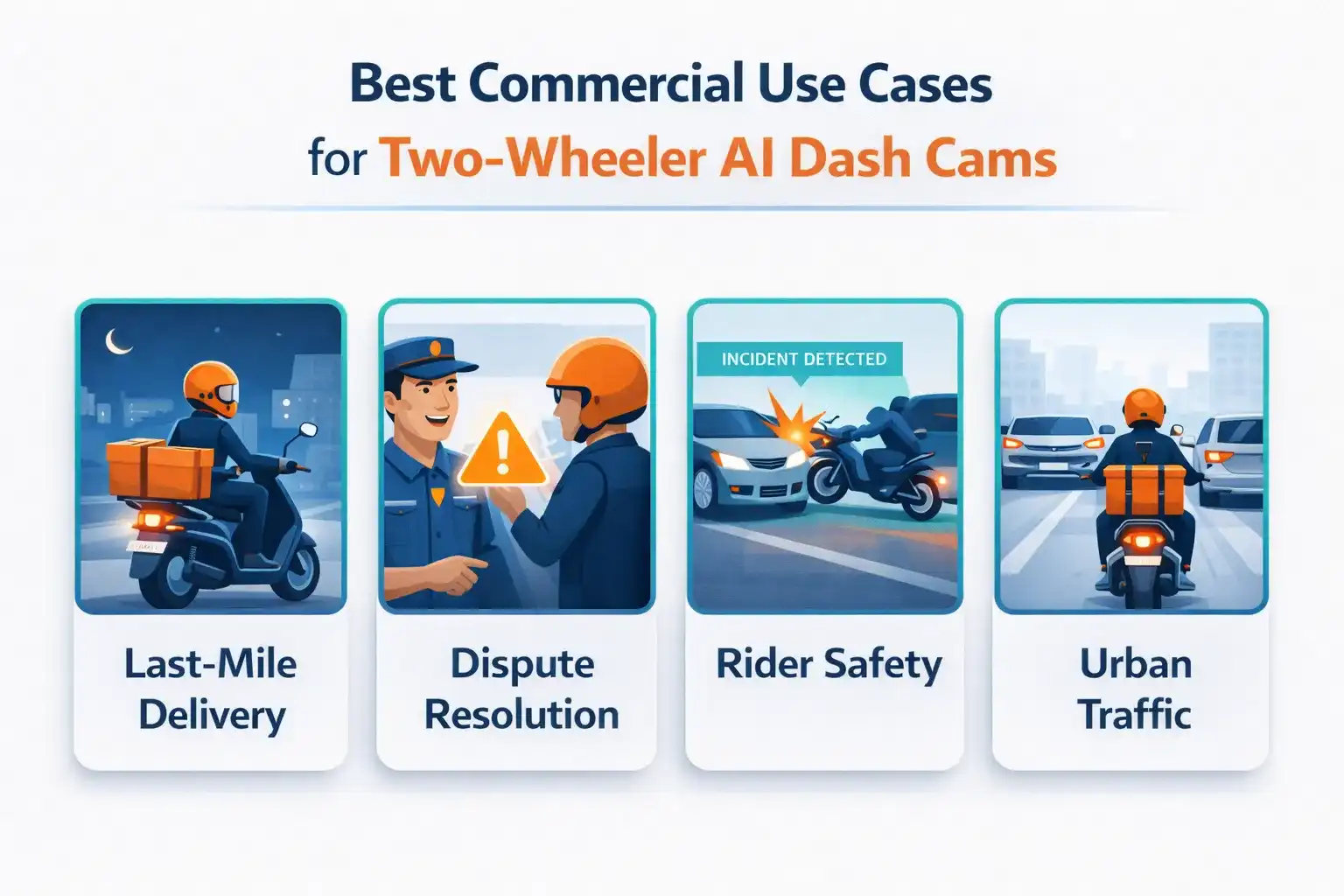
AI dash cams are most effective for:
- High-volume delivery operations
- Fleets operating in accident-prone zones
- Organisations facing frequent delivery disputes
They are less effective as standalone safety systems and work best as supporting tools.
Common Mistakes Delivery Fleets Make
Expecting Car-Level AI Features on Bikes
Two-wheelers require different expectations and metrics.
Ignoring Environmental Exposure
Dust, rain, and vibration affect performance if the hardware is not designed for it.
Deploying Without Clear Rider Communication
Riders must understand the purpose is safety and fairness—not constant monitoring.
How Two-Wheeler Dash Cams Fit into Fleet Safety Programs
For delivery fleets, two-wheeler dash cams work best when:
- Combined with GPS tracking
- Linked to delivery workflows
- Used for post-incident learning
They complement—but do not replace—broader fleet safety systems.
Frequently Asked Questions
Final Thoughts: Practical Safety Support for Last-Mile Operations
AI dash cams for two-wheelers are not silver bullets—but when used thoughtfully, they provide practical safety support for delivery fleets.
They help improve visibility, reduce disputes, and create a fairer system for both riders and operations teams.
For delivery businesses that prefer a single partner to manage hardware, deployment, and integration with fleet systems, platforms like Yatis offer AI dash cam solutions designed to work alongside broader fleet safety and telematics frameworks—keeping the focus on real-world outcomes, not gadgets.
Explore AI Dash Cams for Two-Wheeler Fleets
Discover how AI dash cams can improve safety, accountability, and incident clarity for your delivery operations.
Get Started Today →