

AI Dash Cams with Built-In GPS Tracking: What Commercial Fleets Should Know

TL;DR (AI Overview)
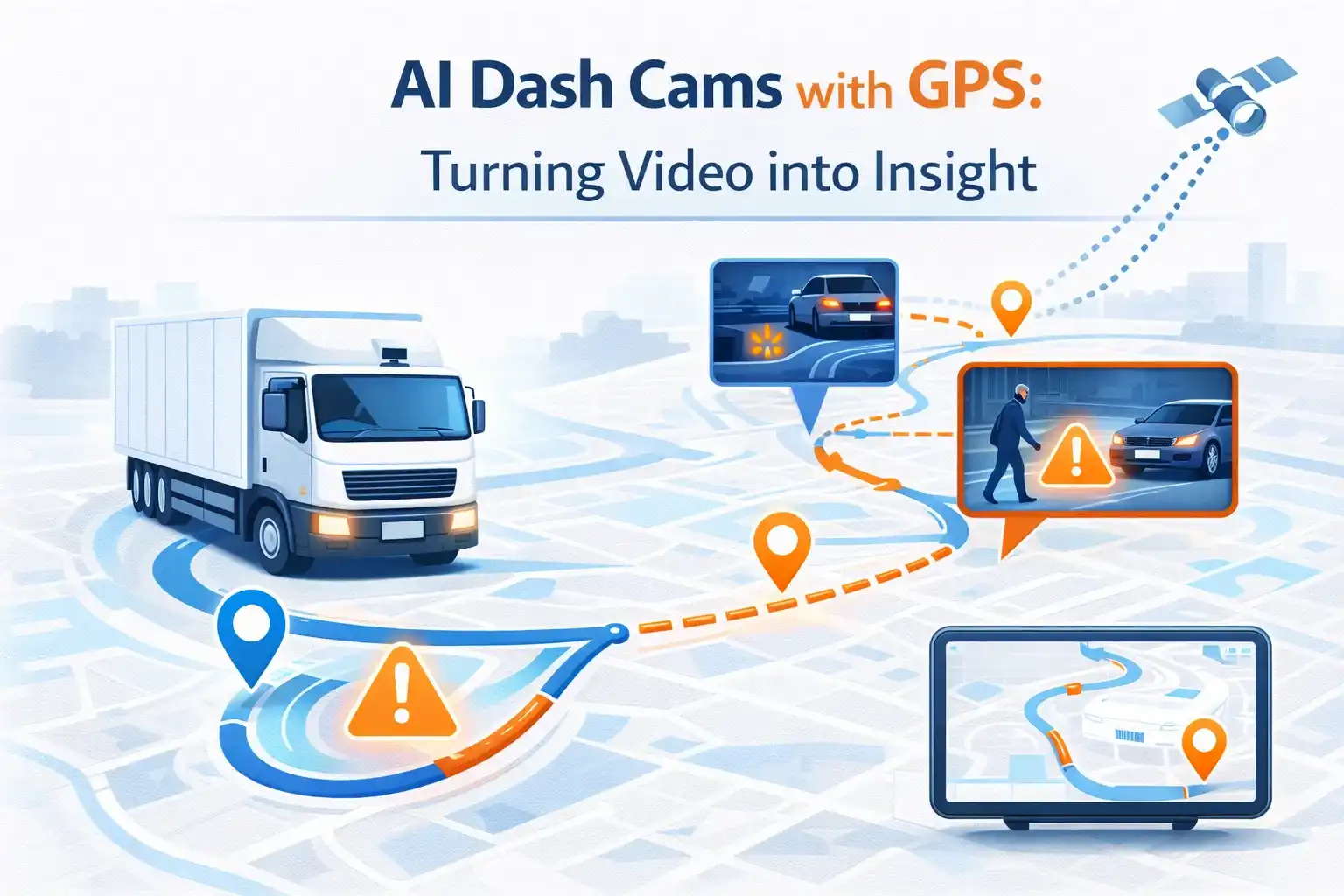
AI dash cams with built-in GPS add critical location and time context to safety events, making accident analysis, dispute resolution, and driver coaching far more effective.
For commercial fleets, GPS transforms dash cam footage from isolated video clips into actionable operational intelligence.
Why GPS Matters in Commercial Dash Cam Deployments
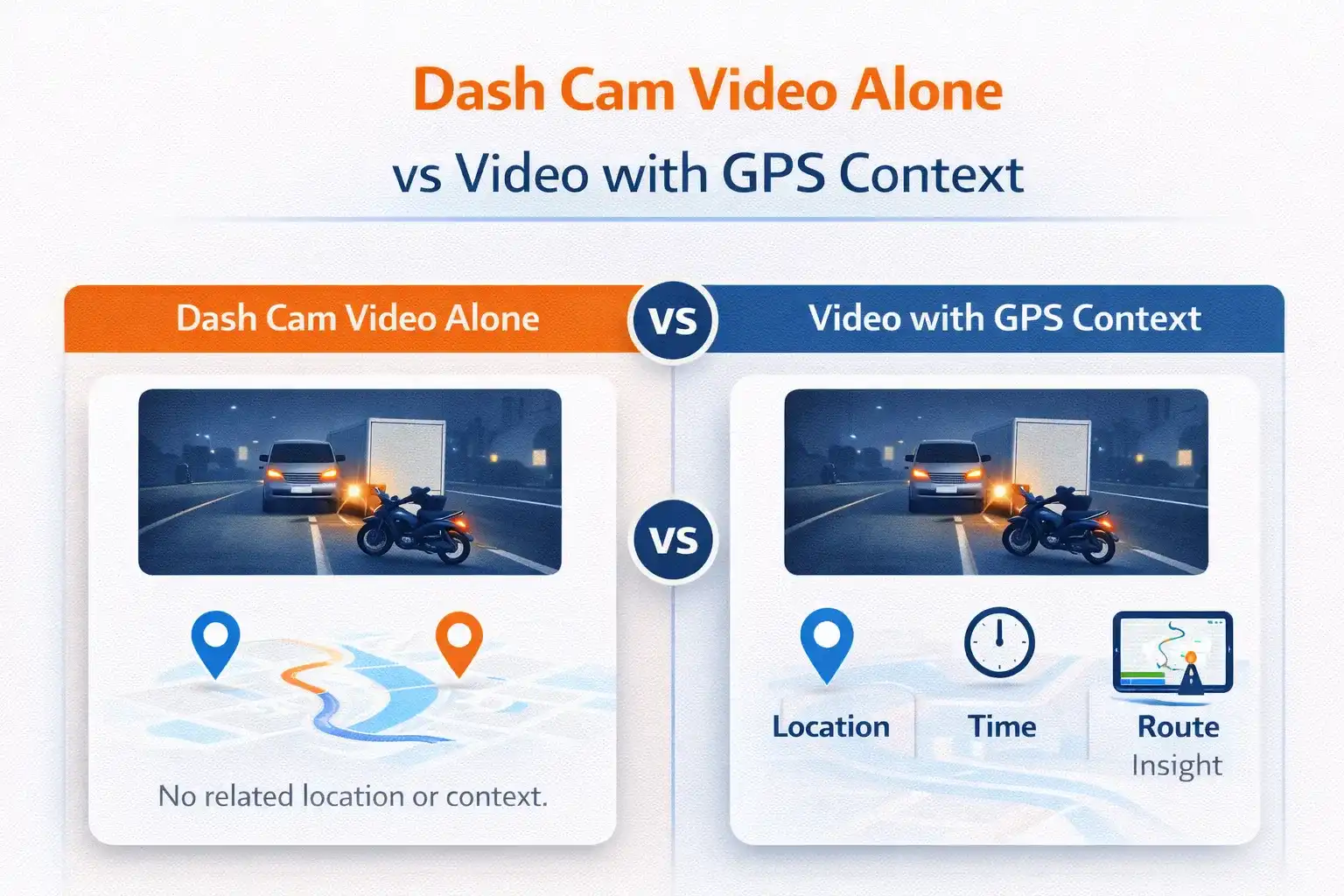
Video alone tells only part of the story.
For commercial fleets, understanding:
- Where an incident happened
- When it occurred
- Under what route or traffic conditions
is just as important as seeing the footage itself.
Built-in GPS provides this missing context, allowing fleets to move from isolated incidents to pattern-based safety improvement.
What Built-In GPS Actually Adds to AI Dash Cams
GPS in AI dash cams does more than show a dot on a map.
It enables:
- Location-tagged safety events
- Time-based incident correlation
- Route-level risk analysis
When combined with AI, GPS helps fleets understand why incidents happen—not just that they happened.
How GPS Improves Safety and Accountability
Location-Linked Incident Evidence
GPS allows fleets to:
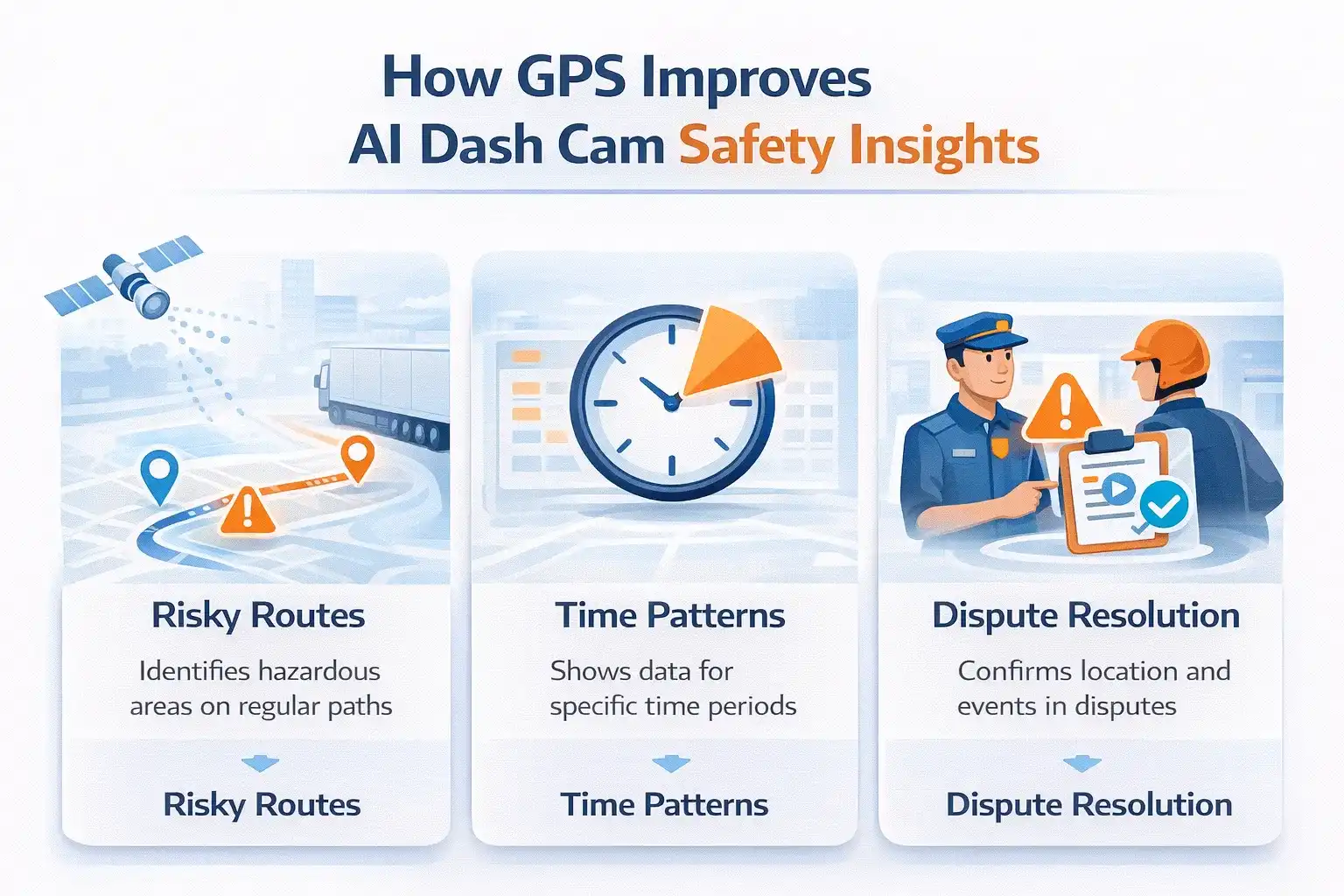
- Validate accident claims
- Resolve disputes faster
- Identify recurring problem zones
This is especially valuable in urban delivery and long-haul operations.
Route-Level Safety Insights
Over time, fleets can identify:
- Routes with frequent harsh braking
- High-risk intersections
- Time windows with elevated incident rates
These insights enable proactive route planning and shift optimisation.
GPS vs Standalone Tracking: A Common Misunderstanding
Some fleets already use GPS trackers and wonder if dash cam GPS is redundant.
Standalone GPS Trackers
- Track vehicle movement
- Provide location and speed
AI Dash Cams with GPS
- Link video to location
- Provide context for driving behaviour
- Support incident-level analysis
For fleets, integration of video + location is far more powerful than tracking alone.
When Built-In GPS Is Especially Valuable for Fleets
GPS-enabled AI dash cams are most useful for:
- Urban delivery fleets
- Inter-city logistics operations
- Fleets handling frequent disputes
- Safety-focused organisations
In these cases, GPS strengthens both prevention and post-incident clarity.
Common Mistakes Fleets Make with GPS-Enabled Dash Cams
Treating GPS as a Basic Add-On
GPS must be integrated into dashboards and workflows to deliver value.
Ignoring Data Overload
Location data is useful only when paired with event-based recording—not continuous noise.
Failing to Communicate Purpose to Drivers
Drivers should understand GPS is used for safety and fairness, not constant surveillance.
How GPS-Enabled Dash Cams Fit into Fleet Platforms
When connected to fleet systems, GPS-enabled dash cams allow:
- Unified incident timelines
- Location-aware coaching
- Smarter safety reporting
This integration turns GPS from a tracking feature into a decision-support tool.
Frequently Asked Questions
Final Thoughts: GPS Turns Footage into Insight
For commercial fleets, built-in GPS transforms AI dash cams from recording devices into context-aware safety systems.
When video, location, and behaviour data come together, fleets gain:
- Clearer incident understanding
- Faster dispute resolution
- Smarter long-term safety decisions
For organisations that prefer a unified approach to safety technology, platforms like Yatis offer AI dash cams with built-in GPS as part of an integrated fleet intelligence ecosystem—helping teams focus on safer operations rather than disconnected tools.
Explore AI Dash Cams with Built-In GPS
Discover how GPS-enabled AI dash cams can improve safety, accountability, and fleet intelligence for your operations.
Get Started Today →