

GPS Tracking for Cold Chain Logistics: How GPS and Temperature Monitoring Work Together

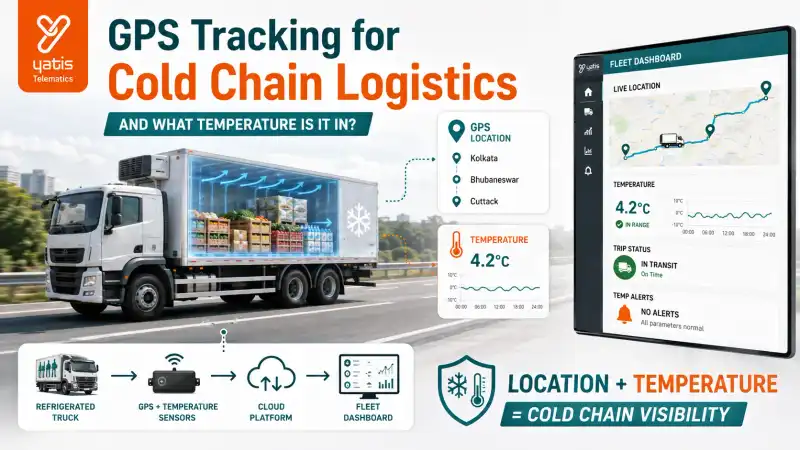
In conventional logistics, knowing where a shipment is can be enough. In cold chain logistics, it isn't.
A refrigerated truck carrying pharmaceuticals, vaccines, dairy products, frozen foods or other temperature-sensitive goods can arrive at its destination on time and still have a compromised shipment. Location and temperature are two different operational variables.
A fleet manager may know that Truck 42 is 18 km from the destination. But the more important question could be whether the cargo is still being maintained within its required temperature range. This is why modern cold chain visibility increasingly combines GPS tracking with temperature monitoring: GPS answers where the vehicle is, temperature monitoring answers what conditions the shipment is experiencing. Together, they create a much more complete picture of a refrigerated journey.
Quick Takeaways
- Location and cargo condition in a single view
- Configurable temperature thresholds per shipment type
- Temperature excursion alerts with location context
- Combined journey and temperature history
- Fleet-wide monitoring of refrigerated vehicles
- Evidence for investigating customer complaints
- Better cold chain control end to end
What Is GPS Tracking for Cold Chain Logistics?
GPS tracking for cold chain logistics is a monitoring system that combines vehicle location data with temperature information from refrigerated cargo areas. It allows logistics teams to monitor where a vehicle is travelling while also checking whether temperature conditions remain within configured limits.
A simplified architecture looks like this: Refrigerated Vehicle → GPS and Temperature Sensors → Communication Network → Cloud Platform → Cold Chain Dashboard.
The result is a combined view of vehicle location, temperature, journey progress, temperature excursions and historical records. Instead of maintaining separate information streams, the logistics team can connect location with environmental conditions.
Why GPS Alone Is Not Enough for Cold Chain Logistics
GPS tracking alone shows where a refrigerated vehicle is located, but it does not indicate whether the cargo is being maintained at the required temperature. Cold chain monitoring combines GPS with temperature sensors to provide both location and environmental visibility.
Consider a refrigerated truck transporting temperature-sensitive goods. The GPS system reports the location as Kolkata. But that doesn't tell you whether the cargo compartment is holding 8°C or has drifted to 14°C, or whether the temperature has been outside the required range for an extended period.
This is the fundamental difference. GPS provides location intelligence. Temperature sensors provide condition intelligence. Cold chain monitoring combines both, and that combination is particularly valuable when investigating temperature excursions.
How GPS and Temperature Monitoring Work Together
A cold chain tracking system collects vehicle location through GPS and cargo-condition information through temperature sensors. The data is transmitted to a central platform where operators can view the vehicle's journey and temperature history together.
Step 1 — GPS Determines Vehicle Location
The tracking device provides the vehicle's position.
Step 2 — Sensors Monitor Temperature
Temperature sensors measure conditions inside the refrigerated compartment.
Step 3 — Data Is Transmitted
Location and sensor data are sent to the monitoring platform when connectivity is available.
Step 4 — Platform Combines the Data
The system associates temperature readings with the vehicle's journey.
Step 5 — Operators Monitor Conditions
The logistics team can identify temperature changes alongside the vehicle's location and journey status.
This relationship is extremely important. A temperature excursion becomes much more useful when the operator can determine where the vehicle was when the temperature changed.
Why Temperature Plus Location Context Matters
Imagine a refrigerated truck travelling from Kolkata to Bhubaneswar. The temperature is within range for most of the journey. Then the system records a temperature excursion.
A temperature-only system might tell you the temperature exceeded the threshold at 2:17 PM. A combined GPS and temperature system can add that the excursion began at 2:17 PM while the vehicle was stationary near a particular location.
That information can help the operations team investigate possible causes such as extended loading, an unplanned stop, a door opening, a refrigeration issue, a traffic delay, delivery activity or equipment malfunction.
The GPS data doesn't necessarily explain the cause by itself. But it provides location and journey context around the event.
What Is a Temperature Excursion?
A temperature excursion occurs when the temperature of a temperature-sensitive shipment moves outside its specified acceptable range for a period of time. The appropriate range depends on the product, storage requirements, and applicable handling standards.
This is an important distinction: there is no single temperature range that applies to every cold chain shipment. Different products may require different conditions. Refrigerated logistics can involve chilled products, frozen products, dairy, fresh produce, meat and seafood, pharmaceuticals, vaccines and biological materials.
Therefore, a cold chain monitoring system should allow temperature thresholds appropriate to the shipment or operating requirement.
Real-Time Temperature Alerts
Temperature alerts notify logistics teams when monitored conditions move outside configured thresholds. When combined with GPS tracking, the alert can be associated with the vehicle's location and journey status, helping operators investigate the event more quickly.
A simplified alert workflow runs: temperature crosses threshold → system generates alert → vehicle location identified → operations team investigates → corrective action.
Depending on the platform, alerts can be delivered through dashboard notifications, mobile applications, SMS, email or other configured channels. The important point is that an alert should trigger action, not simply generate another data point.
Monitor Refrigerated Fleets From One Platform
Cold chain operators may manage dozens or hundreds of refrigerated vehicles. Without centralized visibility, teams may have to monitor individual vehicles separately. A centralized platform can provide:
| Information | Visibility |
|---|---|
| Vehicle location | Live or last-available location |
| Temperature | Current sensor readings |
| Temperature history | Historical trend |
| Route progress | Journey visibility |
| Excursions | Threshold alerts |
| Vehicle identity | Asset-level association |
| Trip history | Historical records |
This gives the operator a fleet-wide cold chain view.
GPS Tracking for Refrigerated Trucks
Refrigerated vehicles, often called reefers, have an additional operational dependency: maintaining the required cargo environment while the vehicle is moving.
GPS tracking can help answer where the reefer is, how far it has travelled, whether it has stopped unexpectedly, what temperature was recorded during the journey, where an excursion occurred, and what the vehicle was doing when it happened.
This makes refrigerated fleet GPS particularly useful for journey-level investigation.
Cold Chain Visibility During Transit
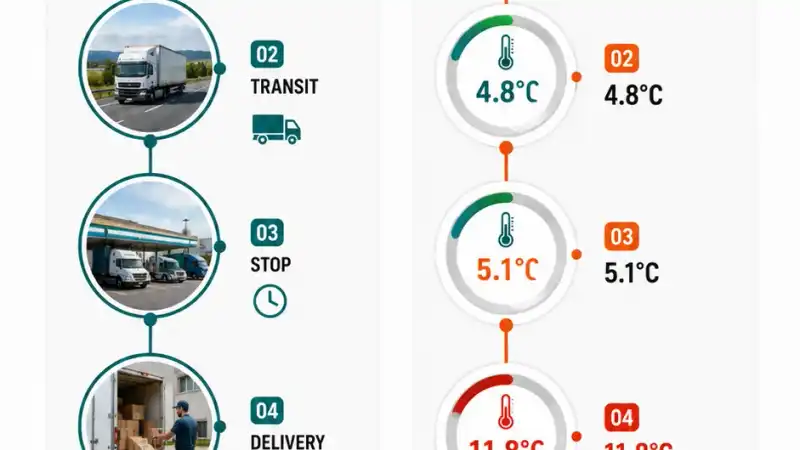
A shipment's cold chain doesn't end when the vehicle leaves the warehouse. The transit period can introduce multiple operational events: loading, departure, transit, stops, delivery and unloading.
Each stage can potentially affect the shipment's temperature conditions. Combining GPS and temperature information gives operators visibility across the journey rather than only at origin and destination.
This is especially useful when investigating delays, temperature excursions, unexpected stops, delivery issues and refrigeration problems.
Historical GPS and Temperature Data
Real-time monitoring is valuable, but historical data can be equally important.
Suppose a customer reports that a shipment arrived outside its required temperature conditions. The operator can review journey history, temperature history and location history together.
This can help establish when the temperature changed, how long the excursion lasted, where the vehicle was, whether the vehicle was moving or stationary, and whether the issue occurred during a particular stage of the journey. The result is a more complete chain-of-condition record.
GPS Tracking for Pharmaceutical Cold Chains
Pharmaceutical logistics can require particularly controlled transportation conditions. Products may have specific storage and transportation requirements, and monitoring requirements can vary according to the product and applicable standards.
For these operations, GPS provides transport visibility while temperature monitoring provides condition visibility. The combination can help logistics teams monitor the journey and investigate excursions.
However, technology should complement rather than replace appropriate pharmaceutical cold-chain procedures, validated packaging and refrigeration processes, and applicable regulatory requirements.
GPS Tracking for Food and Beverage Cold Chains
Cold chain logistics is also important across food distribution, including dairy, frozen foods, meat, seafood, fresh produce, ice cream and processed food products.
A refrigerated vehicle may travel through multiple distribution points before final delivery. GPS and temperature monitoring can help businesses understand whether the shipment remained within the required operating conditions throughout the journey.
What Should Businesses Look for in a Cold Chain GPS Solution?
Don't evaluate the solution solely on GPS functionality. A proper cold chain deployment should be assessed across location, temperature, alerting and historical visibility.
1. GPS Visibility
Can the operator see the refrigerated vehicle's location?
2. Temperature Monitoring
Can the system connect to appropriate temperature sensors? Note that ambient climate can also affect vehicle and refrigeration performance.
3. Threshold Configuration
Can temperature limits be configured according to the operating requirement?
4. Temperature Alerts
Can the system notify operators when conditions move outside configured thresholds?
5. Historical Data
Can operators review temperature and location history together?
6. Multi-Vehicle Monitoring
Can the platform monitor an entire refrigerated fleet?
7. Data Continuity
What happens when communication connectivity is temporarily unavailable?
8. Reporting
Can the system produce useful journey and temperature records?
GPS Tracking vs Cold Chain Monitoring
| GPS Tracking | Cold Chain Monitoring |
|---|---|
| Vehicle location | Vehicle location plus cargo conditions |
| Route visibility | Route plus temperature visibility |
| Movement history | Movement plus temperature history |
| Location alerts | Temperature and location alerts |
| Fleet visibility | Fleet plus shipment-condition visibility |
Cold chain monitoring doesn't replace GPS tracking. It extends it with environmental data.
Key Benefits of GPS and Temperature Monitoring
| Capability | Cold Chain Benefit |
|---|---|
| GPS location | Know where the shipment is |
| Temperature sensors | Know shipment conditions |
| Temperature alerts | Identify excursions quickly |
| Location history | Investigate where events occurred |
| Temperature history | Understand excursion duration |
| Centralized dashboard | Monitor multiple vehicles |
| Journey records | Review complete trips |
| Combined data | Connect condition with location |
The Business Value of Cold Chain GPS
The real value isn't "we can see the refrigerated truck." It is the chain that runs from location to temperature to alerts to historical evidence and finally to better cold chain control.
That gives logistics operators a more complete view of what happened to a temperature-sensitive shipment throughout its journey. For a cold chain business, that additional visibility can be commercially important because a shipment's condition can matter just as much as its arrival time.
Final Thoughts
Cold chain logistics has a simple but critical requirement: the shipment needs to arrive not only at the right place, but in the right condition.
GPS tracking provides visibility into where the refrigerated vehicle is. Temperature monitoring provides visibility into the conditions inside the transport environment. When the two are integrated, logistics teams can connect location, temperature and time.
That enables operators to identify temperature excursions, understand where they occurred, review journey history and respond more effectively to potential cold-chain issues.
For businesses operating temperature-controlled fleets, a dedicated cold chain solution can therefore go beyond traditional vehicle tracking by combining fleet visibility with condition monitoring. The result is a more complete view of the refrigerated journey, from departure to delivery.
Frequently Asked Questions
Ready to get started?
Contact Yatis Telematics to learn how combined GPS and temperature monitoring can protect every temperature-sensitive shipment you move.
Contact Us →