

GPS Tracking for Construction Equipment: How Asset Tracking Improves Jobsite Visibility

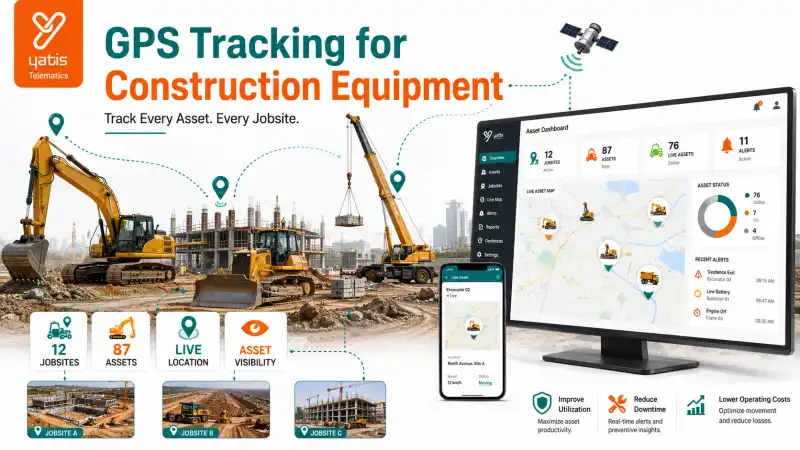
An excavator can be worth lakhs or even crores. A crane can move between projects. A generator may spend weeks at one jobsite before being transferred somewhere else. A compactor, loader, bulldozer or other piece of machinery may be operating far from the company's main office.
The problem isn't simply knowing where the equipment is. Construction companies also need to know which project is using it, whether the equipment is where it should be, whether it has moved unexpectedly, how long it has remained at a site, whether it is being utilized, and which assets are available for the next project.
This is where GPS tracking for construction equipment becomes valuable. Instead of managing heavy machinery through spreadsheets, phone calls and manual site updates, businesses can create a centralized view of their mobile assets.
Quick Takeaways
- Centralized location visibility across every jobsite
- Faster identification of unexpected equipment movement
- Better equipment allocation between projects
- Reduced dependence on manual site reporting
- Visibility into underutilized machinery
- Historical movement and deployment records
- Fewer unnecessary equipment rentals
What Is GPS Tracking for Construction Equipment?
GPS tracking for construction equipment is the use of GPS-enabled tracking devices to monitor the location and movement of machinery such as excavators, cranes, loaders, bulldozers, generators and other mobile construction assets. The data can be viewed through an asset-tracking platform for centralized equipment visibility.
The basic model is: Construction Equipment → GPS Tracker → Communication Network → Tracking Platform.
Depending on the equipment and tracker, the system can provide information such as:
- Current location
- Movement history
- Equipment status
- Operating activity
- Location-based alerts
- Historical utilization information
The objective is straightforward: know where your equipment is without having to physically locate it.
Why Construction Equipment Needs Dedicated Asset Visibility
Construction equipment differs from an ordinary passenger vehicle. A vehicle generally follows roads and may have a relatively predictable operating pattern. Construction equipment can:
- Remain stationary for long periods
- Move between jobsites
- Operate inside restricted areas
- Be transported between projects
- Be shared across multiple sites
- Spend significant time away from headquarters
This creates an asset visibility problem. A company may own dozens or hundreds of machines but still struggle to answer a basic question: where is each asset right now?
GPS-based asset tracking addresses this problem by giving the business a centralized location reference for its equipment.
Which Construction Equipment Can Be GPS Tracked?
GPS tracking isn't limited to road-going vehicles. Depending on the tracker and installation requirements, construction companies can track:
| Equipment | Potential Tracking Use |
|---|---|
| Excavators | Jobsite visibility |
| Wheel loaders | Location and utilization |
| Bulldozers | Asset monitoring |
| Cranes | Deployment visibility |
| Backhoe loaders | Location monitoring |
| Rollers and compactors | Equipment visibility |
| Generators | Remote asset tracking |
| Compressors | Location monitoring |
| Forklifts | Site-level visibility |
| Concrete equipment | Asset monitoring |
| Trailers | Mobile asset tracking |
The exact tracking capabilities depend on the equipment type, tracker and available power or installation configuration.
How GPS Tracking Improves Heavy Equipment Visibility
GPS tracking improves construction equipment visibility by providing a centralized view of where mobile assets are located, which jobsites they are associated with, and how equipment has moved over time. This reduces dependence on manual location updates and makes asset allocation easier to manage.
Imagine a construction company operating across Kolkata, Durgapur, Siliguri, Bhubaneswar and Ranchi. Without centralized tracking, the equipment manager may need to contact site supervisors to determine where individual machines are deployed.
With asset tracking, the chain becomes: Asset → Location → Jobsite → Dashboard. The location information becomes available through a centralized system. This is particularly useful for companies managing equipment across multiple projects simultaneously.
Track Equipment Across Multiple Jobsites
GPS asset tracking allows construction companies to monitor equipment deployed across multiple jobsites from a centralized platform. This helps equipment managers identify where machines are located without relying entirely on manual site reporting.
Consider a fleet of 100 machines deployed across 20 projects. Without centralized visibility, that means 20 sites, 20 site teams and a constant stream of calls and reports. With centralized tracking, those 20 sites feed one tracking platform that the equipment manager can read at a glance.
The difference becomes increasingly valuable as the number of projects grows. The equipment manager can establish a clearer picture of asset distribution across the organization.
Reduce Unauthorized Equipment Movement
GPS tracking can help construction companies identify unexpected equipment movement by generating alerts when tracked assets move outside configured operating conditions or locations. This gives asset managers an opportunity to investigate potentially unauthorized movement.
Heavy equipment is expensive and often operates in locations where physical supervision is limited. Unexpected movement could indicate unauthorized use, equipment relocation, theft, incorrect deployment or movement between projects.
GPS tracking doesn't physically prevent theft. Its value is visibility and early awareness. When a tracked asset moves unexpectedly, the system can provide information that helps the organization investigate the event. Setting up geofences around active jobsites makes this considerably more effective.
Equipment Utilization Visibility
Location alone doesn't answer whether an asset is being used effectively. A machine may be at Site A but barely used, while another machine at Site B is heavily utilized. This creates an equipment-allocation problem.
Depending on the tracking solution and equipment integration, businesses can combine location information with operating data to understand:
- Where equipment is deployed
- How frequently it moves
- How long it remains at locations
- Whether assets are sitting idle
- Which assets may be available for redeployment
This can support better equipment allocation decisions.
Improve Equipment Allocation Between Projects
Suppose Project A needs an excavator. The equipment manager has two options: rent another machine, or identify an underutilized company-owned excavator elsewhere.
If the company doesn't know where its assets are, the second option becomes difficult. Centralized asset visibility can help answer a question with a direct financial consequence: do we already own equipment that can be redeployed?
That can make GPS tracking particularly valuable for construction companies operating multiple projects simultaneously.
GPS Tracking vs Traditional Asset Tracking
| Traditional Approach | GPS-Based Asset Tracking |
|---|---|
| Manual equipment registers | Digital asset records |
| Phone-based location checks | Centralized location visibility |
| Spreadsheet updates | Automated tracking data |
| Periodic reporting | Ongoing location information |
| Difficult multi-site visibility | Centralized multi-site visibility |
| Reactive investigation | Faster identification of unusual movement |
The goal isn't necessarily to eliminate every manual process. It is to reduce the amount of operational information that depends on someone remembering to report it.
Key Benefits for Construction Companies
| Benefit | Business Value |
|---|---|
| Equipment location visibility | Know where assets are |
| Multi-site monitoring | Centralized project visibility |
| Unauthorized movement detection | Faster investigation |
| Better equipment allocation | Reduce unnecessary rentals |
| Utilization visibility | Identify underused assets |
| Historical movement records | Review asset activity |
| Asset accountability | Improve operational control |
| Centralized monitoring | Simplify equipment management |
What Should Construction Companies Look for in an Equipment Tracking Solution?
Don't select a tracker simply because it displays GPS coordinates. For construction equipment, evaluate:
1. Equipment Compatibility
Can the device be deployed on the type of machinery you operate?
2. Power Configuration
Can the tracker operate appropriately with the equipment's power system?
3. Physical Installation
Can the device be installed securely and appropriately for the operating environment?
4. Location Visibility
Can equipment managers see current and historical locations?
5. Asset Identification
Can each machine be clearly associated with a unique asset identity?
6. Alerts
Can the system identify relevant movement or location events? Review the alerts a tracking platform should support before committing.
7. Multi-Site Visibility
Can managers monitor equipment across multiple projects?
8. Historical Data
Can asset movement and deployment history be reviewed? Understanding real-time versus historical tracking helps set the right expectations here.
9. Platform Scalability
Can the system support the company's equipment inventory as the fleet grows?
Who Benefits From Construction Equipment GPS Tracking?
Equipment Managers
Get centralized visibility of machinery.
Project Managers
Can better understand equipment availability and deployment.
Operations Teams
Can coordinate equipment between projects.
Finance Teams
Can gain better visibility into owned-asset utilization.
Senior Management
Can make more informed equipment investment and allocation decisions.
GPS Tracking for Construction Equipment: Use Cases
Heavy Equipment
Track excavators, loaders, bulldozers and similar machinery across projects. Operations in regulated environments may also require AIS-140 compliant tracking.
Mobile Generators
Monitor generator deployment between locations.
Construction Trailers
Maintain visibility of mobile equipment and support assets.
Shared Machinery
Track equipment that moves between multiple projects.
Remote Jobsites
Maintain visibility when equipment is deployed away from the main office.
Equipment Security
Identify unexpected asset movement for investigation.
From Equipment Location to Asset Intelligence
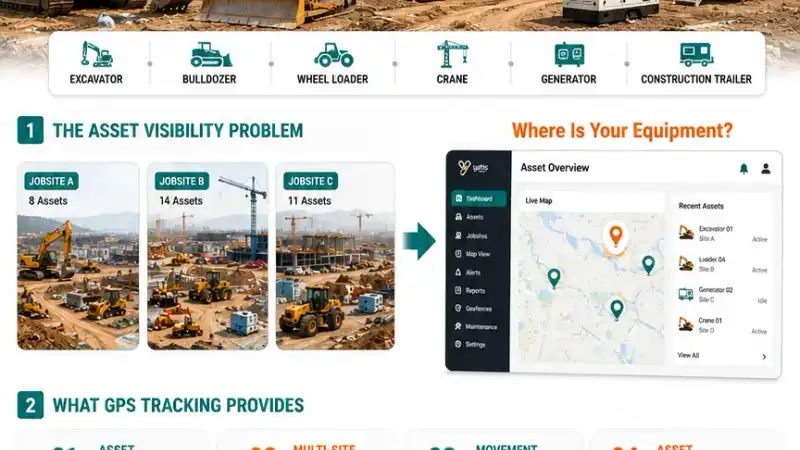
The biggest mistake is thinking GPS tracking means seeing equipment on a map. The bigger opportunity runs deeper: location data becomes asset visibility, which becomes utilization insight, which becomes better allocation.
Once a construction company knows where its assets are, it can begin asking more valuable questions:
- Which assets are underutilized?
- Which projects have excess equipment?
- Which machines should be redeployed?
- Where are assets spending most of their time?
- Which equipment requires closer monitoring?
That is where GPS tracking becomes part of a broader asset tracking strategy rather than simply another tracking device.
Final Thoughts
Construction companies don't just manage vehicles. They manage high-value mobile assets spread across projects, locations and operating environments.
GPS tracking for construction equipment gives businesses a way to create centralized visibility across those assets. Instead of relying entirely on site calls, spreadsheets and manual reports, equipment managers can see where tracked machinery is located, review its movement history, identify unexpected movement and make more informed allocation decisions.
For companies managing equipment across multiple projects, the real benefit isn't simply knowing where a machine is. It's knowing where the company's assets are, how they are being deployed, and whether they are available when the next project needs them.
Frequently Asked Questions
Ready to get started?
Contact Yatis Telematics to learn how GPS asset tracking can give you centralized visibility across every jobsite and machine.
Contact Us →