

GPS Tracking for Logistics Companies: Improve Fleet Visibility, Deliver Faster, and Reduce Operating Costs

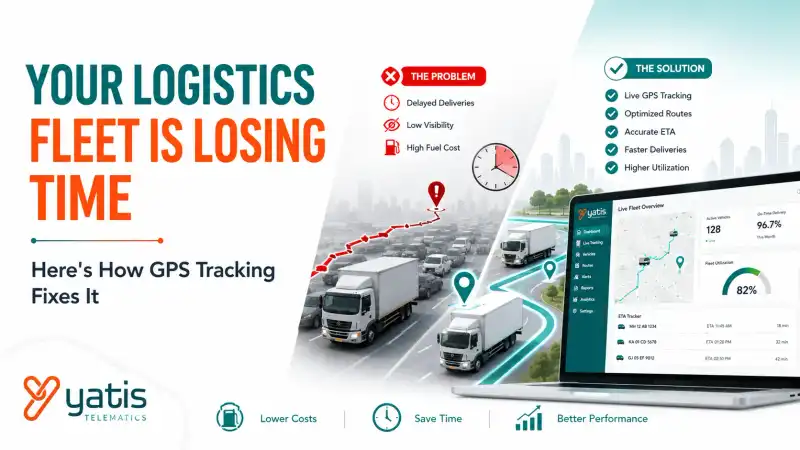
Every successful logistics operation depends on one critical factor—visibility. Without knowing where vehicles are, how deliveries are progressing, or when shipments will arrive, logistics teams are forced to make decisions based on assumptions rather than real-time information.
This lack of visibility often leads to delayed deliveries, inefficient dispatching, rising fuel costs, poor customer communication, and underutilized fleet assets. A modern GPS Tracking System changes that. Instead of simply displaying vehicle locations on a map, today's GPS tracking platforms provide logistics companies with actionable operational insights that help dispatchers, fleet managers, and operations teams make faster, data-driven decisions.
If you're unfamiliar with the fundamentals of fleet tracking, our guide on How Does a GPS Tracking System Work? explains how GPS technology enables businesses to monitor vehicles in real time before exploring its logistics-specific applications.
For logistics companies managing delivery fleets across cities, regions, or nationwide networks, GPS tracking has become an essential operational tool rather than an optional technology investment.
Quick Takeaways
- Track every delivery vehicle in real time
- Improve shipment visibility
- Optimize delivery routes
- Increase fleet utilization
- Reduce delivery delays
- Provide accurate customer ETAs
- Improve operational efficiency
At a Glance
| Logistics Challenge | GPS Tracking Solution |
|---|---|
| Delayed deliveries | Real-time fleet visibility |
| Manual dispatch | Intelligent vehicle assignment |
| Poor shipment visibility | Live tracking dashboard |
| Customer ETA issues | Accurate arrival estimates |
| Low fleet utilization | Better asset allocation |
| Inefficient routing | Optimized delivery planning |
Why Logistics Companies Need GPS Tracking
GPS tracking helps logistics companies improve operational visibility, monitor delivery vehicles in real time, optimize dispatching, reduce delays, increase fleet utilization, and provide customers with accurate shipment updates throughout the delivery process.
Logistics operations involve far more than moving goods from one location to another. Every delivery depends on multiple interconnected activities:
- Vehicle allocation
- Driver scheduling
- Dispatch planning
- Route execution
- Customer communication
- Delivery confirmation
Without centralized fleet visibility, even minor disruptions can affect the entire delivery schedule. GPS tracking provides a single operational view that enables managers to monitor deliveries as they happen, respond to unexpected delays, and allocate resources more efficiently.
1. Real-Time Shipment Visibility
One of the biggest challenges for logistics companies is maintaining visibility after a vehicle leaves the warehouse. Customers increasingly expect accurate delivery updates and timely communication.
Using real-time GPS tracking, logistics managers can monitor vehicle movement, track delivery progress, and respond quickly to delays. This improves coordination between dispatch teams, drivers, customer service representatives, and end customers.
Benefits include:
- Live vehicle locations
- Delivery progress monitoring
- Faster incident response
- Better shipment transparency
- Improved customer confidence
2. Smarter Dispatch Decisions
Efficient dispatching is essential for maximizing fleet productivity. Instead of assigning deliveries manually, GPS tracking provides dispatchers with live visibility into:
- Vehicle availability
- Current locations
- Ongoing trips
- Estimated completion times
Combined with GPS Tracking and Route Optimization, dispatchers can assign the nearest available vehicle to new delivery requests, reducing travel time and improving operational efficiency.
3. Better Fleet Utilization
Many logistics companies expand their fleets without fully utilizing existing vehicles. GPS tracking helps managers identify:
- Underutilized vehicles
- Overloaded routes
- Idle assets
- Uneven workload distribution
These insights enable businesses to maximize the productivity of existing assets before investing in additional vehicles. Understanding fleet utilization also contributes directly to improving GPS Tracking ROI, as higher asset productivity reduces unnecessary operational costs.
4. Optimize Delivery Routes for Faster and More Efficient Operations
GPS tracking helps logistics companies optimize delivery routes by combining real-time vehicle visibility with intelligent route planning. This reduces unnecessary travel, shortens delivery times, improves fleet utilization, and enables dispatchers to make faster operational decisions.
For logistics businesses, every unnecessary kilometre increases operational costs. Poor route planning leads to:
- Longer delivery times
- Higher fuel consumption
- Increased driver hours
- Missed delivery windows
- Lower customer satisfaction
Modern GPS platforms integrate real-time vehicle tracking with route optimization to help dispatchers identify the most efficient delivery sequence. Instead of assigning routes based on assumptions, operations teams can make decisions using live fleet data.
Business Benefits
- Faster deliveries
- Reduced travel distance
- Improved dispatch efficiency
- Better resource allocation
- Lower operating costs
5. Improve Last-Mile Delivery Performance
GPS tracking improves last-mile logistics by providing live delivery visibility, accurate ETAs, optimized dispatching, and faster responses to delivery exceptions, helping logistics companies deliver a better customer experience.
The last mile is often the most expensive and unpredictable stage of the delivery process. Traffic congestion, customer availability, address changes, and unexpected delays can all impact delivery schedules. GPS tracking enables operations teams to monitor deliveries as they happen and respond quickly when issues arise.
Benefits include:
- Live delivery monitoring
- Faster issue resolution
- Improved delivery success rates
- Better customer communication
- Reduced failed deliveries
6. Deliver Accurate ETAs and Improve Customer Communication
GPS tracking helps logistics companies provide more accurate estimated arrival times (ETAs) by monitoring vehicle movement in real time and responding to traffic delays or route changes before they affect customers.
Today's customers don't just want fast deliveries. They expect visibility. Providing accurate delivery updates improves trust and reduces the number of support enquiries received by customer service teams. With live GPS visibility, logistics companies can:
- Share accurate delivery updates
- Notify customers of delays
- Improve delivery transparency
- Enhance overall customer experience
7. Increase Fleet Utilization Without Expanding Your Fleet
GPS tracking helps logistics companies maximize fleet utilization by identifying underused vehicles, balancing delivery workloads, reducing idle time, and improving vehicle allocation across daily operations.
Fleet expansion should be driven by business growth—not operational inefficiency. GPS tracking provides managers with detailed utilization reports that reveal idle vehicles, overloaded delivery routes, uneven fleet usage, and delivery bottlenecks. Rather than purchasing additional vehicles, many logistics companies can first improve how existing assets are used—one of the most effective ways to increase GPS Tracking ROI.
8. Improve Fleet Productivity with Actionable Insights
GPS tracking generates operational data throughout every journey. The real value comes from converting that data into business decisions. Logistics managers can analyze daily trips completed, vehicle utilization, delivery delays, idle time, driver productivity, fleet availability, and dispatch efficiency.
Instead of relying on spreadsheets, managers receive centralized dashboards that simplify performance monitoring. To explore the reporting and dashboard capabilities available in modern systems, see our article on 15 Features Every Commercial GPS Tracking System Should Have.
9. Scale Logistics Operations with Confidence
As logistics businesses grow, operational complexity increases. Managing more vehicles, more drivers, more delivery locations, and more customers requires systems that scale efficiently.
GPS tracking provides centralized visibility across the entire fleet, enabling businesses to maintain operational control without significantly increasing manual oversight. Whether operating within one city or across multiple states, managers can monitor fleet activity from a single platform.
For companies experiencing rapid fleet growth, our guide on 7 Signs Your Fleet Has Outgrown Basic GPS Tracking explains when it's time to upgrade from basic tracking to a comprehensive fleet management solution.
10. Make Data-Driven Decisions with Logistics Analytics
GPS tracking helps logistics companies make better operational decisions by converting vehicle location data into actionable analytics. Fleet managers can monitor delivery performance, vehicle utilization, idle time, and dispatch efficiency to continuously improve logistics operations.
Modern GPS tracking platforms transform raw data into dashboards and reports that help managers answer critical business questions, such as:
- Which routes experience frequent delays?
- Which vehicles have the highest utilization?
- Which customers experience repeated delivery issues?
- Which depots are operating efficiently?
- Where is fleet capacity underutilized?
Instead of reacting to operational issues after they occur, logistics teams can identify patterns early and make informed decisions.
Logistics Challenges vs GPS Tracking Solutions
| Logistics Challenge | GPS Tracking Solution |
|---|---|
| Limited shipment visibility | Live fleet monitoring |
| Inefficient dispatch | Real-time vehicle allocation |
| Delivery delays | Optimized routing |
| Poor customer communication | Accurate ETAs |
| Underutilized fleet | Fleet utilization reports |
| Manual operations | Automated dashboards |
| Limited scalability | Centralized fleet management |
Industries That Benefit from Logistics GPS Tracking
GPS tracking delivers value across a wide range of logistics operations, including:
- Third-Party Logistics (3PL)
- E-commerce Fulfillment
- FMCG Distribution
- Courier & Parcel Services
- Cold Chain Logistics
- Retail Distribution
- Pharmaceutical Logistics
- Manufacturing & Industrial Supply Chains
Because operational requirements differ across industries, selecting a solution with the right commercial GPS tracking system features is essential.
Common Mistakes Logistics Companies Make When Using GPS Tracking
The most common GPS tracking mistakes include using GPS only for vehicle location, ignoring fleet analytics, failing to optimize routes, monitoring vehicles instead of operations, and not integrating GPS data into daily logistics workflows. Avoid these common mistakes:
1. Using GPS Only to Locate Vehicles
Many businesses stop at "Where is my truck?" The bigger opportunity is understanding fleet productivity, delivery performance, vehicle utilization, and operational bottlenecks.
2. Ignoring Route Performance
Routes should evolve with business growth. If delivery patterns, customer locations, or traffic conditions change, routing strategies should also change.
3. Measuring Drivers Instead of Operations
Poor delivery performance isn't always a driver issue. It may result from inefficient dispatching, poor scheduling, traffic bottlenecks, or uneven workload distribution. GPS data should be used to improve operational processes, not simply monitor individual drivers.
4. Choosing Basic Tracking When Operations Have Outgrown It
As fleets expand, businesses need more than vehicle location. Advanced reporting, utilization insights, alerts, and centralized dashboards become increasingly important.
KPIs Every Logistics Company Should Monitor
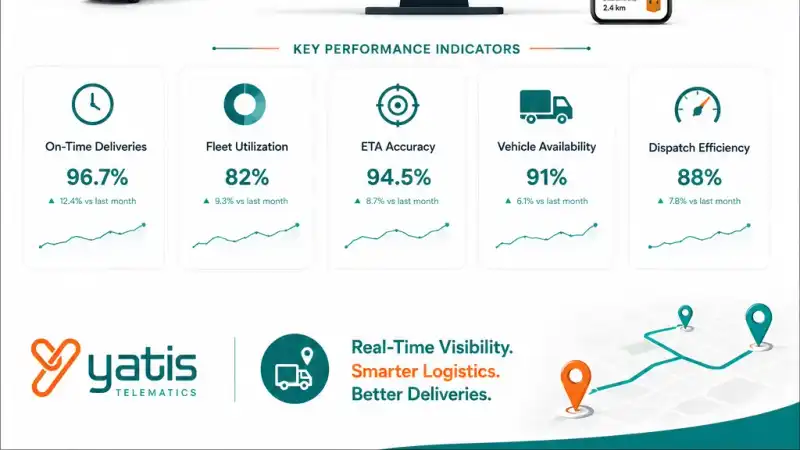
Logistics companies should measure GPS tracking performance using KPIs such as on-time delivery rate, average delivery time, fleet utilization, idle time, fuel efficiency, vehicle availability, and customer service performance.
| KPI | Why It Matters |
|---|---|
| On-Time Delivery Rate | Measures service reliability |
| Average Delivery Time | Tracks operational efficiency |
| Fleet Utilization | Maximizes asset productivity |
| Vehicle Idle Time | Identifies unnecessary fuel consumption |
| Route Completion Rate | Evaluates delivery execution |
| Vehicle Availability | Measures fleet readiness |
| Dispatch Response Time | Improves operational agility |
| Customer Complaints | Indicates service quality |
| Delivery Success Rate | Measures last-mile efficiency |
Reviewing these KPIs regularly helps logistics businesses identify trends, improve resource allocation, and enhance customer satisfaction.
Logistics GPS Implementation Checklist
Is Your Logistics Business Ready?
Use this checklist to assess your current operations.
- Delivery vehicles frequently experience delays.
- Customers regularly request shipment updates.
- Dispatchers rely on phone calls for vehicle status.
- Delivery routes are manually planned.
- Fleet utilization varies significantly between vehicles.
- Managers lack real-time shipment visibility.
- Operational reports are created manually.
- Scaling operations has become increasingly difficult.
If you answered Yes to several of these questions, your logistics operation is likely ready for a modern GPS tracking solution.
Final Thoughts
In today's logistics industry, speed alone is no longer a competitive advantage. Customers expect visibility, reliability, and transparency throughout the delivery process.
GPS tracking enables logistics companies to move beyond basic vehicle tracking by providing real-time operational intelligence that improves every stage of fleet management—from dispatch planning and route execution to delivery confirmation and performance analysis.
Whether your business manages regional deliveries, nationwide distribution, third-party logistics (3PL), or last-mile operations, investing in the right GPS tracking platform helps build a more efficient, scalable, and customer-focused logistics network. At Yatis, our GPS Tracking System and Fleet Management Platform are designed to help logistics companies gain complete fleet visibility, improve operational efficiency, and deliver better customer experiences through intelligent, real-time fleet management.
Frequently Asked Questions
Ready to get started?
Contact Yatis Telematics to learn how our GPS tracking and fleet management platform can improve visibility and efficiency across your logistics operations.
Contact Us →