

GPS Tracking for School Buses: How It Improves Student Safety and Parent Visibility

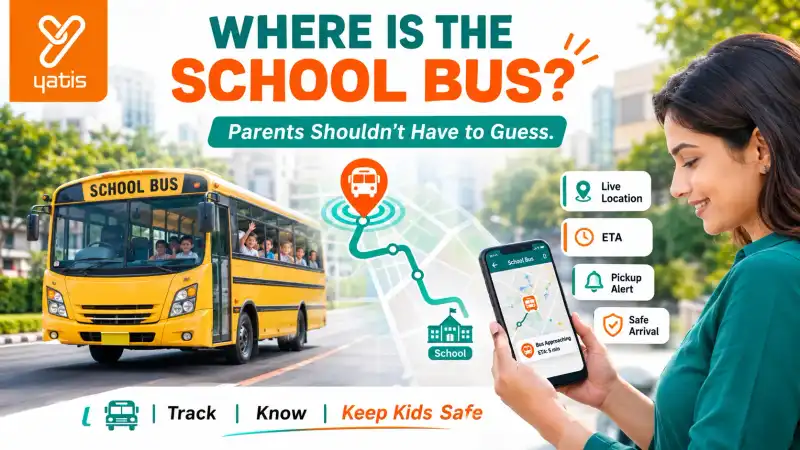
For parents, the school bus journey doesn't end when a child boards the bus. There is a period between home and school when parents want to know: Has the bus started? Where is it now? Is it running late? When will it reach the stop? Has my child reached school safely?
For schools and transport managers, the questions are different: Is every bus following its assigned route? Are buses being operated safely? Are delays affecting students? Can the transport team respond quickly when something changes?
This is where school bus GPS tracking becomes more than a vehicle-location tool. It creates a shared visibility layer between the school, transport team, bus and parent. CBSE's published school-bus safety guidance specifically calls for GPS and CCTV arrangements in school buses and states that these systems should remain operational.
Quick Takeaways
- Live bus location for schools and parents
- Estimated arrival at each stop
- Trip start, pickup and drop-off notifications
- Route deviation and speed-related alerts
- Centralized monitoring for transport teams
- Journey history for operational review
- Greater transparency across school transport
What Is School Bus GPS Tracking?
School bus GPS tracking is a vehicle-monitoring system that uses GPS-enabled hardware to determine a bus's location and transmit that information to a tracking platform. Schools can monitor buses while authorized parents can receive journey updates through an app, web interface, or notifications.
The basic model is: School Bus → GPS Device → Communication Network → Tracking Platform → School / Parent.
The GPS device remains associated with the bus. The platform then turns the incoming location information into useful operational visibility. Depending on the solution, this can include:
- Live bus location
- Route monitoring
- Estimated arrival time
- Pickup and drop notifications
- Route deviation alerts
- Speed-related alerts
- Journey history
The important distinction is that the system is not simply showing a dot on a map. It can turn vehicle-location data into actionable school-transport information.
Why Student Safety Needs More Than Basic Bus Tracking
A school bus carries a particularly sensitive passenger group: children. That changes the value of visibility.
For an ordinary commercial vehicle, knowing where the vehicle is may primarily serve operational purposes. For a school bus, location visibility can also support safety, accountability and communication together.
For example, if a bus unexpectedly deviates from its planned route, the transport team can identify the deviation rather than relying entirely on a parent or student reporting that something appears unusual. Similarly, if a bus is delayed, parents can receive an update rather than repeatedly calling the school office.
Government education material describing GPS-based school transport monitoring specifically identifies real-time tracking, overspeed alerts, geofencing, parent notifications and safety monitoring among the benefits of such systems.
How GPS Tracking Improves Parent Visibility
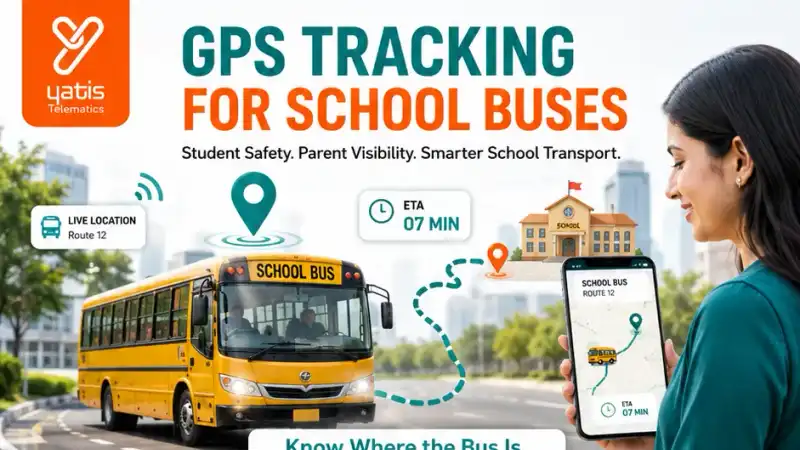
GPS tracking improves parent visibility by allowing authorized parents to see the school bus's current location and receive journey-related notifications such as trip start, approaching-stop, arrival, pickup, or drop-off updates, depending on the tracking system.
Without a tracking system, parents often depend on estimated times, phone calls and manual updates. With GPS-enabled school transport, they get live location, ETA and automated notifications instead. This changes the parent experience considerably.
Instead of asking "Where is the bus?"
Parents can check the available journey information directly.
Instead of waiting at the stop unnecessarily
Parents can use the estimated arrival information to better time their arrival.
Instead of repeatedly calling the school
Parents can receive relevant automated updates.
This is one of the strongest benefits of school bus GPS because visibility itself becomes part of the school's transport service.
What Can Parents See?
The exact functionality varies between platforms, but a school bus tracking solution may provide parents with:
| Parent Visibility | Purpose |
|---|---|
| Live bus location | Know where the bus currently is |
| Estimated arrival | Plan when to reach the stop |
| Trip-start notification | Know when the journey has begun |
| Approaching-stop alert | Prepare for pickup |
| School-arrival notification | Know the bus reached school |
| Drop-off notification | Know the return journey has reached the stop |
| Route information | Understand the assigned journey |
Some school transport platforms also combine GPS tracking with student boarding and deboarding systems so that parents can receive information about the child's transport status rather than only the bus's location.
That distinction is important. Bus tracking tells you where the vehicle is. Student-status tracking can tell you whether the child has boarded or been dropped off. These are complementary capabilities and should not be treated as identical.
How GPS Tracking Helps Schools Monitor Bus Operations
GPS tracking is equally valuable from the school's side. A transport administrator can potentially monitor multiple buses from a centralized platform rather than relying on individual driver calls. This creates visibility into:
- Current bus locations
- Route progress
- Delays
- Route deviations
- Speed-related events
- Completed journeys
- Historical movement
The Ministry of Education's documented school-transport tracking example specifically identifies centralized monitoring, real-time vehicle tracking, overspeed monitoring, route history, geofencing and alerts as operational applications.
This allows transport teams to move from "Something went wrong. What happened?" toward "We can see what is happening and respond."
Route Deviation: A Safety Visibility Layer
A school bus GPS system can alert transport administrators when a bus moves outside a predefined route or geographic area, helping the school identify unexpected movement and investigate it quickly.
A planned school-bus route can be represented digitally within a tracking platform. If the bus moves significantly away from the expected route, the system can generate an alert, depending on the configuration. This can help identify unexpected route changes, wrong turns, unauthorized deviations, operational disruptions and traffic-related diversions.
The goal isn't to assume that every deviation is dangerous. A legitimate diversion may occur because of road construction, traffic restrictions, emergency situations, police diversions or road closures. The value of the alert is that the transport team knows about the deviation and can verify it.
School Bus GPS and Driver Safety
Driver behaviour should be treated as a supporting safety layer rather than the entire purpose of a school bus tracking system. GPS tracking can help schools identify events such as:
- Excessive speed
- Harsh driving events, where supported
- Unexpected route changes
- Extended stops
- Unusual journey patterns
This can provide evidence for transport-team review and driver coaching. However, GPS data alone does not replace driver training, vehicle maintenance, attendant supervision, school transport policies, emergency procedures or regulatory compliance. The strongest school transport safety model combines technology with proper operational processes.
Why Parent Visibility Is Also a School-Management Advantage
Parent visibility isn't merely a convenience feature. It can reduce uncertainty around the school transport process. Consider a delayed bus.
Without live visibility
Parent calls driver → driver calls transport office → transport office investigates → parent finally receives an update.
With tracking
Bus location flows to the platform → the parent sees current status → the transport team monitors the same journey.
This creates a more transparent communication loop. It can also reduce unnecessary calls to school transport staff during routine delays.
School Bus GPS vs Basic Location Sharing
Not every location-sharing method provides the same operational value. A driver sharing their smartphone location may show where the phone is. A dedicated school bus tracking solution can instead associate the tracking identity with the vehicle, while a school transport platform can add route, ETA and notification workflows around that vehicle.
This distinction matters when drivers change, multiple buses operate the same route, transport staff need centralized visibility, historical journey records are required, or parents need consistent bus identification.
For a school managing multiple vehicles, vehicle-centric tracking provides a more structured operational model.
What Should Schools Look for in a School Bus GPS System?
Schools should evaluate the complete transport workflow rather than selecting a device based only on GPS capability.
1. Live Vehicle Visibility
Can transport staff see active buses from a centralized dashboard?
2. Parent Visibility
Can authorized parents access relevant bus information?
3. ETA and Stop Notifications
Can the system communicate useful arrival information?
4. Route Monitoring
Can transport teams identify unexpected route movement? A platform with route optimization capability also helps schools plan more efficient pickup sequences.
5. Alerting
Can administrators configure relevant safety and operational alerts?
6. Historical Records
Can the school review completed journeys?
7. Emergency Support
Does the solution provide appropriate emergency communication or SOS functionality?
8. System Reliability
Does the hardware and platform remain operational throughout school transport hours?
The School Bus Tracking Ecosystem
A mature school transport solution connects several stakeholders. The student travels safely from pickup point to school. The parent receives relevant journey visibility. The GPS tracking device provides vehicle location information. The school transport team monitors the active fleet. And school administration gets operational records and visibility.
This creates a connected transport ecosystem rather than a standalone GPS device.
GPS Tracking for School Buses: Key Benefits
| Benefit | Who Benefits? |
|---|---|
| Live bus location | Parents and school |
| ETA visibility | Parents |
| Route monitoring | School |
| Route deviation alerts | Transport team |
| Speed-related alerts | School |
| Journey history | School |
| Automated notifications | Parents |
| Centralized monitoring | Transport team |
| Better communication | Parents and school |
| Greater transport transparency | Everyone |
Who Should Use School Bus GPS Tracking?
School bus GPS tracking is particularly relevant for private schools, CBSE schools, ICSE schools, international schools, school groups operating multiple campuses, schools using outsourced bus operators, and educational institutions managing large transport fleets.
CBSE's current safety information directs affiliated schools to follow applicable school-transport precautions prescribed by relevant authorities, alongside broader child-safety guidelines.
Because transport requirements can vary by state, vehicle category and local authority, schools should verify the requirements applicable to their own operations rather than treating one technology specification as universally sufficient.
The Core Takeaway
A school bus GPS system shouldn't be evaluated simply by asking "Can it show the bus on a map?"
The more useful questions are: Can the school monitor the journey? Can parents receive meaningful updates? Can transport teams identify unusual events? Can the school maintain an operational record of journeys?
That is where GPS tracking moves from basic location technology to a school transport safety and visibility system. For schools looking for a broader solution, the natural next step is a dedicated school bus tracking platform that combines vehicle tracking with parent visibility and transport monitoring.
Final Thoughts
School bus GPS tracking gives schools something that traditional transport management often lacks: visibility throughout the journey.
Parents can know where the bus is and better understand when it is likely to arrive. Transport teams can monitor buses centrally, identify unexpected movement and respond to operational issues more quickly. And school administrators can build a more transparent transport process around measurable journey data.
Most importantly, GPS tracking should not be treated as a replacement for responsible school transport management. It is a visibility and response layer that works alongside trained drivers, attendants, vehicle safety procedures, emergency protocols and applicable regulations.
For schools, that combination can create a transport experience that is not only more manageable, but also more transparent and reassuring for parents.
Frequently Asked Questions
Ready to get started?
Contact Yatis Telematics to learn how school bus GPS tracking can give your transport team and your parents complete journey visibility.
Contact Us →