

GPS Tracking for Transport Companies: Improve Fleet Safety, Visibility, and Operational Efficiency

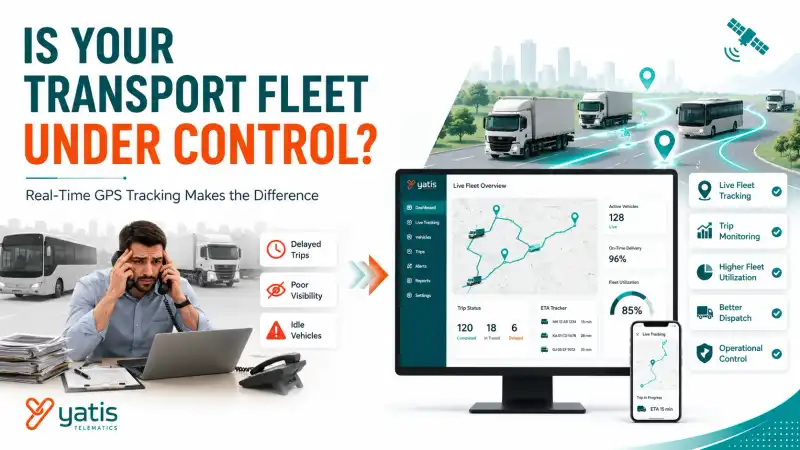
Transport companies operate in environments where visibility, reliability, and operational control directly influence business performance. Whether managing long-haul trucks, passenger buses, employee transportation, school buses, construction vehicles, or specialized commercial fleets, transport operators need accurate information about vehicle movement throughout the day.
Without real-time visibility, operations teams often rely on phone calls, manual reporting, and delayed updates to understand fleet activity. A modern GPS Tracking System replaces uncertainty with live operational intelligence. Instead of simply displaying vehicle locations, today's GPS platforms help transport companies monitor trips, optimize dispatch decisions, improve vehicle utilization, and support safer fleet operations.
If you're new to fleet tracking technology, our guide on How Does a GPS Tracking System Work? explains how GPS enables real-time vehicle monitoring before exploring its transport-specific applications.
For transport companies operating dozens or even hundreds of commercial vehicles, GPS tracking has become an essential operational platform for maintaining efficiency and delivering reliable services.
Quick Takeaways
- Monitor every vehicle in real time
- Improve trip visibility
- Increase fleet utilization
- Optimize transport operations
- Enhance passenger and cargo safety
- Improve dispatch efficiency
- Reduce operating costs
At a Glance
| Transport Challenge | GPS Tracking Solution |
|---|---|
| Limited fleet visibility | Real-time vehicle tracking |
| Manual trip monitoring | Live fleet dashboard |
| Poor fleet utilization | Vehicle utilization reports |
| Inefficient dispatch | Intelligent fleet management |
| Delayed trip updates | Real-time trip monitoring |
| Growing fleet complexity | Centralized operations |
Why Transport Companies Need GPS Tracking
GPS tracking helps transport companies improve fleet visibility, monitor vehicle movement in real time, optimize trip management, increase vehicle utilization, improve operational efficiency, and provide better oversight across commercial transport operations.
Managing a transport fleet involves more than moving vehicles between locations. Operations teams must coordinate vehicle allocation, trip scheduling, driver assignments, fleet availability, route execution, and operational reporting. Without centralized visibility, delays, communication gaps, and inefficient resource allocation become increasingly difficult to manage.
GPS tracking provides transport managers with live operational insight, allowing them to monitor fleet performance from a single dashboard.
1. Real-Time Fleet Visibility
One of the greatest challenges for transport companies is maintaining complete visibility after vehicles begin their journeys. GPS tracking enables managers to view live vehicle locations, monitor active trips, track route progress, respond quickly to operational issues, and improve coordination across the fleet.
For businesses that rely on continuously updated vehicle information, Real-Time GPS Tracking provides a significant operational advantage over historical tracking methods.
2. Better Trip Monitoring
Transport companies often manage vehicles travelling across multiple cities, states, or operational zones. GPS tracking allows operations teams to monitor trip start times, route progress, estimated arrival times, unexpected delays, and vehicle availability. This improves operational control without requiring constant communication between drivers and dispatch teams.
3. Improve Fleet Utilization
Fleet expansion should be based on operational demand rather than limited visibility. GPS tracking provides utilization reports that help managers identify underutilized vehicles, idle fleet assets, uneven workload distribution, and opportunities to optimize fleet capacity.
Improving vehicle utilization contributes directly to stronger operational performance and better GPS Tracking ROI.
4. Improve Dispatch Efficiency with Real-Time Fleet Visibility
GPS tracking improves dispatch efficiency by providing transport companies with real-time visibility into vehicle locations, trip status, and fleet availability, enabling faster vehicle allocation and better operational planning.
Without live fleet visibility, dispatchers rely on phone calls, driver updates, manual spreadsheets, and estimated arrival times. This creates unnecessary delays and reduces operational efficiency. A GPS tracking platform provides dispatchers with a centralized dashboard showing every active vehicle, allowing them to assign trips based on real-time availability rather than assumptions.
If you'd like to understand how GPS improves dispatch through smarter routing, read our guide on GPS Tracking and Route Optimization: How Smarter Routing Reduces Costs and Improves Deliveries.
5. Increase Vehicle Availability Across Your Fleet
GPS tracking helps transport companies improve vehicle availability by monitoring fleet utilization, reducing idle time, identifying underused assets, and enabling better trip scheduling across commercial fleets.
Vehicle availability directly impacts revenue. Every vehicle sitting idle unnecessarily represents lost earning potential. GPS tracking enables fleet managers to identify idle vehicles, overbooked vehicles, uneven trip allocation, and fleet capacity gaps.
Benefits include higher vehicle utilization, reduced idle hours, better scheduling, improved operational planning, and lower capital expenditure.
6. Improve Passenger and Cargo Visibility
GPS tracking improves passenger and cargo visibility by providing live vehicle locations, real-time trip monitoring, and accurate arrival updates, enabling transport companies to deliver more reliable services.
Whether transporting passengers or commercial goods, visibility is a key expectation. Customers, clients, and operations teams all benefit from knowing vehicle location, trip progress, expected arrival time, and delay notifications. For transport businesses operating school buses, employee transportation, or passenger services, GPS tracking also supports better coordination between dispatch teams and service users.
7. Improve Operational Control Across Long-Haul Transport
GPS tracking enables transport companies to monitor long-distance vehicle operations by providing live trip visibility, centralized fleet dashboards, and real-time operational insights across multiple locations.
GPS tracking provides centralized operational control by allowing managers to monitor active trips, vehicle locations, route progress, unexpected delays, and fleet distribution. Businesses operating large transport fleets can further improve efficiency by adopting a commercial GPS tracking system with advanced reporting and centralized fleet management capabilities.
8. Scale Your Transport Business Without Losing Operational Visibility
As transport companies expand, managing additional vehicles, drivers, and routes becomes increasingly complex. GPS tracking provides a centralized platform that allows businesses to scale operations while maintaining visibility across the entire fleet—whether operating regional truck fleets, passenger buses, employee transportation, school transport, or industrial transport.
Businesses experiencing rapid fleet growth should also understand when basic vehicle tracking is no longer sufficient. Our guide on 7 Signs Your Fleet Has Outgrown Basic GPS Tracking explains the indicators that it's time to move to a more advanced fleet management platform.
9. Gain Actionable Insights Through Fleet Analytics
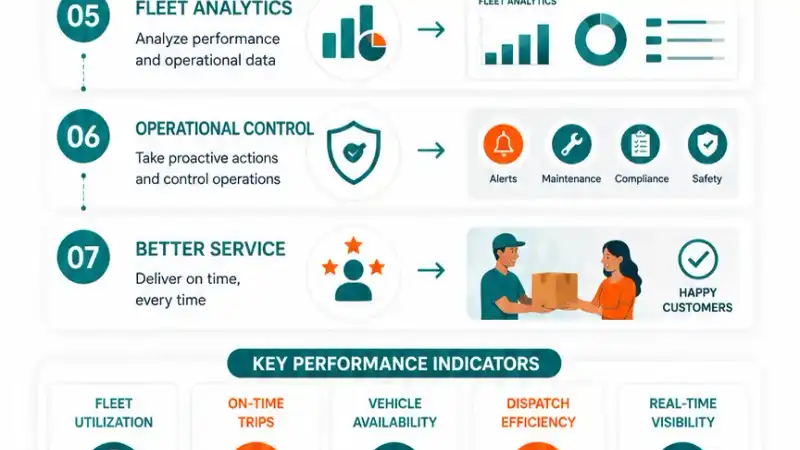
GPS tracking systems continuously collect operational data from every vehicle. Rather than using this data only for historical reporting, transport companies can leverage analytics to improve decision-making, including vehicle utilization, trip completion rates, idle time, fleet availability, route efficiency, dispatch performance, and daily vehicle activity.
Modern fleet dashboards make it easier to identify operational trends and optimize resource allocation.
10. Make Better Transport Decisions with Fleet Analytics
GPS tracking helps transport companies make better operational decisions by converting real-time vehicle data into actionable insights. Fleet managers can monitor utilization, trip performance, idle time, and fleet availability to improve operational efficiency.
A modern GPS tracking platform transforms raw vehicle data into dashboards and reports that answer questions such as: which vehicles complete the most trips, which routes experience recurring delays, which vehicles remain idle for extended periods, which depots have the highest fleet utilization, and which trips require operational improvements.
These insights help transport businesses optimize fleet performance and improve long-term planning.
Transport Challenges vs GPS Tracking Solutions
| Transport Challenge | GPS Tracking Solution |
|---|---|
| Limited fleet visibility | Real-time vehicle tracking |
| Manual dispatch | Centralized dispatch dashboard |
| Vehicle idle time | Fleet utilization analytics |
| Poor trip monitoring | Live trip tracking |
| Delayed operational updates | Instant fleet visibility |
| Growing fleet complexity | Centralized fleet management |
| Low operational efficiency | Data-driven decision-making |
Industries That Benefit from GPS Tracking
GPS tracking delivers measurable operational benefits across a wide range of transport businesses, including:
- Trucking & Freight Transport
- Passenger Bus Operators
- School Transportation
- Employee Transportation Services
- Taxi & Cab Fleets
- Construction Equipment Transport
- Mining & Heavy Vehicle Fleets
- Oil & Gas Transport
- Cement & Bulk Material Transport
- Municipal Transport Services
Each industry has unique operational requirements, making it important to choose a GPS tracking platform that supports scalability, reporting, and fleet-wide visibility.
Common Mistakes Transport Companies Make with GPS Tracking
The most common GPS tracking mistakes include using GPS only for vehicle location, ignoring fleet analytics, relying on manual dispatch processes, underutilizing fleet data, and delaying upgrades from basic tracking systems.
1. Using GPS Only to Track Vehicle Locations
Many businesses use GPS solely to answer "Where is my vehicle?" However, modern GPS tracking platforms provide insights far beyond vehicle location, including fleet utilization, trip efficiency, operational trends, dispatch performance, and resource allocation.
2. Relying on Manual Dispatch Decisions
Many transport operators continue assigning trips based on phone calls, driver availability estimates, manual records, or experience alone. Without real-time fleet visibility, dispatch decisions become slower and less efficient. Using GPS tracking alongside GPS Tracking and Route Optimization enables dispatchers to assign vehicles using live operational data.
3. Ignoring Fleet Utilization Reports
Adding vehicles isn't always the solution. Often, existing vehicles are simply not being used efficiently. Fleet utilization reports help identify idle vehicles, overworked vehicles, uneven scheduling, and fleet capacity gaps. Improving utilization frequently delivers a better return than expanding the fleet.
4. Waiting Too Long to Upgrade Fleet Management
As transport businesses grow, operational complexity increases. Basic tracking solutions often lack advanced reporting, fleet analytics, dispatch dashboards, and enterprise scalability. If your business is experiencing these challenges, read 7 Signs Your Fleet Has Outgrown Basic GPS Tracking.
KPIs Every Transport Company Should Monitor
Transport companies should monitor KPIs such as fleet utilization, trip completion rate, vehicle availability, idle time, on-time arrivals, dispatch response time, and operational efficiency to maximize fleet performance.
| KPI | Why It Matters |
|---|---|
| Fleet Utilization | Measures asset productivity |
| Vehicle Availability | Indicates fleet readiness |
| Trip Completion Rate | Tracks operational efficiency |
| On-Time Arrival Rate | Measures service reliability |
| Average Trip Duration | Identifies operational delays |
| Idle Time | Highlights wasted operational hours |
| Dispatch Response Time | Evaluates dispatch efficiency |
| Fleet Downtime | Measures operational availability |
| Route Performance | Supports optimization decisions |
Regularly reviewing these KPIs enables transport companies to improve fleet planning, reduce inefficiencies, and deliver more reliable services.
Transport Fleet Readiness Checklist
Is Your Transport Business Ready for GPS Tracking?
Evaluate your operations using this checklist.
- Drivers frequently call dispatch to provide location updates.
- Fleet managers struggle to monitor active trips.
- Vehicle allocation is handled manually.
- Fleet utilization varies significantly.
- Operational reports are prepared manually.
- Customers request frequent trip updates.
- Managers lack real-time fleet visibility.
- Business growth is making fleet operations more difficult to manage.
If you answered Yes to several of these questions, your business is likely ready to benefit from a modern GPS tracking platform.
Final Thoughts
The transport industry is becoming increasingly competitive, with growing expectations around operational efficiency, service reliability, and fleet visibility. Managing commercial vehicles without real-time operational insight often results in delayed decisions, underutilized assets, and higher operating costs.
GPS tracking enables transport companies to move beyond basic vehicle monitoring by providing the visibility, analytics, and operational intelligence needed to manage fleets more effectively. Whether you operate trucking fleets, passenger buses, school transport, employee transportation, or industrial vehicles, a modern GPS tracking solution helps improve daily operations while supporting long-term business growth.
At Yatis, our GPS Tracking System and Fleet Management Platform help transport companies gain complete fleet visibility, optimize operations, and make smarter business decisions through real-time fleet intelligence.
Frequently Asked Questions
Ready to get started?
Contact Yatis Telematics to learn how our GPS tracking and fleet management platform can improve visibility, safety, and efficiency across your transport operations.
Contact Us →